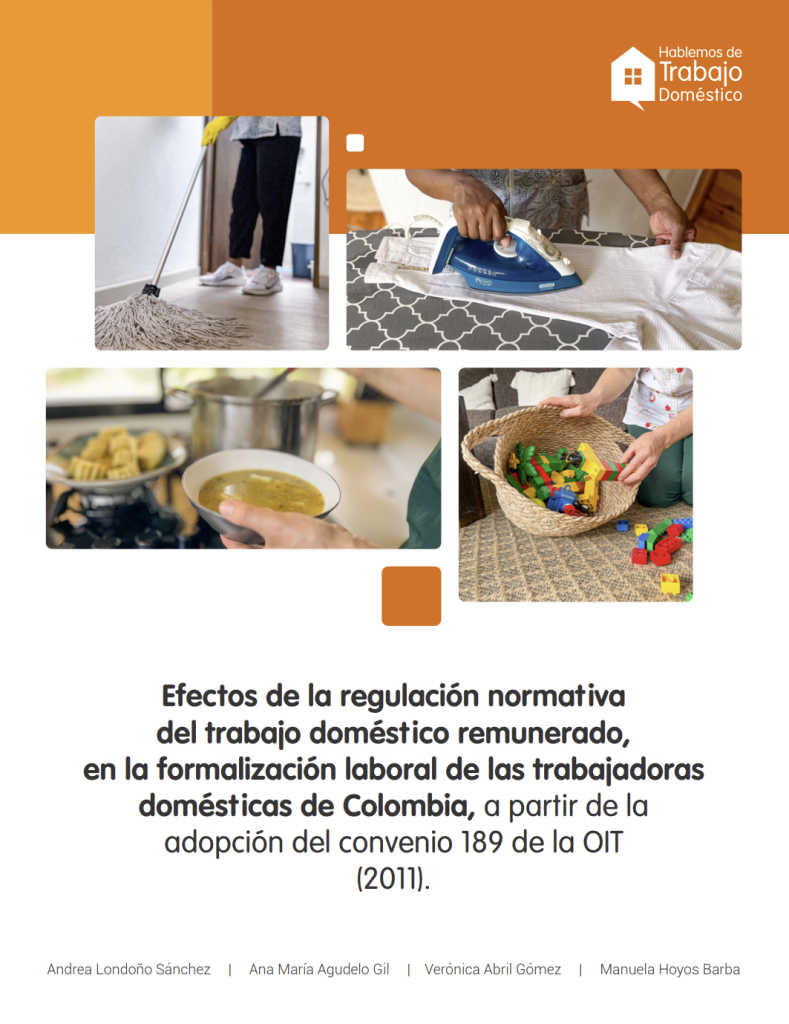
Effects of the normative regulation of paid domestic work on the labor formalization of domestic workers in Colombia, since the adoption of ILO Convention 189 (2011).
- Type
- Articles
- Country
- Colombia
- Types of care work
- Domestic work
- Care and populations
- Women
- Actors
- Communities
- Regions
- Latin America and the Caribbean
- Policies and actions
- Social security and protection
- Conceptual framework
- Care society
This study examines the effects of the normative regulation of paid domestic work on the labor formalization of domestic workers in Colombia, starting with the adoption of ILO Convention 189 (2011), taking as a reference that, by the year 2022, informality in the sector was 80%. To this end, a review of regulations and jurisprudence is proposed, between 2010 and 2022, around the paid domestic work sector, in order to identify regulatory milestones that can be contrasted with the behavior of labor formalization in the sector (based on the DANE’s Gran Encuesta Integrada de Hogares), specifically in six cities that concentrate 39% of the country’s paid domestic workers: Bogotá, Medellín, Cali, Barranquilla (with its metropolitan area), Cartagena and Bucaramanga.
The analysis is intended to identify challenges and opportunities that will be useful for making decisions aimed at increasing the formalization of the sector and, therefore, improving the quality of life of domestic workers.

Author
Andrea Londoño Sánchez
Author
Ana María Agudelo Gil
Author
Verónica Abril Gómez
Author
Manuela Hoyos Barba

Continue reading
Related resources