With your permission we measure how the site is used and show content from other services: Google Maps, YouTube, Spotify. Accept or reject all of it, or choose in your preferences. You can change this at any time from Privacy preferences at the foot of every page. Privacy policy
The multiple crises of recent years have shown that the current development model is unsustainable and fails to address the structural gaps that affect the vast majority of the population of Latin America and the Caribbean.Against this backdrop, a comprehensive…
In Latin America and the Caribbean, care has gradually been placed at the centre of public agendas, albeit unevenly, as a result of growing political commitments, as well as the work of women’s movements and feminist economic studies. These contributions…
Mainstreaming the gender perspective in national statistical systems makes it possible to produce information that reflects the circumstances of women and men in all their diversity, and thus to shed light on inequalities in different aspects of life. The Regional…
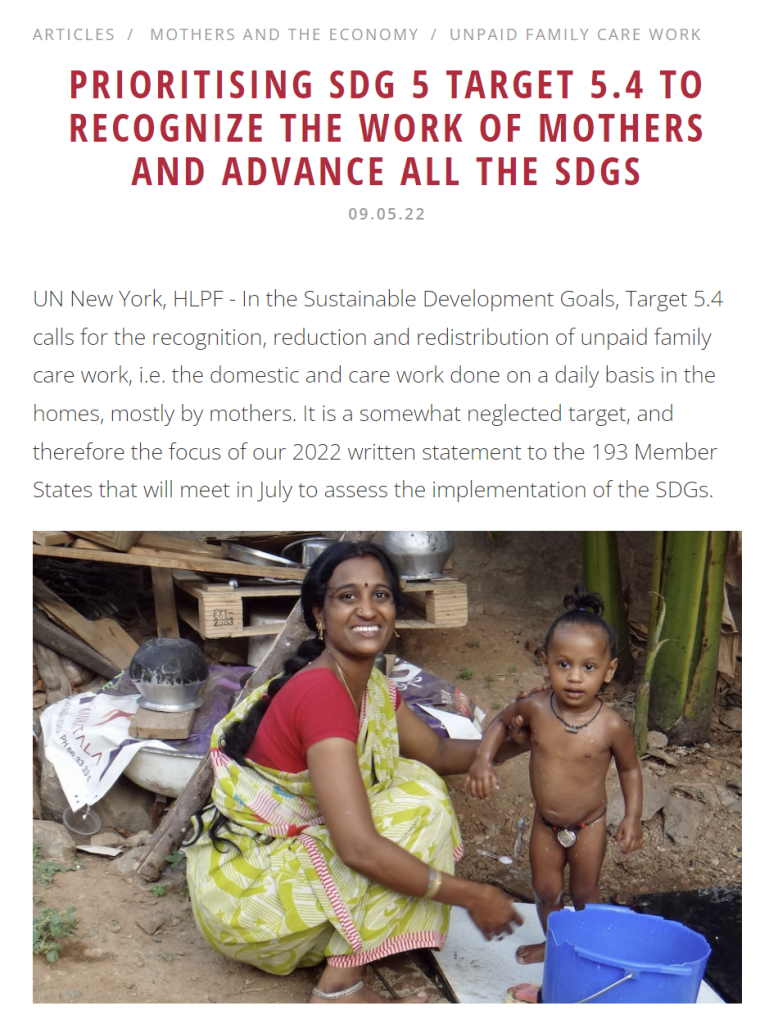
In the Sustainable Development Goals, Target 5.4 calls for the recognition, reduction and redistribution of unpaid family care work, i.e. the domestic and care work done on a daily basis in the homes, mostly by mothers. It is a somewhat…
That women and girls in Uganda are over-burdened with unpaid care work is not shocking news anymore. That the norms, behaviour, and societal sanctions that continue to perpetuate the status quo are still held high in our communities’ everyday life…
This meeting was held on 26 July 2022 and focused on formulating evidence-based policies to recognise care work.With speakers: Neeraja Penumetcha, Senior Manager of Programs & Operations at Data2X, Shelby Bourgault, Research Associate at the Center for Global Development and…
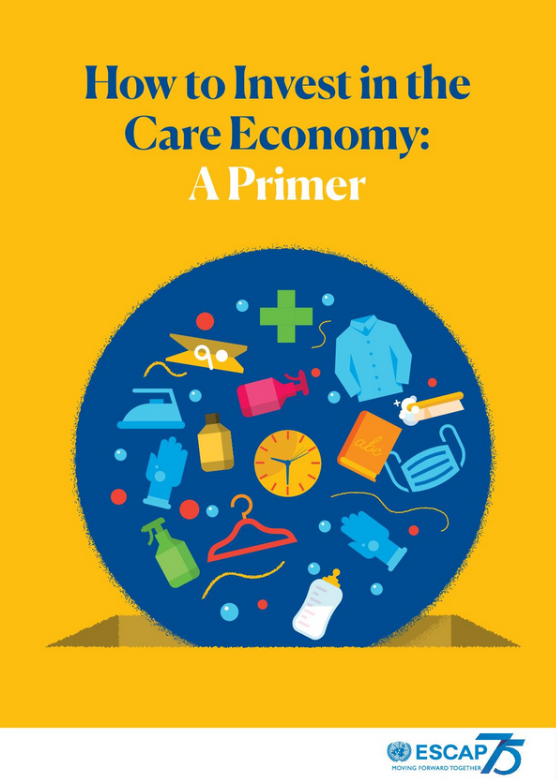
This primer is designed to support policymakers and government officials in their efforts to achieve Sustainable Development Goal 5 on gender equality and empowerment of women in their countries. It lays out the basic concepts relating to what is called…
Globally, unpaid care work is a key determinant of whether women enter and remain in the labour market, and of the type and quality of their employment. Care work is usually categorized into direct care (personally caring for an adult…
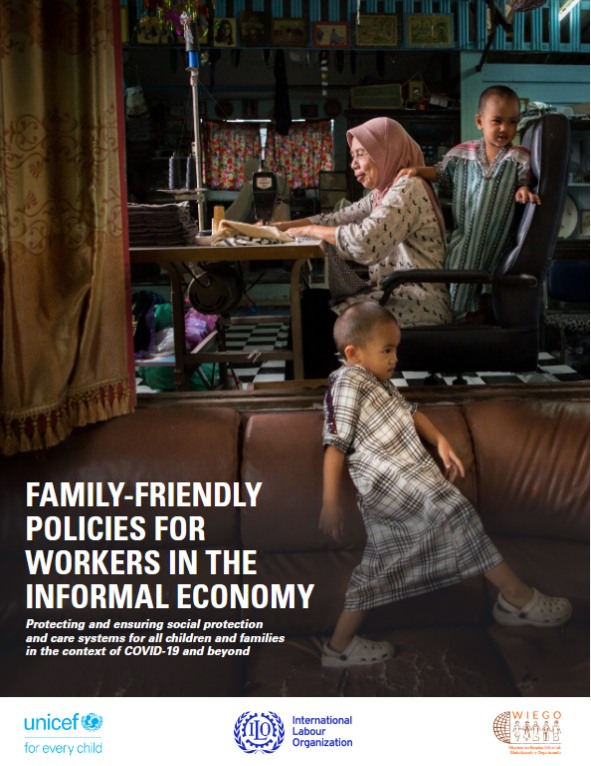
My name is Champa. I grew up in a village in Myanmar. When I was five years old my father died. I am the youngest of nine children, and as a daughter, I was the one who had to help…
It is tailored to actors who are just getting started in this field or hoping to learn more about the multiple, intersecting aspects of paid and unpaid care work.This toolkit builds on the original "Toolkit on recognizing, reducing and redistributing…
Child care is not just a social policy—it is an economic policy, too. Affordable, high-quality child care will grow our economy, allow more women to enter the workforce, and help give every Canadian child the best start in life.In Budget…
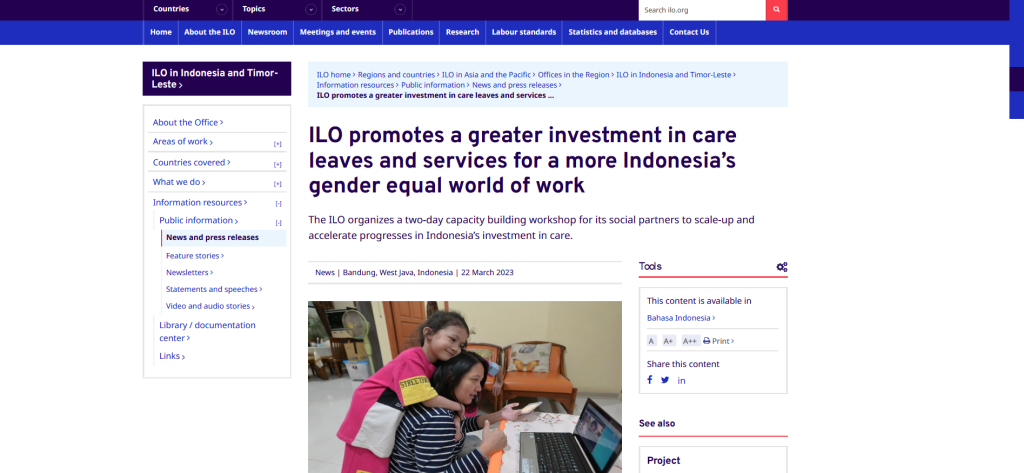
Following to a tripartite social dialogue on care economy held in early March, the ILO conducted a two-day capacity building workshop in Bandung, West Java, from 16-17 March. The workshop was targeted to representatives of relevant ministries, employers’ and workers’…
Effective and comprehensive care systems not only support fundamental rights and human dignity, they also help people maximise their potential and their contribution to economies and societies. However, gaps in care systems – which were exposed during the COVID-19 pandemic…
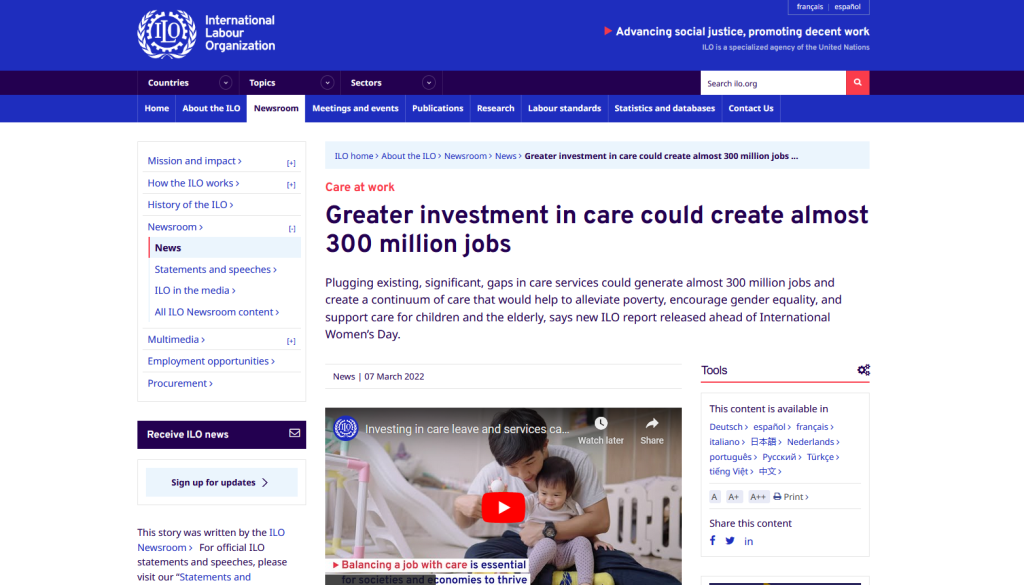
Plugging existing, significant, gaps in care services could generate almost 300 million jobs and create a continuum of care that would help to alleviate poverty, encourage gender equality, and support care for children and the elderly, says new ILO report…
This study examines the annual investment required for universal, collectively funded childcare and longterm care services, as well as adequate paid care leave and breastfeeding breaks to parents in 82 countries. Simulations of policy reforms show that extending paid leave…
The COVID-19 pandemic has exacerbated pre-existing gender inequalities in the labour market and the imbalance between women and men regarding housework and family responsibilities. The additional care demands on women’s time has forced many to quit paid work altogether, making…
1. In accordance with article 19 of the ILO Constitution, at its 334th Session in October–November 2018, the Governing Body decided that the General Survey to be prepared by theCommittee of Experts on the Application of Conventions and Recommendations (CEACR)…
While the Albanian population is ageing rapidly, Albania is facing an imminent challenge to ensure the access to affordable and quality long-term care services for all the elderly in need. Within the framework of the Joint UN Programme “Strategic policy…
The research considers the impacts of three policy interventions (universal free quality childcare, extended school days for school-age children, and universal elder care) to inform decision making by Mexico’s National Institute of Women (INMUJERES). The Levy Institute Measure of Time…