With your permission we measure how the site is used and show content from other services: Google Maps, YouTube, Spotify. Accept or reject all of it, or choose in your preferences. You can change this at any time from Privacy preferences at the foot of every page. Privacy policy
WISE-R consists of six modules and training guides that aims at promoting workplace productivity through the improvement of working conditions.WISE-R Module 5 on Family-friendly measures will help you:1. To understand family responsibilities and their link with your business and productivity;2.…
Business activities touch the lives of billions of working parents and children, both in a company’s own operations and global supply chains. The COVID-19 pandemic has thrown into sharp relief the need for comprehensive Government and business policies that protect…
Care work, both paid and unpaid, plays a central role in enabling all other work and economicproductivity to happen. The care economy is also expected to be the fastest-growing sectorof work in the world with predictions that it could add…
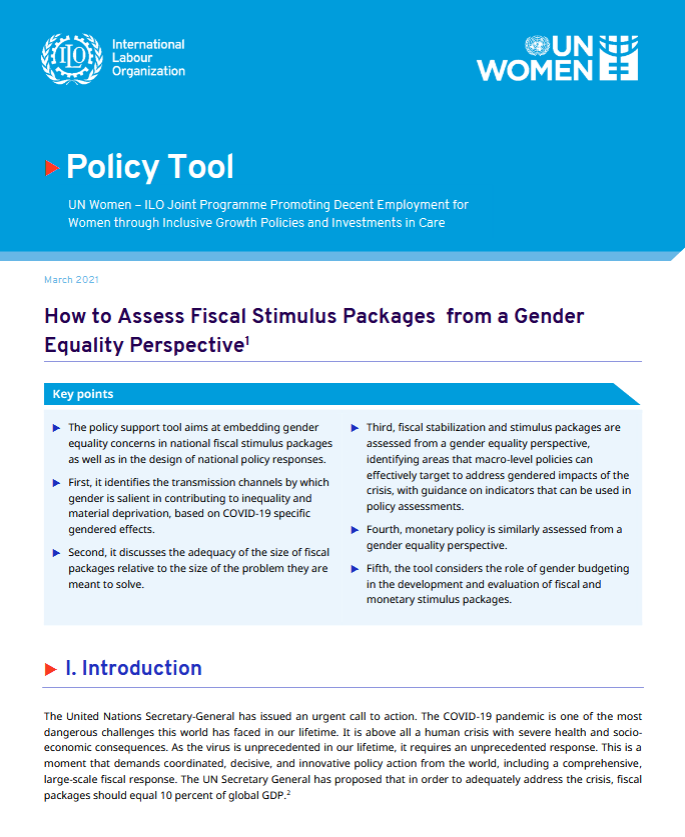
Key Points: - UN Women - ILO Policy Tool 1 How to Assess Fiscal Stimulus Packages from a Gender Equality Perspective.- Policy Tool March 2021 How to Assess Fiscal Stimulus Packages from a Gender Equality Perspective.- The policy support tool…
This study has been developed within the framework of the joint program Closing Gaps: Social Protection for Women in Mexico, created by the International Labor Organization (ILO) office for Mexico and Cuba, in close collaboration with the Secretary of Labor…
The Buenos Aires City's Statistics Bureau partnered with the Open Data Charter to build a Care Indicator System (CIS) to show how care supply and demand are distributed in Buenos Aires. Our objective was to provide the evidence needed for…
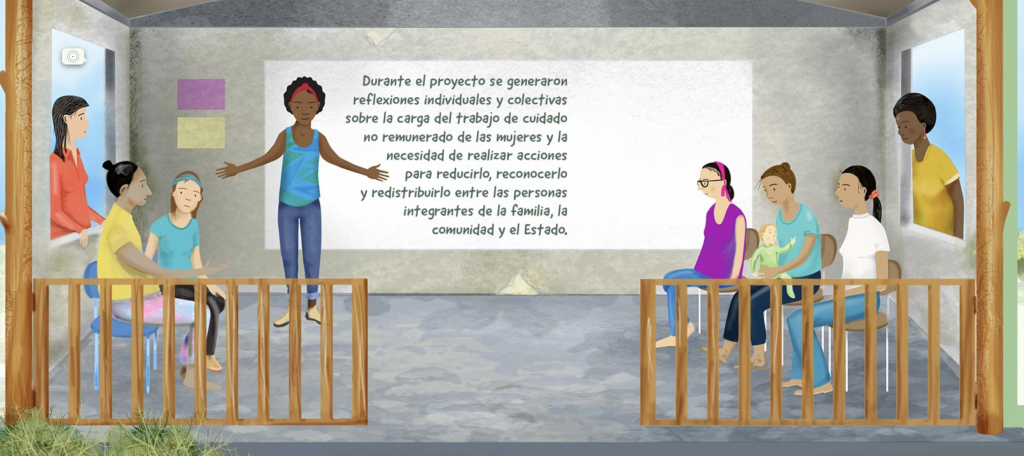
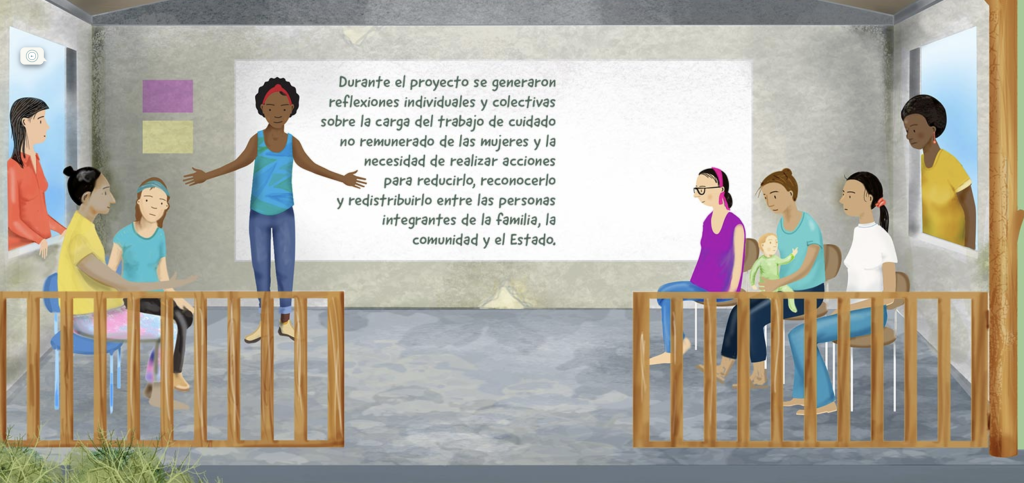
Recopilación de testimonios de mujeres hablando del cuidado como trabajo no remunerado desde la Ley de la Economía del Cuidado y las 3 R del cuidado: Reducción, redistribución y reconocimiento.
This audio brings together testimonies from women reflecting on the meaning of care as unpaid work and on the individual and collective implications of recognizing it.
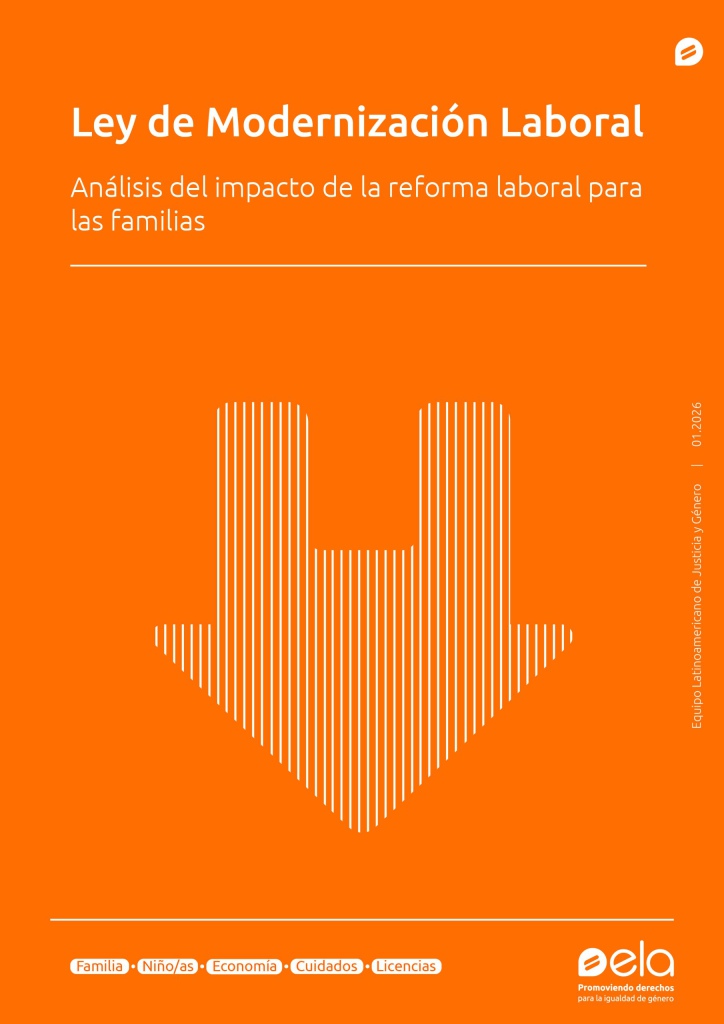
This document presents arguments and evidence on the main aspects of the Labour Modernisation Bill that, in its current form, are problematic. It examines how the proposal overlooks a key dimension for understanding the situation of Argentine families, particularly that…
Bahia Cuida (Bahia Cares Observatory) is a pioneering care observatory developed by Instituto Foz in partnership with local organizations to support the implementation of care policies in the state of Bahia, Brazil. The platform integrates and organizes data on care…
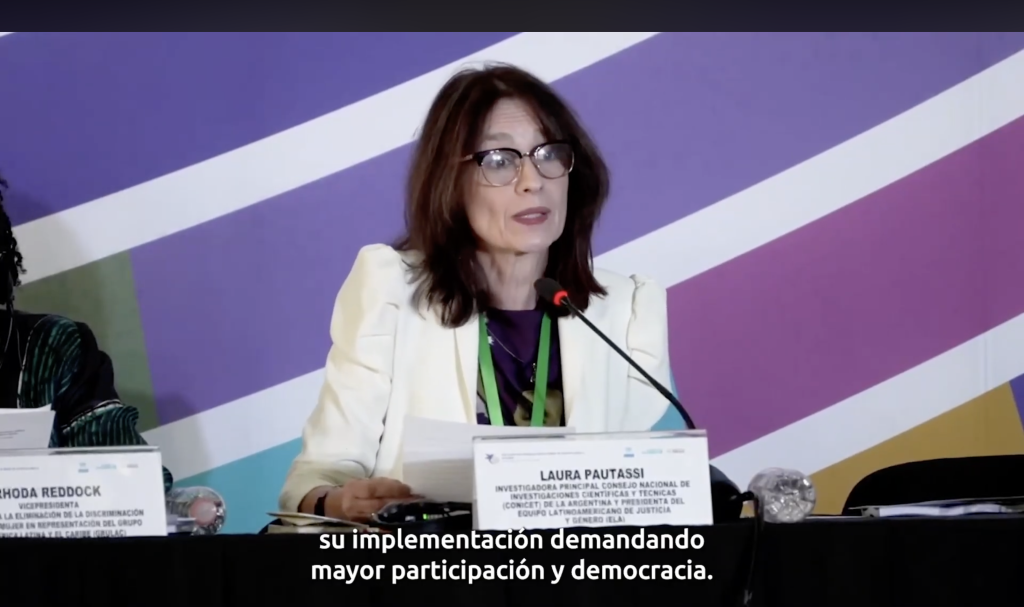
Laura Pautassi, President of ELA, participated in the opening of the XVI Regional Conference on Women in Latin America and the Caribbean, organised by ECLAC in Mexico City. In her remarks, she commented on the position document “The Care Society:…
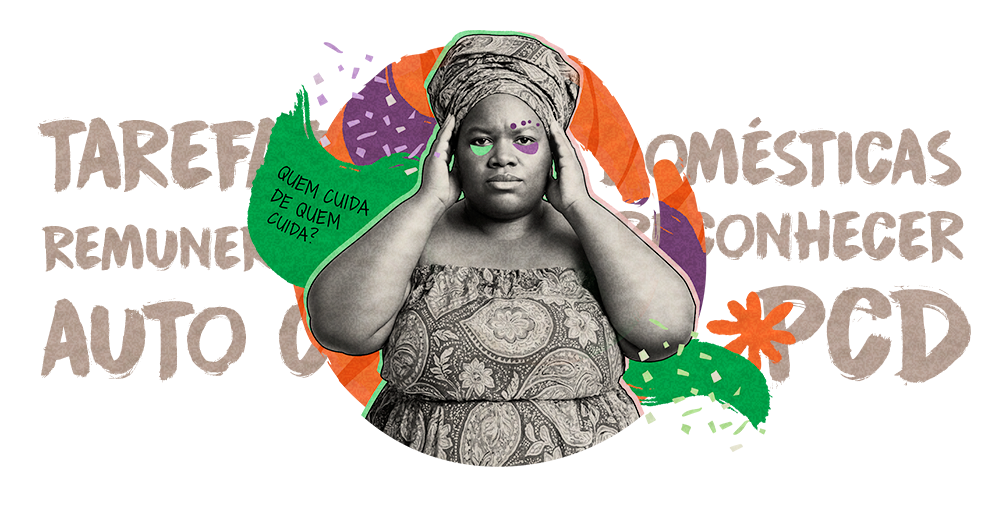
ELA presents a report that brings together the gender and disability agendas to examine how care and support for independent living are organised. The report moves beyond an assistentialist approach and calls for policies that recognise care and support as…
This brief calls for urgent action to integrate care work into climate adaptation policies, backed by the Four R Lens (Recognize, Reduce, Redistribute, Represent). Policy priorities include investment in clean energy and water systems, enforcement of environmental laws paired with…
The document argues that the right to care must be understood and applied from a human rights perspective, especially taking into account persons with disabilities. Although care has traditionally been addressed from an assistance-based perspective, it has not always incorporated…
From the moment we wake up until we go to bed, we carry out many essential tasks for ourselves and our families. From preparing meals and washing dishes to coordinating schedules, taking children or older adults to medical appointments, and…
Published by the T20 to inform the G20 in Brazil (2024), this policy brief, Rethinking the Care Economy and Promoting Gender Equality for All Ages by Reducing and Redistributing Unpaid Care and Domestic Work, outlines essential strategies for addressing unpaid…