With your permission we measure how the site is used and show content from other services: Google Maps, YouTube, Spotify. Accept or reject all of it, or choose in your preferences. You can change this at any time from Privacy preferences at the foot of every page. Privacy policy
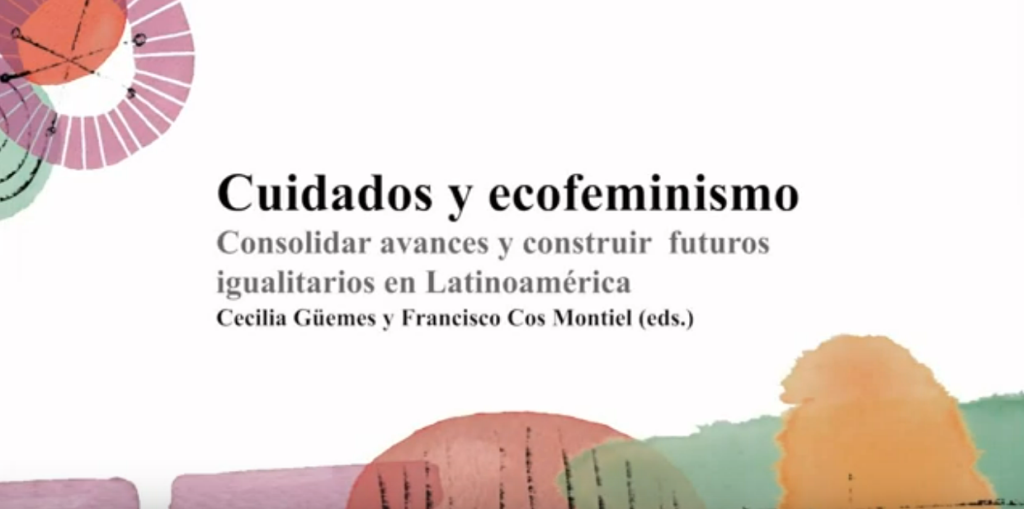
In 2021 the Carolina Foundation and UNRISD launched a polyphonic project focused on reflecting, in a situated and critical way, on some of the most pressing challenges of Latin American in relation to gender justice. After the Covid-19 pandemic, several…
The ILO, with the support of the Bill & Melinda Gates Foundation, has developed the Care Policy Investment Simulator, the largest online care policy modelling tool that once launched will be available for the general public. Containing data from more…
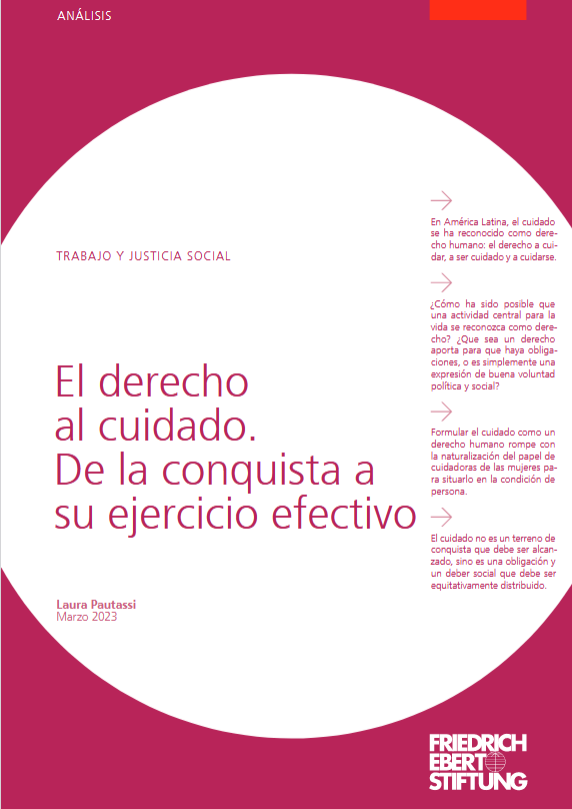
This document introduces the theoretical arguments thathave led to recognizing care as a human right and thesocial and political mobilization underpinning its imple-mentation. The Starting Point summarizes the main ele-ments that have contributed to problematizing the sexualdivision of labor and…
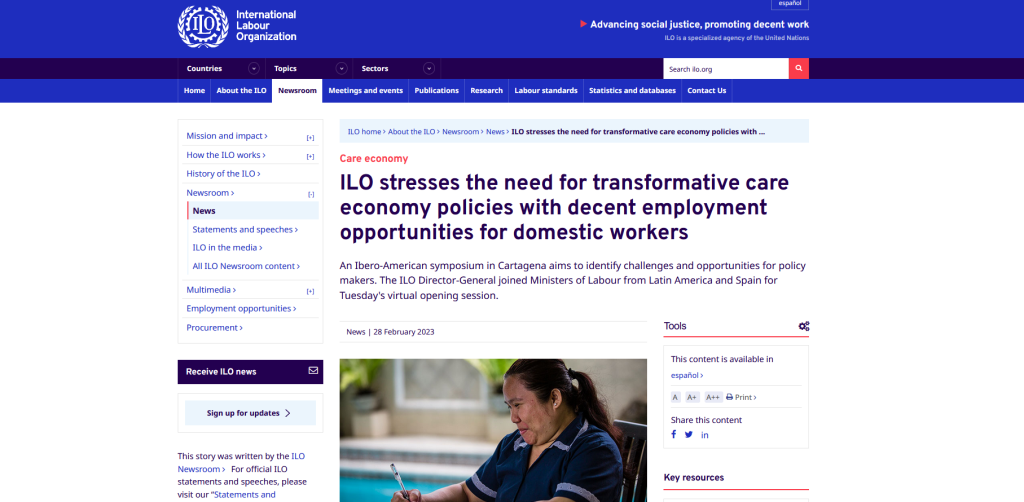
An Ibero-American symposium in Cartagena aims to identify challenges and opportunities for policy makers. The ILO Director-General joined Ministers of Labour from Latin America and Spain for Tuesday's virtual opening session.
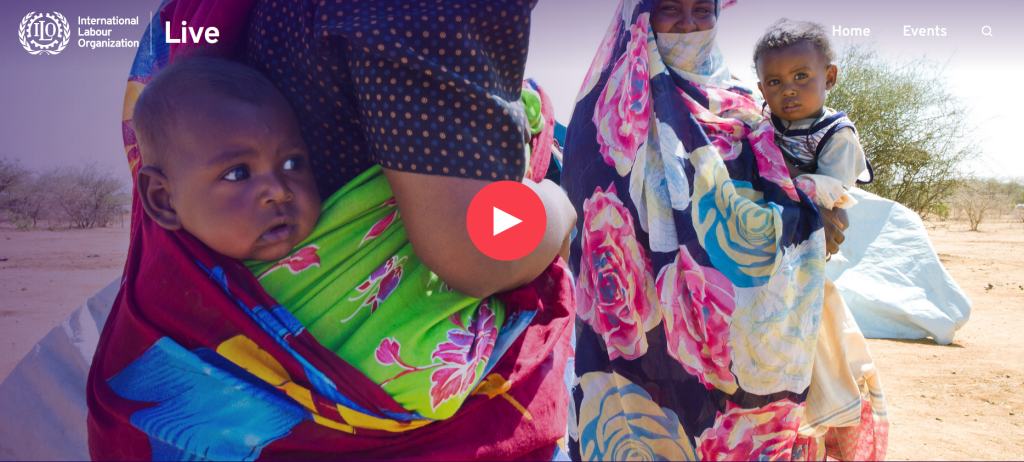
The talkshow discusses about the care economy and a great involvement of women in the care economy. It is growing as the demand for childcare and care for the elderly is increasing in all regions. It will thus create a…
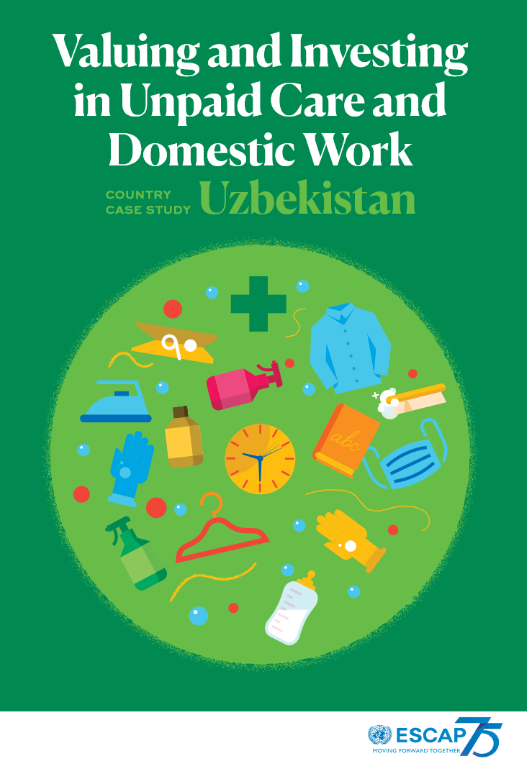
This case study on Uzbekistan enhances ESCAP technical and advisory assistance to its member States, in particular aligning with the region’s efforts to bring care to the centre of public policy. The study aims to draw great attention and resources…
We talked to Fernanda Manuel, the Sustainability, Diversity, and Inclusion Manager at Arredo and coordinator of the "Cuidar Cuidando Cuidando" Program.
General Survey on the Discrimination (Employment and Occupation) Convention, 1958 (No. 111), the Workers with Family Responsibilities Convention, 1981 (No. 156), the Maternity Protection Convention, 2000 (No. 183), the Discrimination (Employment and Occupation) Recommendation, 1958 (No. 111), the Workers with…
In this toolkit you will find some helpful recommendations and tools that can be used flexibly by anyone who wants to talk more effectively about the value of all care, paid and unpaid, to the UK general public.
This is a study on the public provision of childcare across 48 economies in Asia and the Pacific through the lens of accessibility, affordability, quality, and decent work for childcare workers. Based on its findings the study offers recommendations for…
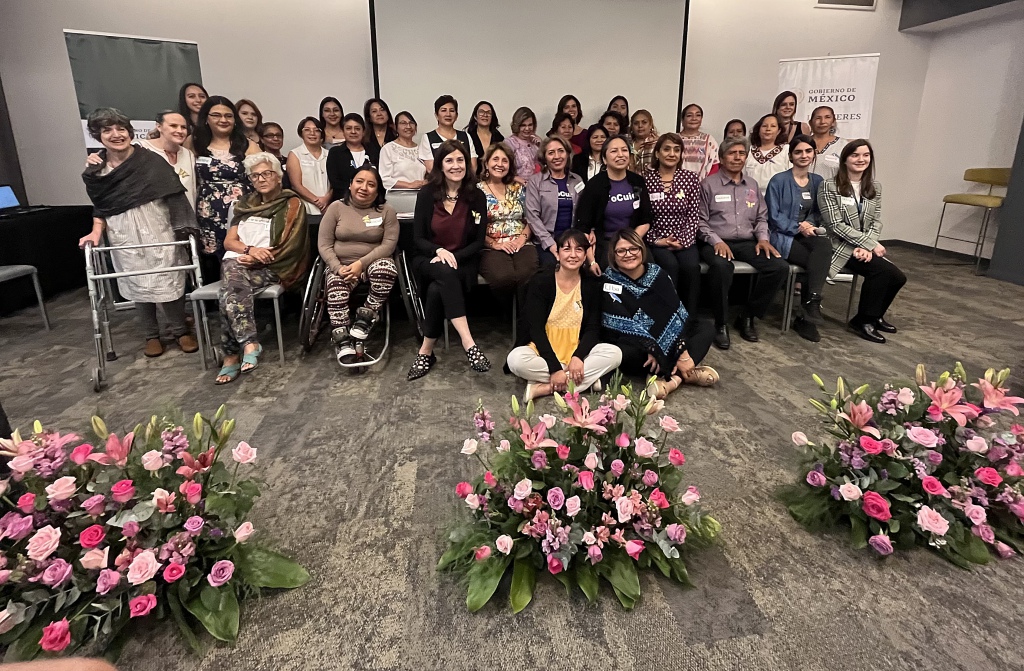
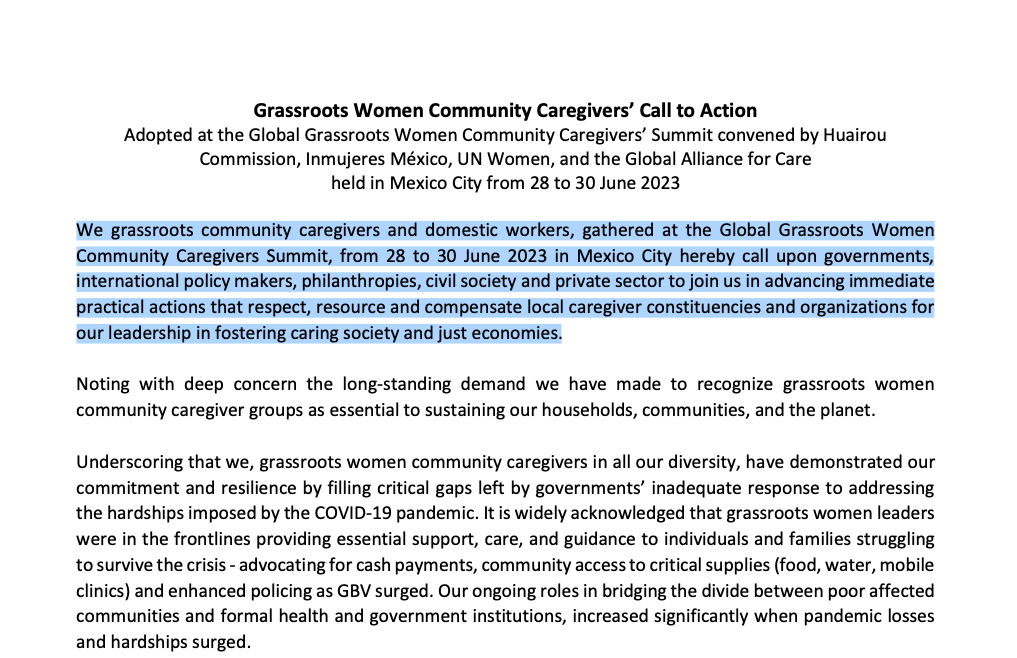
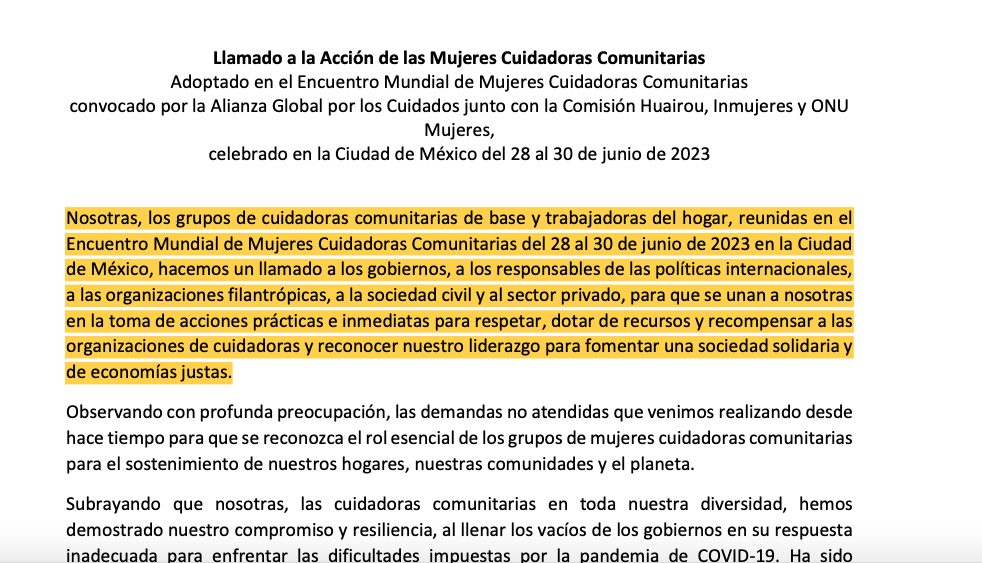
We grassroots community caregivers and domestic workers, gathered at the Global Grassroots Women Community Caregivers Summit, from 28 to 30 June 2023 in Mexico City hereby call upon governments, international policy makers, philanthropies, civil society and private sector to join…
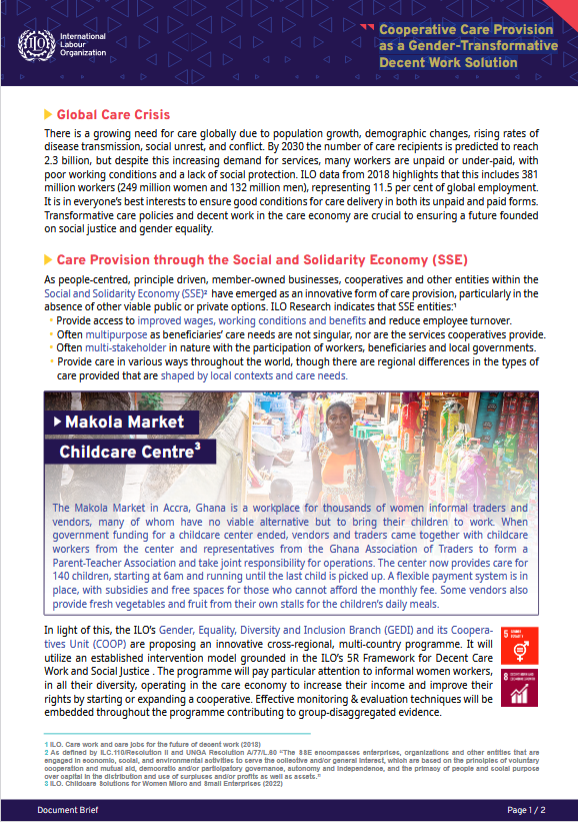
There is a growing need for care globally due to population growth, demographic changes, rising rates of disease transmission, social unrest, and conflict. By 2030 the number of care recipients is predicted to reach 2.3 billion, but despite this increasing…
We grassroots community caregivers and domestic workers, gathered at the Global Grassroots Women Community Caregivers Summit, from 28 to 30 June 2023 in Mexico City hereby call upon governments, international policy makers, philanthropies, civil society and private sector to join…
This Technical Note provides guidance on how to use the online ILO Care Policy Investment Simulator by explaining the underlying methodology, calculations and results. The Simulator helps build tailor-made care policy investment packages to fill national gaps on care leave…
The transformation of societies and economies towards paradigms centred on interdependence, care, and sustainability is urgently needed. In this context, this working paper sheds light on emerging efforts to address women’s and girls’ unpaid care, domestic, and communal work in…
This policy brief examines the low rate of female labour force participation in Asia and the Pacific and its correlation with persistent inequalities in the distribution of care responsibilities between men and women as well as the society and the…