With your permission we measure how the site is used and show content from other services: Google Maps, YouTube, Spotify. Accept or reject all of it, or choose in your preferences. You can change this at any time from Privacy preferences at the foot of every page. Privacy policy
Halfway through the 2030 Agenda for Sustainable Development, the world is failing to achieve gender equality, making it an increasingly distant goal. The latest available data show that, despite the strong rhetoric, none of the United Nations’ Sustainable Development Goal…
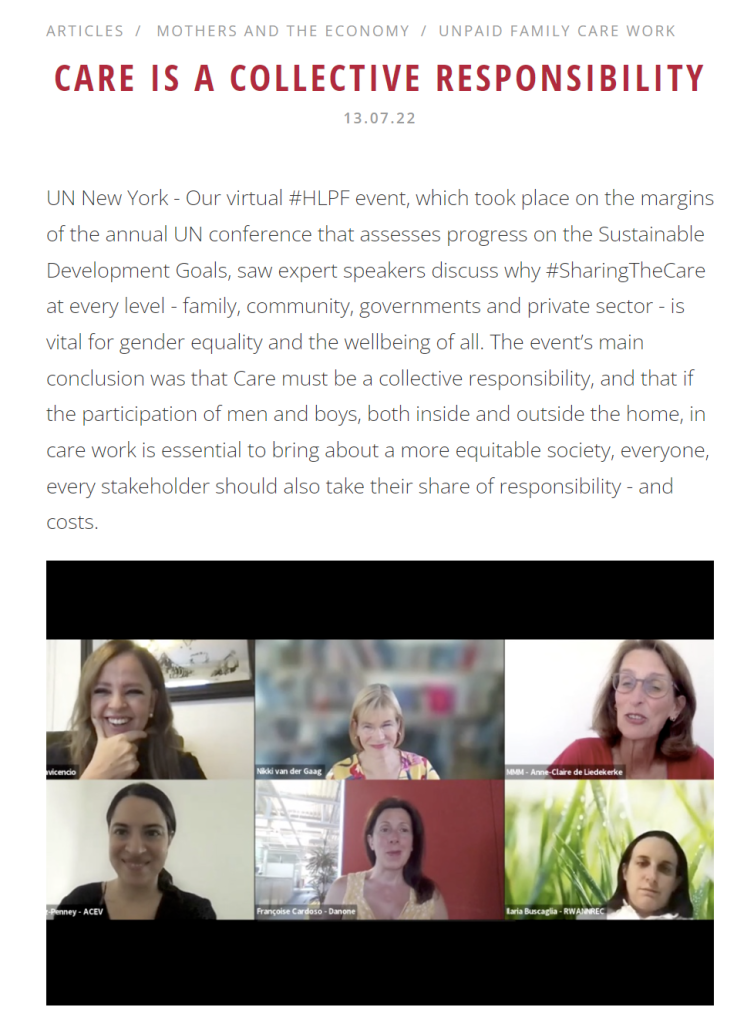
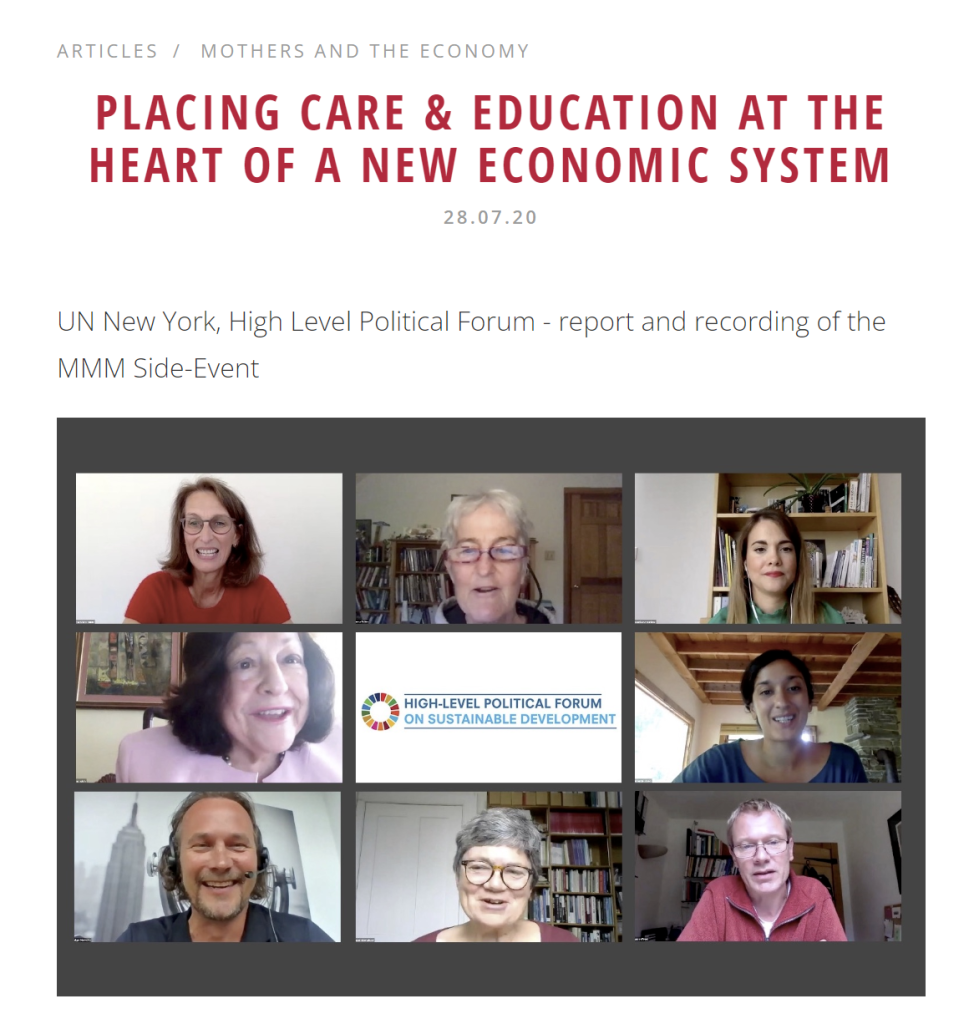
This virtual HLPF side-event saw expert speakers discuss why #SharingTheCare at every level - family, community, governments and private sector - is vital for gender equality and the wellbeing of all. The event’s main conclusion was that Care must be…
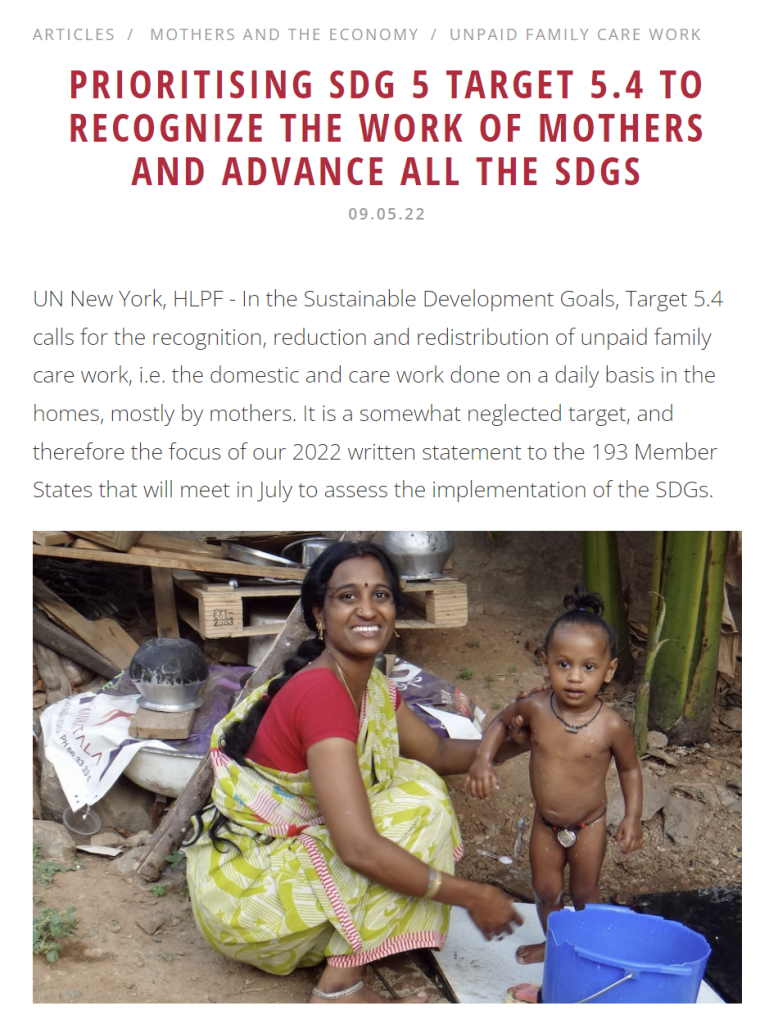
In the Sustainable Development Goals, Target 5.4 calls for the recognition, reduction and redistribution of unpaid family care work, i.e. the domestic and care work done on a daily basis in the homes, mostly by mothers. It is a somewhat…
The Covid-19 crisis caused waves of sickness,mental and physical exhaustion and deathfor essential workers in care homes, grocerystores, warehouses and distribution centres. Inresponse to the pandemic—and the long-standingproblems it exacerbated—trade unions developedsuccessful strategies and tactics for buildingunion power by organizing…
Effective and comprehensive care systems not only support fundamental rights and human dignity, they also help people maximise their potential and their contribution to economies and societies. However, gaps in care systems – which were exposed during the COVID-19 pandemic…
In 2013, an international definition of “work” was agreed upon for the first time as a reference concept to support measurement. Importantly for gender equality, the definition recognizes all paid and unpaid forms of work on an equal footing. This…
On 14 July 2021, MMM organized a virtual HLPF side-event on ‘Changing narratives about unpaid care work and the economy‘ to discuss how changing the way unpaid care work is perceived and socially and economically valued is a first and…
The video shows the business case for work-life balance and how enterprises can take concrete action to promote the equal sharing of care responsibilities.
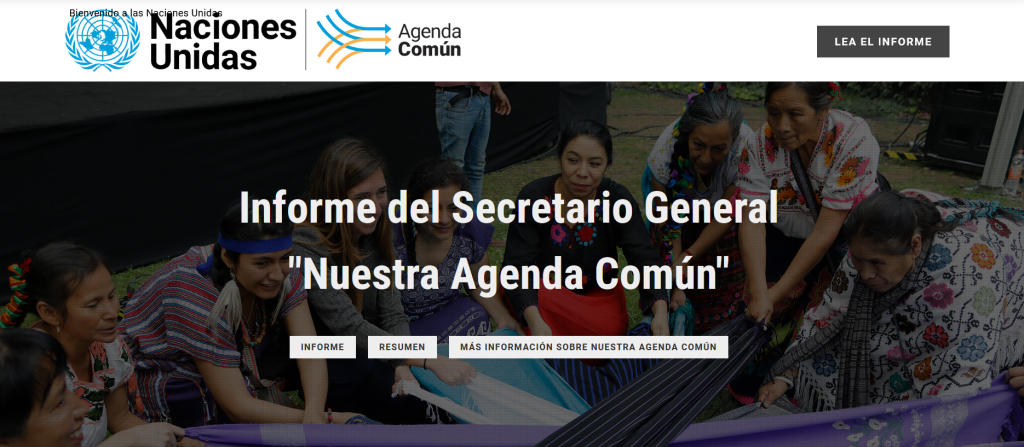
We are at an inflection point in history. The COVID-19 pandemic has served as a wake-up call and with the climate crisis now looming, the world is experiencing its biggest shared test since the Second World War.Humanity faces a stark…
This policy support tool was developed in the framework of the UN Women and International Labour Organization (ILO) Joint Programme titled “Promoting Decent Employment for Women through Inclusive Growth Policies and Investments in the Care Economy” and as part of…
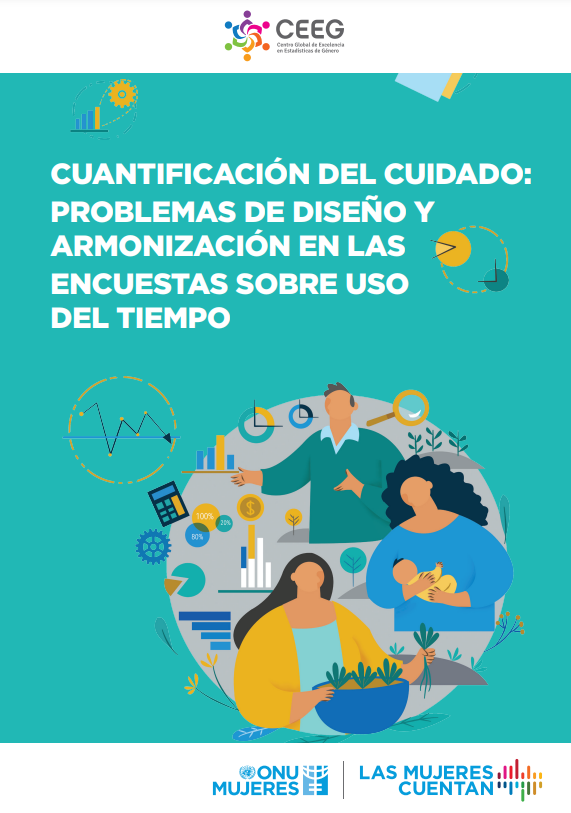
Estimates of the amount of unpaid care work performed by women and men now garner international attention, but while analysis of existing surveys has yielded important insights, it has also revealed significant limitations. Because unpaid care work has not traditionally…
The General Conference of the International Labour Organization, Having received the proposal made by the Conference Committee on the Response to COVID-19, Considering the urgent need for action to ensure a human-centred recovery from the COVID-19 crisis that is inclusive,…
On 16 July 2020, MMM organized a webinar on ‘Care and education – Cornerstones of just and sustainable economies’ to discuss the economics of care and education. This HLPF side-event aimed at contributing to the current discussions on ‘building back…
The International Labour Conference, meeting in Geneva at its OneHundred and Eighth Session on the occasion of the Centenary of theInternational Labour Organization (ILO)
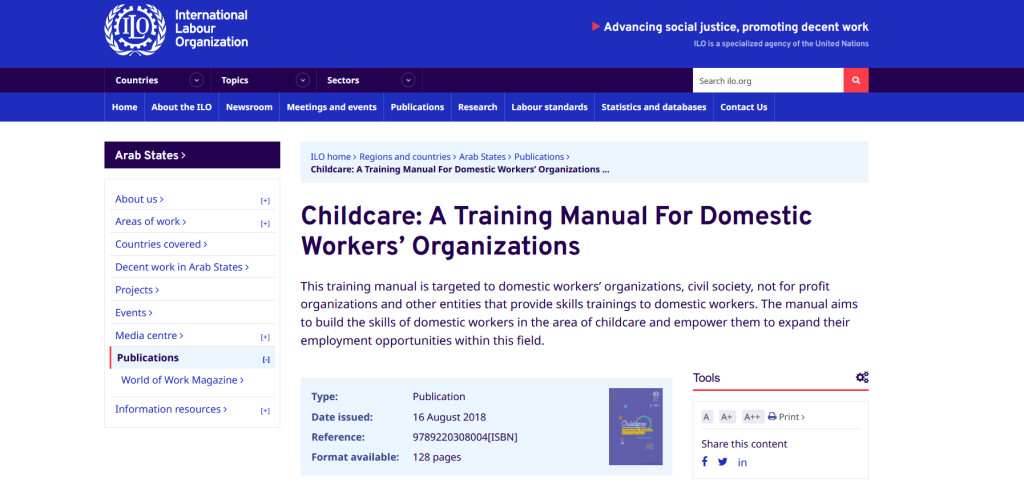
This training manual is targeted to domestic workers’ organizations, civil society, not for profit organizations and other entities that provide skills trainings to domestic workers. The manual aims to build the skills of domestic workers in the area of childcare…
J-PAL’s research resource, A Practical Guide to Measuring Women’s and Girls’ Empowerment in Impact Evaluations, gathers insights from the experiences of J-PAL affiliated researchers around the world and offers practical tips for how to measure women's and girls’ empowerment in…
The impact of human activities on our planet's natural systems has been intensifying rapidly in the past several decades, leading to disruption and transformation of most natural systems. These disruptions in the atmosphere, oceans, and across the terrestrial land surface…