With your permission we measure how the site is used and show content from other services: Google Maps, YouTube, Spotify. Accept or reject all of it, or choose in your preferences. You can change this at any time from Privacy preferences at the foot of every page. Privacy policy
Within the framework of the Generation Equality Forum in 2021, the Government of Mexico, through the National Institute of Women (INMUJERES) with the support of UN Women, launched the Global Alliance for Care, as a collective commitment, through which there…
With the acceleration of population ageing, healthy ageing is becoming an imperative for all. Social protection systems have an important role to play in this endeavour. Through a life cycle approach, social protection systems can support i) the prevention of…
In July 2022, the “Experience exchange workshop on the design, approval and implementation of National Care Systems and/or national care policies” was held by the Global Alliance for Care, in collaboration with the Government of Mexico, through the National Institute…
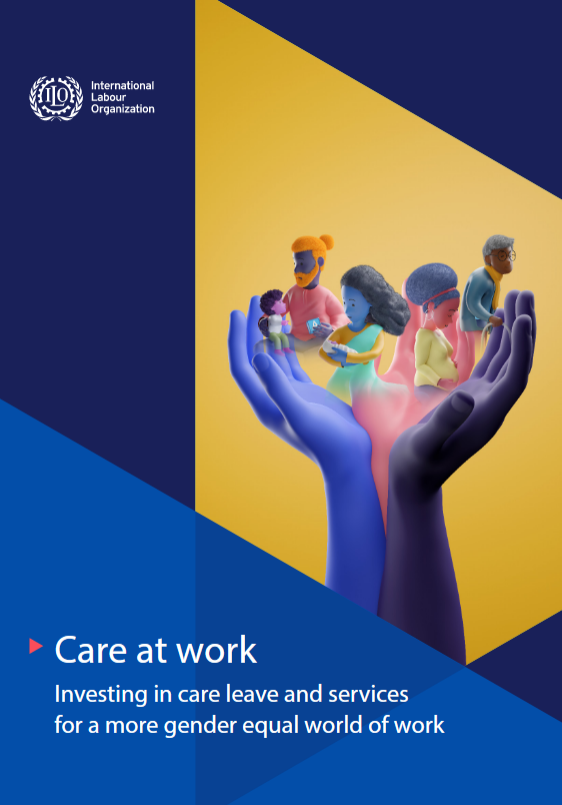
This study examines the annual investment required for universal, collectively funded childcare and longterm care services, as well as adequate paid care leave and breastfeeding breaks to parents in 82 countries. Simulations of policy reforms show that extending paid leave…
The COVID-19 pandemic has exacerbated pre-existing gender inequalities in the labour market and the imbalance between women and men regarding housework and family responsibilities. The additional care demands on women’s time has forced many to quit paid work altogether, making…
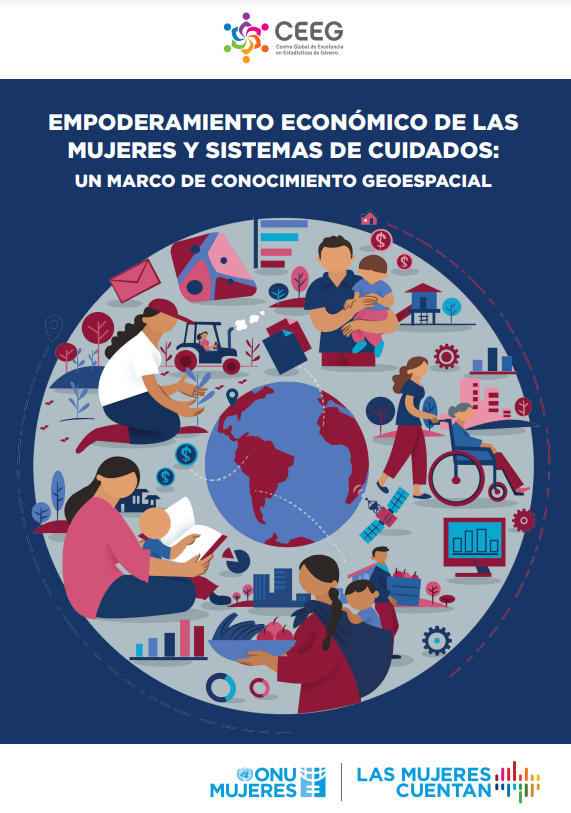
Studies on women's economic empowerment have received increasing attention in recent years, identifying the factors that limit and enable it, among which care systems are a key factor, because they have an impact on the reduction and redistribution of women's…
NoFM RADIO, Friedrich Ebert Foundation in Mexico and Alta-Voz Social y Cultural present: Ojalá tuviera un hijo como tú. Podcast about dignified care, co-responsibility in care work and the need to legislate around a National Care System.
This guidance aims to provide implementing partners with a better understanding of the Government of Canada's approach to addressing unpaid and paid care work through international assistance, particularly with regard to developing care programming anchored in a feminist approach. It…
This guidance aims to provide implementing partners with a better understanding of the Government of Canada's approach to addressing unpaid and paid care work through international assistance, particularly with regard to developing care programming anchored in a feminist approach. It…
This report describes the state of the unpaid care economy in ASEAN countries. By examining the socioeconomic, political, legislative and institutional conditions in each country of ASEAN, this report highlights examples of promising policy measures undertaken either prior to the…
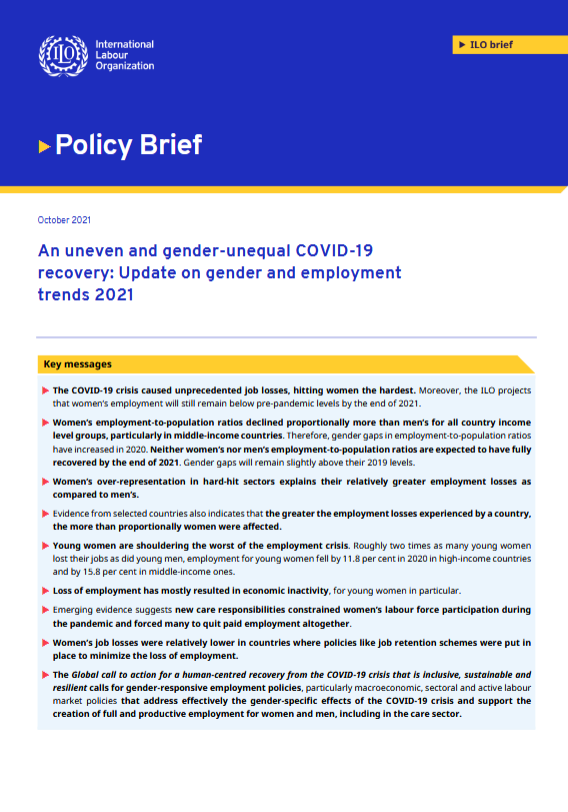
Key Messages - The COVID-19 crisis caused unprecedented job losses, hitting women the hardest. Moreover, the ILO projects that women’s employment will still remain below pre-pandemic levels by the end of 2021.- Women’s employment-to-population ratios declined proportionally more than men’s…
The Road to Reproductive Justice: A Decade of Progress and Pending Issues seeks to show the most outstanding advances of this period, as well as the barriers that remain and that must be addressed by the Mexican State in order…
On 14 July 2021, MMM organized a virtual HLPF side-event on ‘Changing narratives about unpaid care work and the economy‘ to discuss how changing the way unpaid care work is perceived and socially and economically valued is a first and…
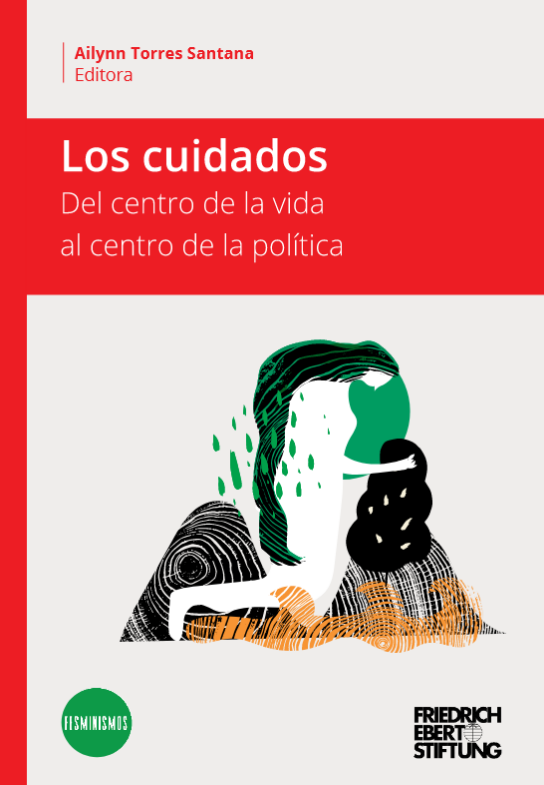
The regional project FESminismos - The Future is Feminist of the Friedrich Ebert Foundation (FES) is an initiative that seeks to strengthen feminist voices and activism in Latin America and the Caribbean through meetings and exchanges, to link and articulate…
The video shows the business case for work-life balance and how enterprises can take concrete action to promote the equal sharing of care responsibilities.
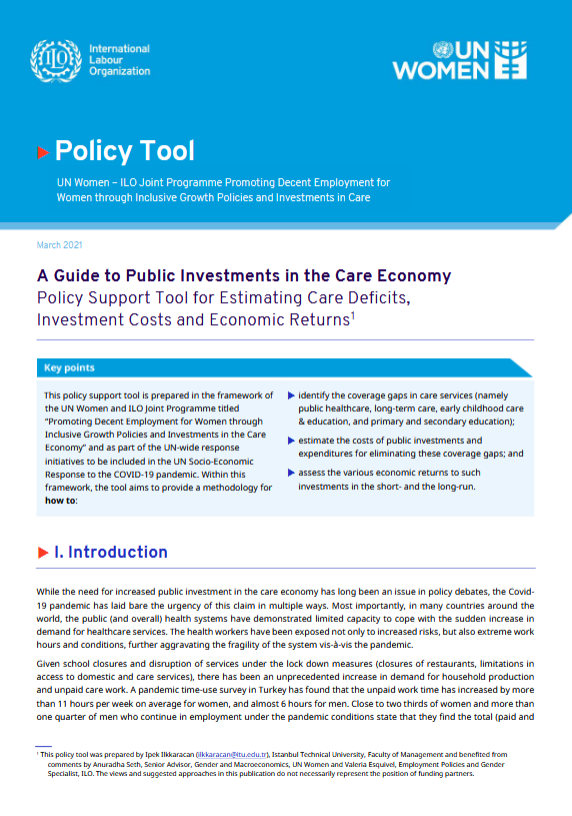
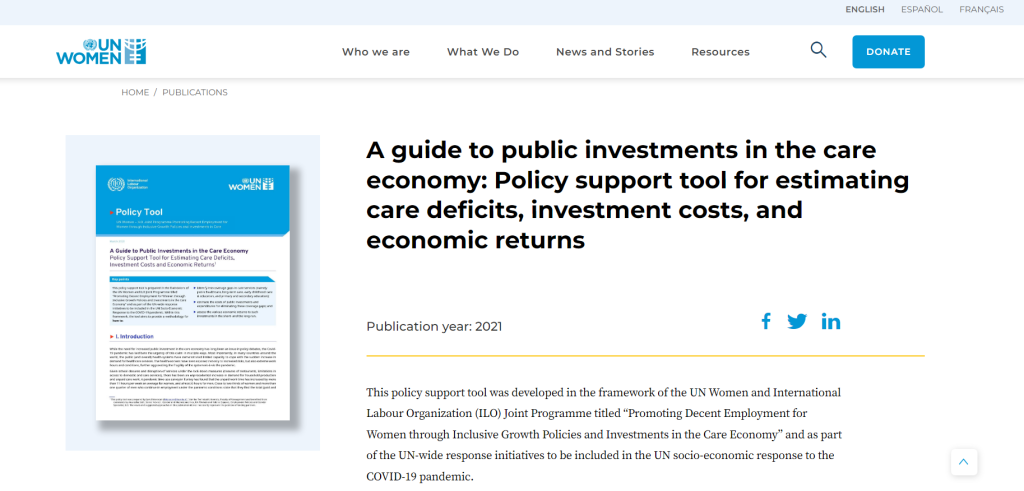
Key points: - UN Women – ILO Policy Tool 1 A Guide to Public Investments in the Care Economy.- Policy Tool March 2021 A Guide to Public Investments in the Care Economy.- Policy Support Tool for Estimating Care Deficits, Investment…
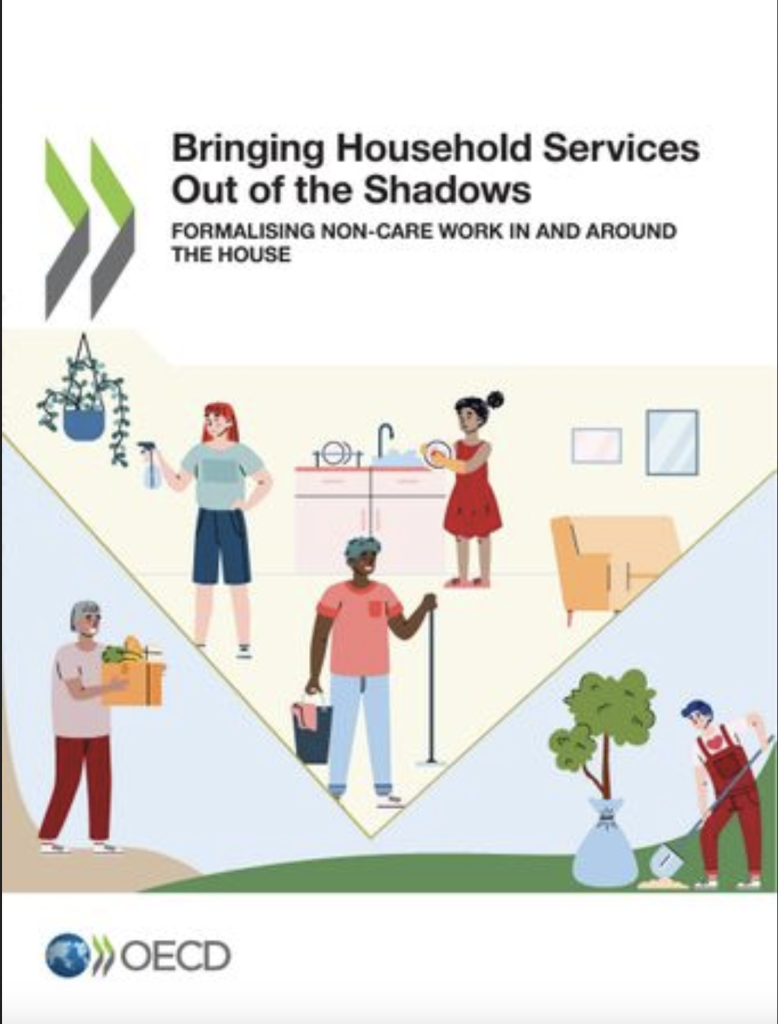
Despite years of growth in the number of women in paid work, gender roles in unpaid housework have remained remarkably rigid. Unpaid housework can be outsourced to non-care household service providers, such as cleaners or housekeepers, however, high prices, a…
This policy support tool was developed in the framework of the UN Women and International Labour Organization (ILO) Joint Programme titled “Promoting Decent Employment for Women through Inclusive Growth Policies and Investments in the Care Economy” and as part of…
This document has been conceived to serve as a guiding framework for those involved in the development of comprehensive national care systems. It addresses key questions about why to invest in care, its importance and benefits for the advancement of…