With your permission we measure how the site is used and show content from other services: Google Maps, YouTube, Spotify. Accept or reject all of it, or choose in your preferences. You can change this at any time from Privacy preferences at the foot of every page. Privacy policy
We talked to Martín Oliva, sociologist specialized in masculinities, paternity and care. He shares his perspective with us as he pursues a doctoral fellowship at CONICET, where he is dedicated to researching the tense relationship between the world of paid…
This paper presents the different theoretical arguments that have led to the recognition of care as a human right and the social and political mobilization that sustains its realization. The starting point summarizes the main elements that have contributed to…
The commitments made over the last 45 years have led to the development of a robust Regional Gender Agenda in which women’s rights and gender equality are recognized as central and cross-cutting elements of all State action geared toward strengthening…
An inclusive, participatory and egalitarian society will only be achieved if the policies to promote it synergistically andcreatively relate the transformative realities and potentialities of ICTs and technological change with other resources essential to achieving social, climate and gender justice.…
We talked to Fernanda Manuel, the Sustainability, Diversity, and Inclusion Manager at Arredo and coordinator of the "Cuidar Cuidando Cuidando" Program.
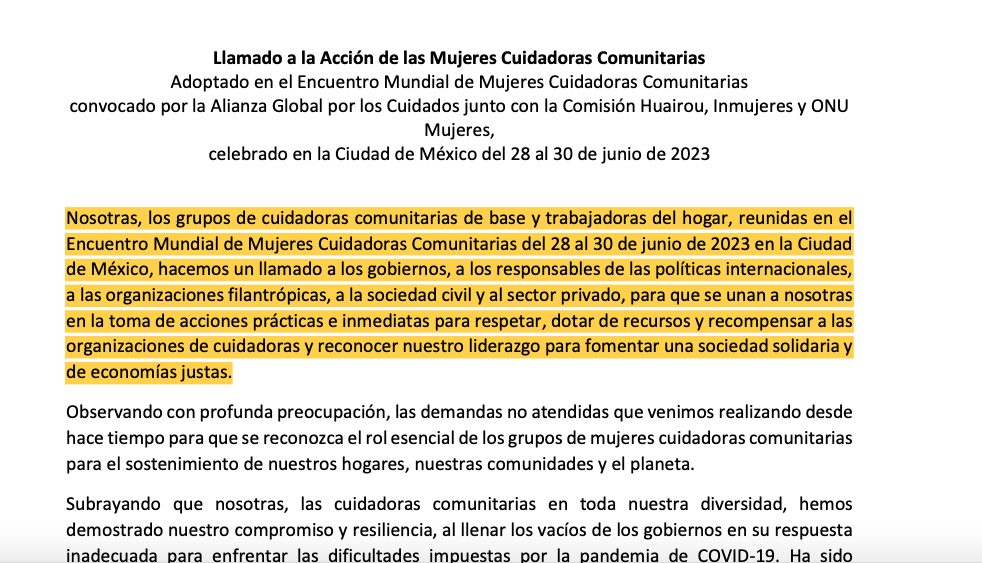
We grassroots community caregivers and domestic workers, gathered at the Global Grassroots Women Community Caregivers Summit, from 28 to 30 June 2023 in Mexico City hereby call upon governments, international policy makers, philanthropies, civil society and private sector to join…
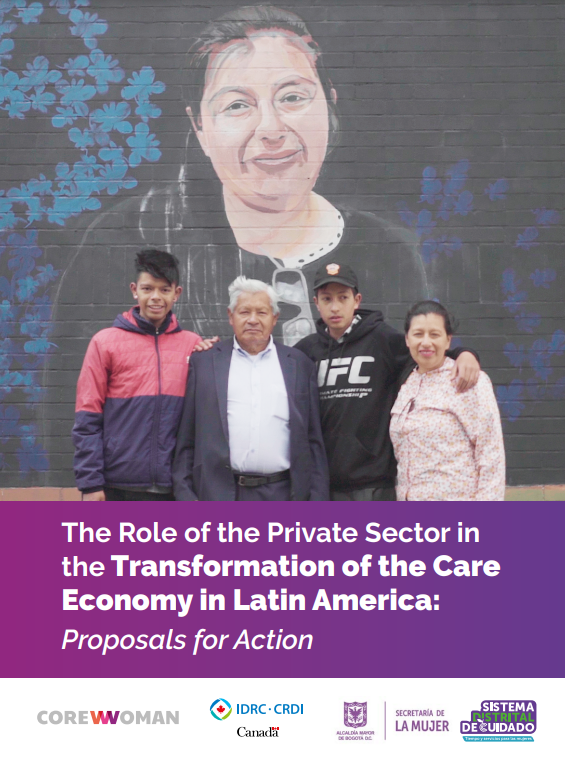
This document provides a research and systematization of various experiences in childcare centers for children aged 45 days to 5 years in companies, consortiums of companies, chambers of interest, and other private sector organizations, both nationally and regionally. It presents…
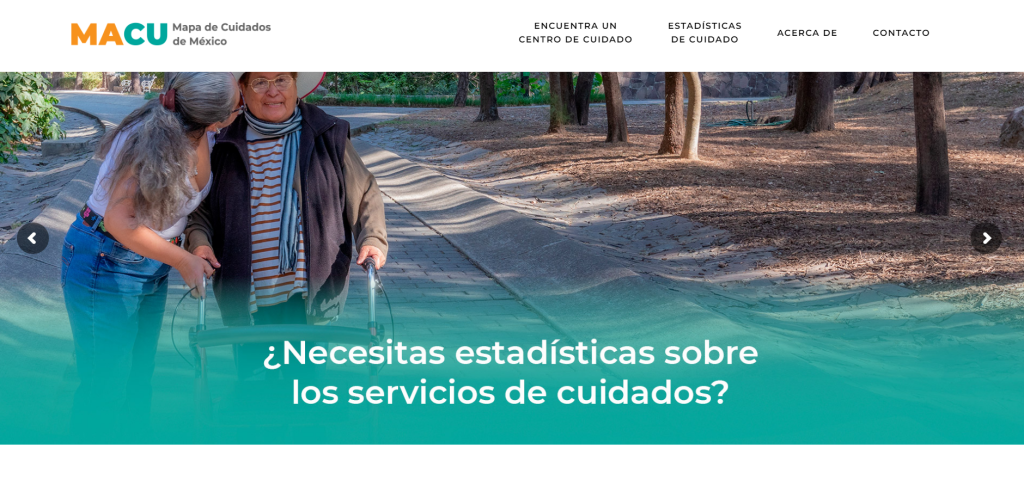
The Care Map of Mexico is an interactive tool that allows two types of consultations. First, for people looking for care facilities (childcare centers, day care centers, schools, among others), the platform offers information on the location of public, private…
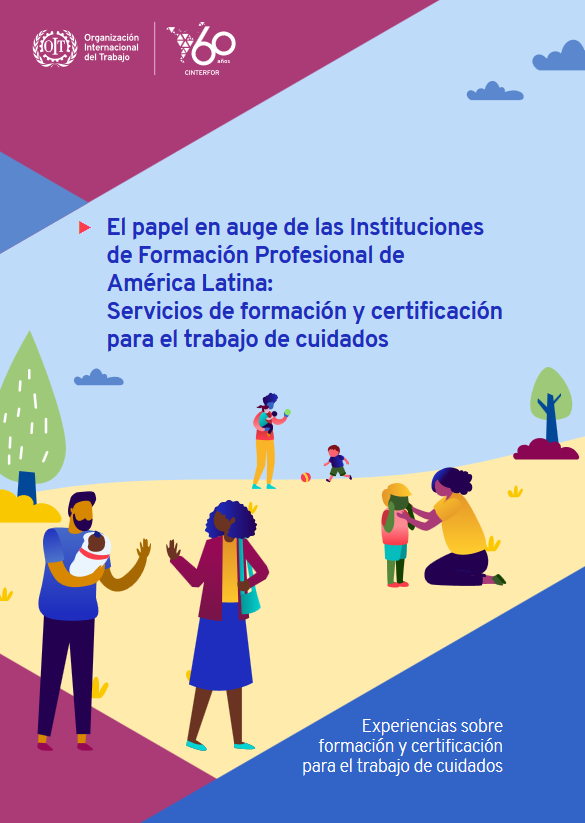
Every quality management and regulation system for the care of dependent persons defines criteria relating to the professional training of caregivers: content of training curricula, minimum qualification levels for access to certain occupations, duration of programs and hours of practice,…
Halfway through the 2030 Agenda for Sustainable Development, the world is failing to achieve gender equality, making it an increasingly distant goal. The latest available data show that, despite the strong rhetoric, none of the United Nations’ Sustainable Development Goal…
This guide seeks to reclaim ancestral self-care practices and place women’s self-care at the heart of political debate, fostering healing-centered leadership among women leaders and human rights defenders and promoting sustainable activism.
In the context of the reviews and evaluations of the implementation of the Madrid implementation of the Madrid International Plan of Action on Ageing in Latin American and In the context of the reviews and evaluations of the implementation of…
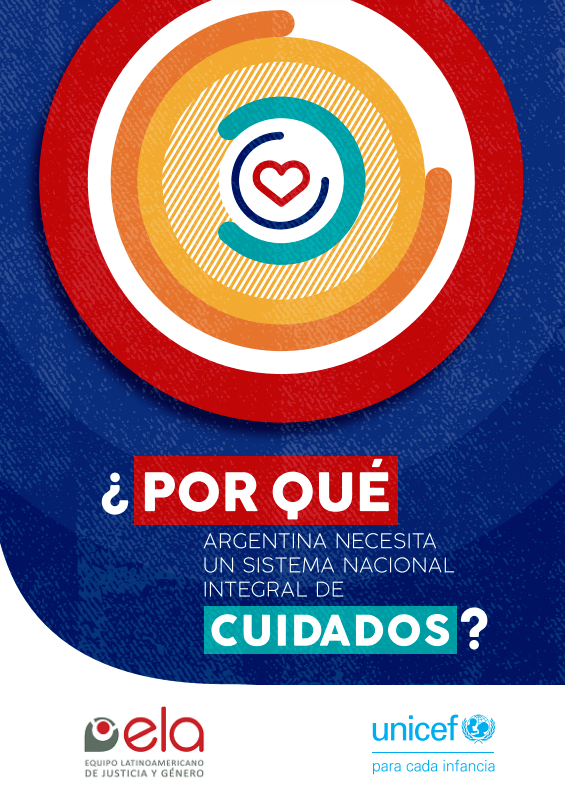
In this document, we present 9 reasons why the creation of a comprehensive care system is essential for the development of Argentina. Care consists of a set of routine activities that provide physical, psychological, and emotional well-being to individuals and…
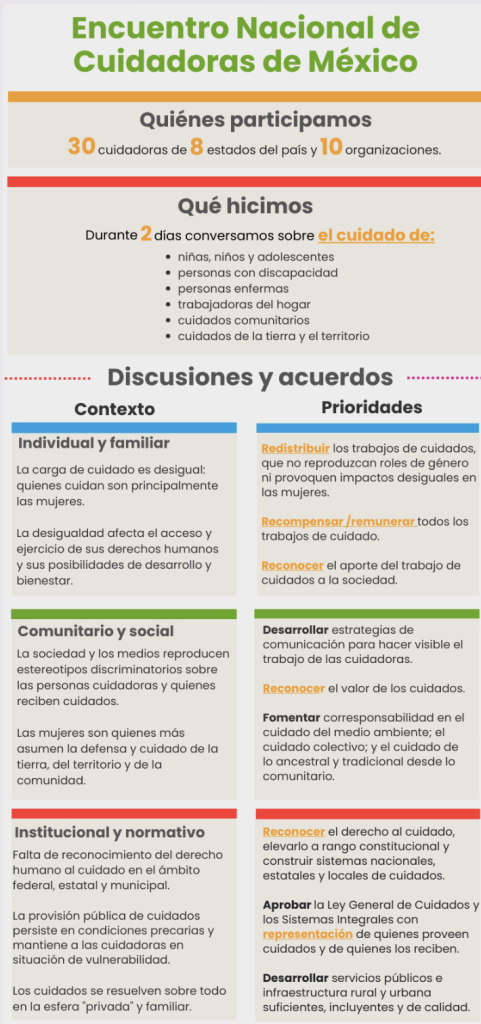
On June 26 and 27, 2023, under the support of the National Institute of Women (IN MUJERES), UN Women and the Global Alliance for Care (AGC) and with the collaboration of the Civic Collaboration Center (CCC), the National Meeting of…
This report offers a qualitative analysis of the reform introduced by the Buenos Aires city government in its leave scheme (public employment) in 2018, based on the experiences of government workers.
On June 26 and 27, 2023, under the support of the National Institute for Women (INMUJERES), UN Women and the Global Alliance for Care (GAC) and with the collaboration of the Civic Collaboration Center (CCC), the National Meeting of Women…
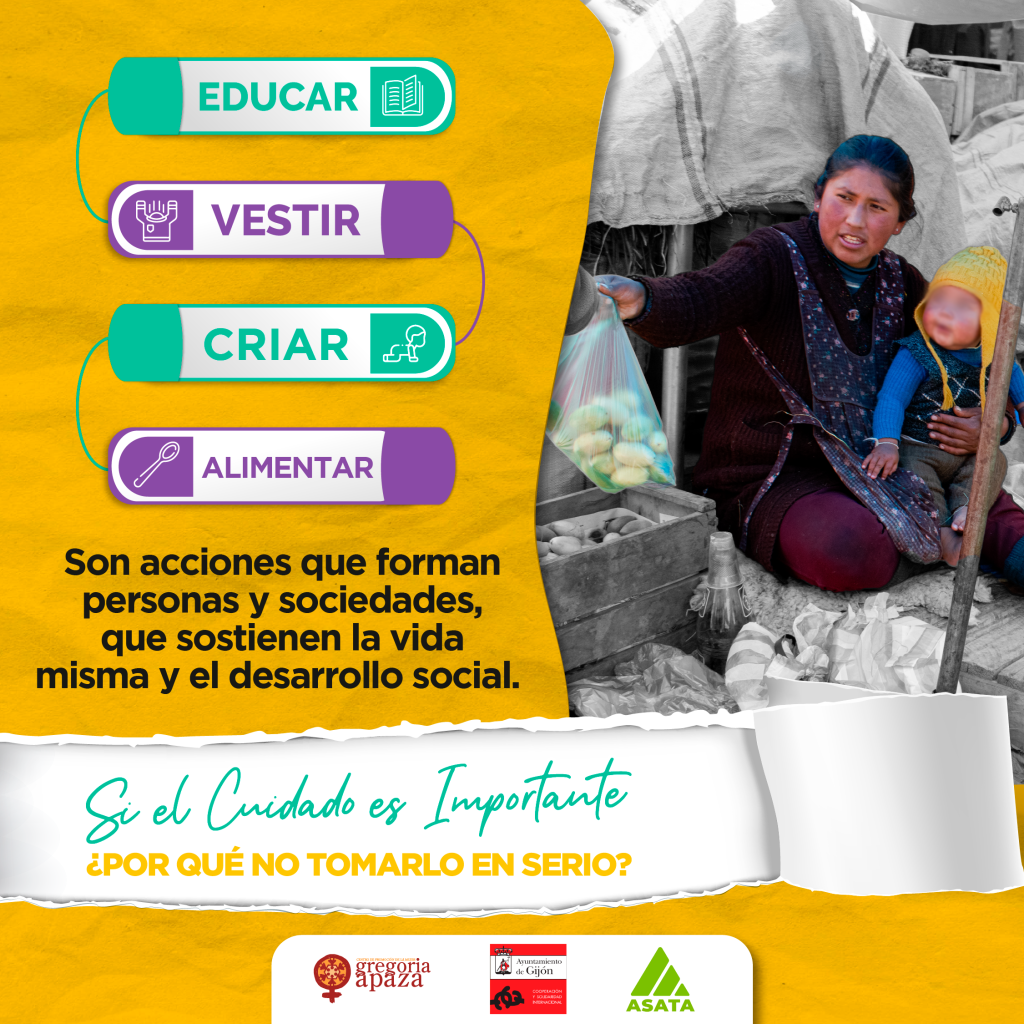
The care economy refers to the care of children, the elderly, and dependent persons, but also to domestic work and all activities necessary for the functioning of households. These activities can be classified as paid and unpaid care work, which…