With your permission we measure how the site is used and show content from other services: Google Maps, YouTube, Spotify. Accept or reject all of it, or choose in your preferences. You can change this at any time from Privacy preferences at the foot of every page. Privacy policy
The care economy refers to the care of children, the elderly, and dependent persons, but also to domestic work and all activities necessary for the functioning of households. These activities can be classified as paid and unpaid care work, which…
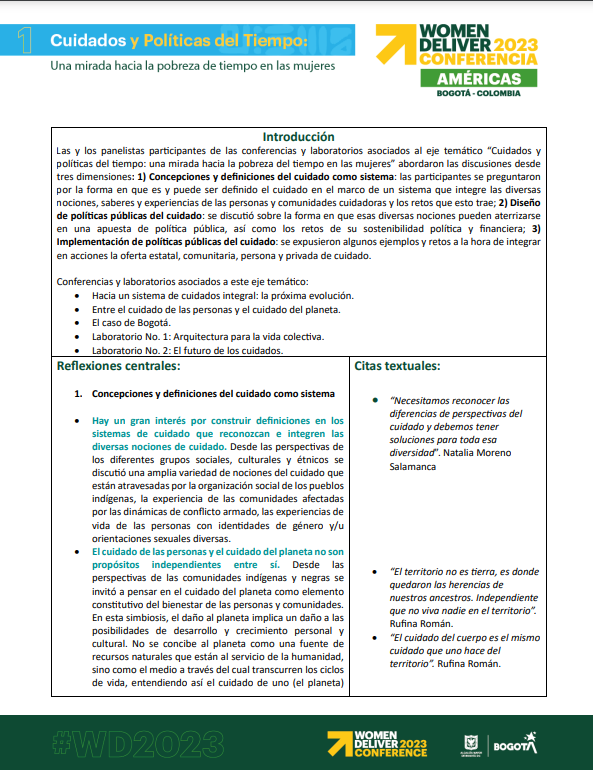
The panelists participating in the conferences and laboratories associated with the thematic axis "Care and time policies: a look at women's time poverty" approached the discussions from three dimensions: 1) Conceptions and definitions of care as a system: the participants…
This report offers a qualitative analysis of the reform introduced by the Buenos Aires city government in its leave scheme (public employment) in 2018, based on the experiences of government workers.
This meeting was held on 26 July 2022 and focused on formulating evidence-based policies to recognise care work.With speakers: Neeraja Penumetcha, Senior Manager of Programs & Operations at Data2X, Shelby Bourgault, Research Associate at the Center for Global Development and…
It is tailored to actors who are just getting started in this field or hoping to learn more about the multiple, intersecting aspects of paid and unpaid care work.This toolkit builds on the original "Toolkit on recognizing, reducing and redistributing…
Investment in comprehensive care systems not only generates well-being, but can also become a driver of socioeconomic recovery, since it generates a triple dividend by directly and indirectly creating jobs and facilitating women's participation in the labor market, which results…
In July 2022, the "Exchange of experiences on the design and implementation of subnational care systems and/or subnational care policies" was held. It was convened by the Global Alliance for Care, in collaboration with the Government of Mexico, through the…
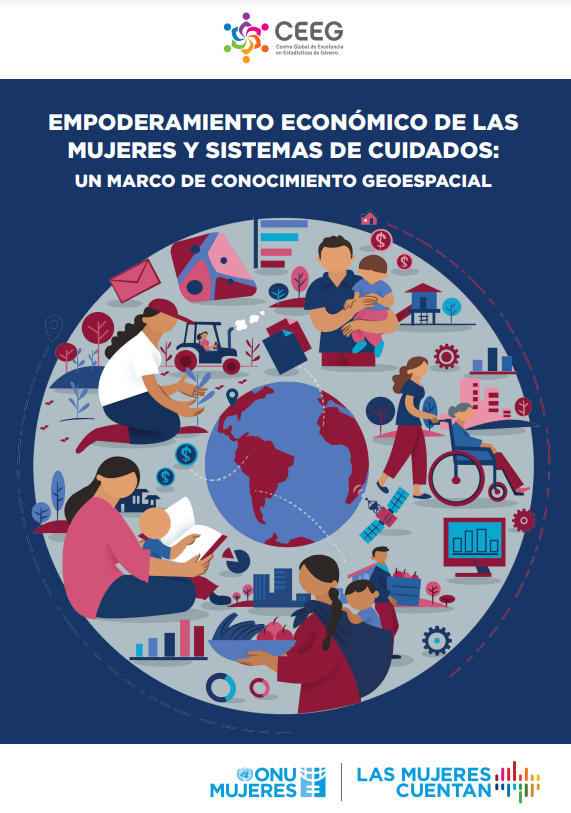
Studies on women's economic empowerment have received increasing attention in recent years, identifying the factors that limit and enable it, among which care systems are a key factor, because they have an impact on the reduction and redistribution of women's…
This policy support tool was developed in the framework of the UN Women and International Labour Organization (ILO) Joint Programme titled “Promoting Decent Employment for Women through Inclusive Growth Policies and Investments in the Care Economy” and as part of…
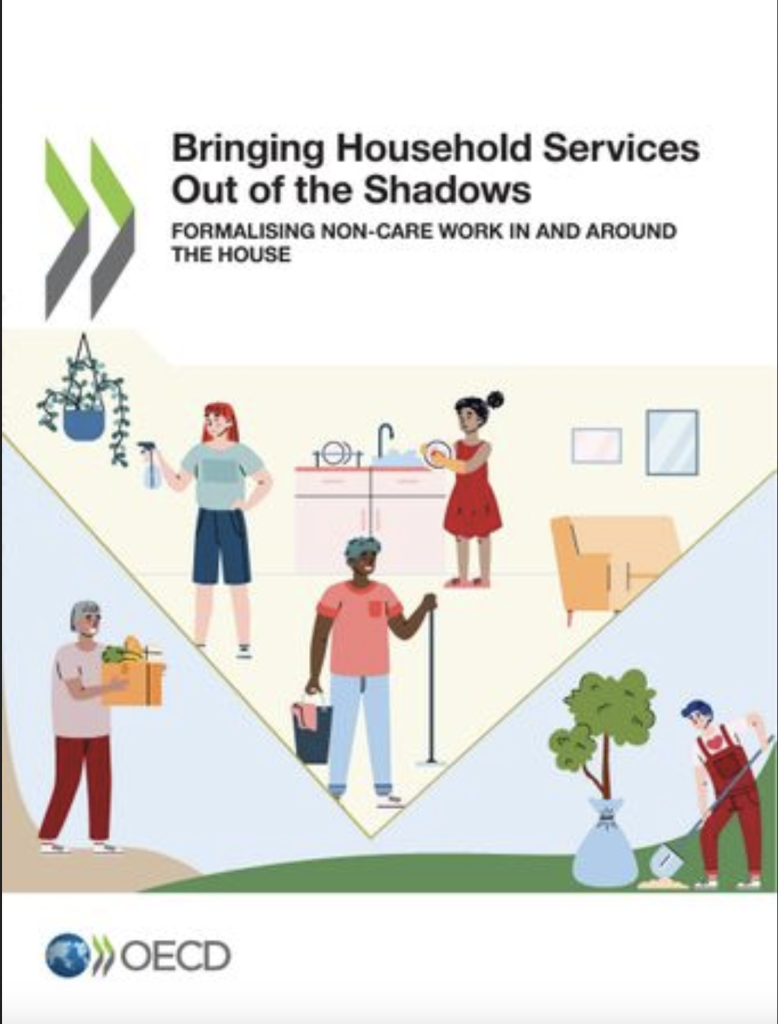
Despite years of growth in the number of women in paid work, gender roles in unpaid housework have remained remarkably rigid. Unpaid housework can be outsourced to non-care household service providers, such as cleaners or housekeepers, however, high prices, a…
This document has been conceived to serve as a guiding framework for those involved in the development of comprehensive national care systems. It addresses key questions about why to invest in care, its importance and benefits for the advancement of…
Estimates of the amount of unpaid care work performed by women and men now garner international attention, but while analysis of existing surveys has yielded important insights, it has also revealed significant limitations. Because unpaid care work has not traditionally…
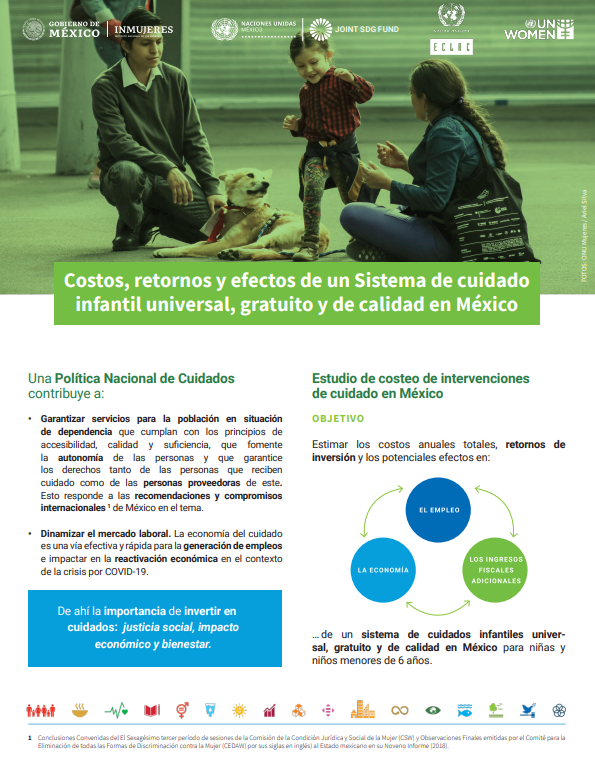
UN Women Mexico, in collaboration with INMUJERES and with support from ECLAC's Subregional Headquarters in Mexico, has developed a series of three studies on the costs and returns of investing in care for children under 6 years of age, for…