With your permission we measure how the site is used and show content from other services: Google Maps, YouTube, Spotify. Accept or reject all of it, or choose in your preferences. You can change this at any time from Privacy preferences at the foot of every page. Privacy policy
It is tailored to actors who are just getting started in this field or hoping to learn more about the multiple, intersecting aspects of paid and unpaid care work.This toolkit builds on the original "Toolkit on recognizing, reducing and redistributing…
Globally, unpaid care work is a key determinant of whether women enter and remain in the labour market, and of the type and quality of their employment. Care work is usually categorized into direct care (personally caring for an adult…
Child care is not just a social policy—it is an economic policy, too. Affordable, high-quality child care will grow our economy, allow more women to enter the workforce, and help give every Canadian child the best start in life.In Budget…
Child care is not just a social policy—it is an economic policy, too. Affordable, high-quality child care will grow our economy, allow more women to enter the workforce, and help give every Canadian child the best start in life.In Budget…
The Covid-19 crisis caused waves of sickness,mental and physical exhaustion and deathfor essential workers in care homes, grocerystores, warehouses and distribution centres. Inresponse to the pandemic—and the long-standingproblems it exacerbated—trade unions developedsuccessful strategies and tactics for buildingunion power by organizing…
Plugging existing, significant, gaps in care services could generate almost 300 million jobs and create a continuum of care that would help to alleviate poverty, encourage gender equality, and support care for children and the elderly, says new ILO report…
Studies on women's economic empowerment have received increasing attention in recent years, identifying the factors that limit and enable it, among which care systems are a key factor, because they have an impact on the reduction and redistribution of women's…
In this document, ELA and UNICEF Argentina present a decalogue aimed especially at legislators with the main problems and possible solutions regarding the distribution of care tasks and the flaws of the current leave system.
This study examines the annual investment required for universal, collectively funded childcare and longterm care services, as well as adequate paid care leave and breastfeeding breaks to parents in 82 countries. Simulations of policy reforms show that extending paid leave…
Investment in comprehensive care systems not only generates well-being, but can also become a driver of socioeconomic recovery, since it generates a triple dividend by directly and indirectly creating jobs and facilitating women's participation in the labor market, which results…
NoFM RADIO, Friedrich Ebert Foundation in Mexico and Alta-Voz Social y Cultural present: Ojalá tuviera un hijo como tú. Podcast about dignified care, co-responsibility in care work and the need to legislate around a National Care System.
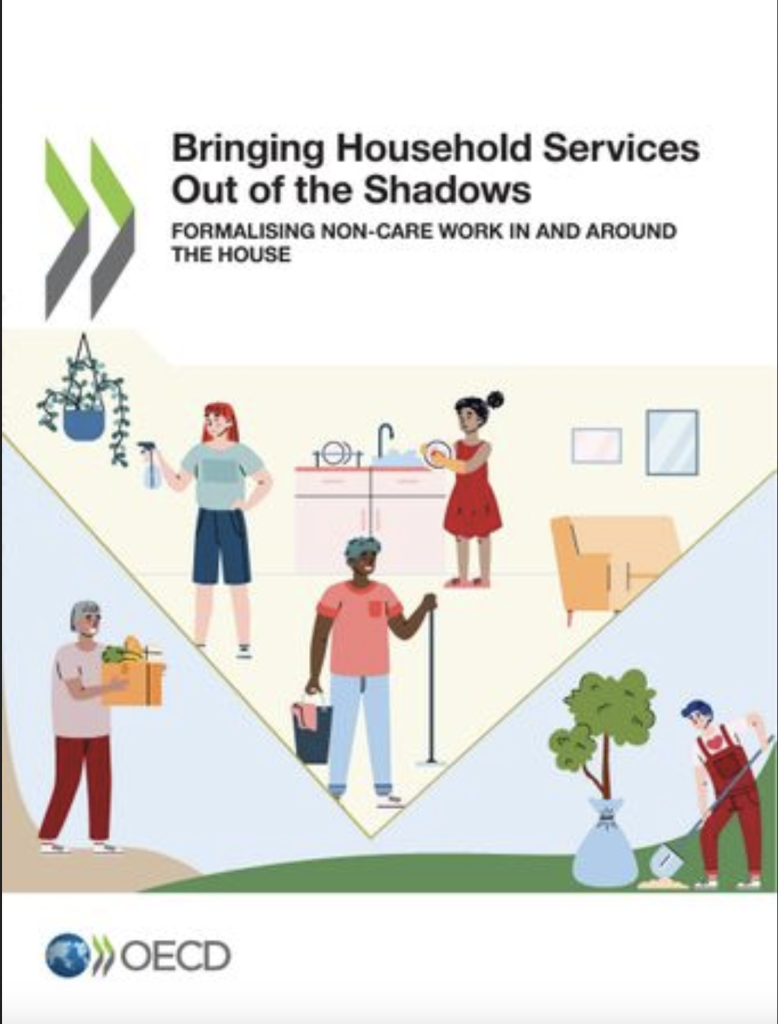
Despite years of growth in the number of women in paid work, gender roles in unpaid housework have remained remarkably rigid. Unpaid housework can be outsourced to non-care household service providers, such as cleaners or housekeepers, however, high prices, a…
The pandemic has made access to early learning and child care a universal issue that is resonating across sectors, regions, and income brackets. School and child care centre closures have been difficult for parents. Some have had to leave their…
This research systematizes practices and experiences to promote the reconciliation of work and family life, as well as co-responsibility in SMEs, in order to delve into the specific realities, advances and obstacles that this key sector of our economy has…
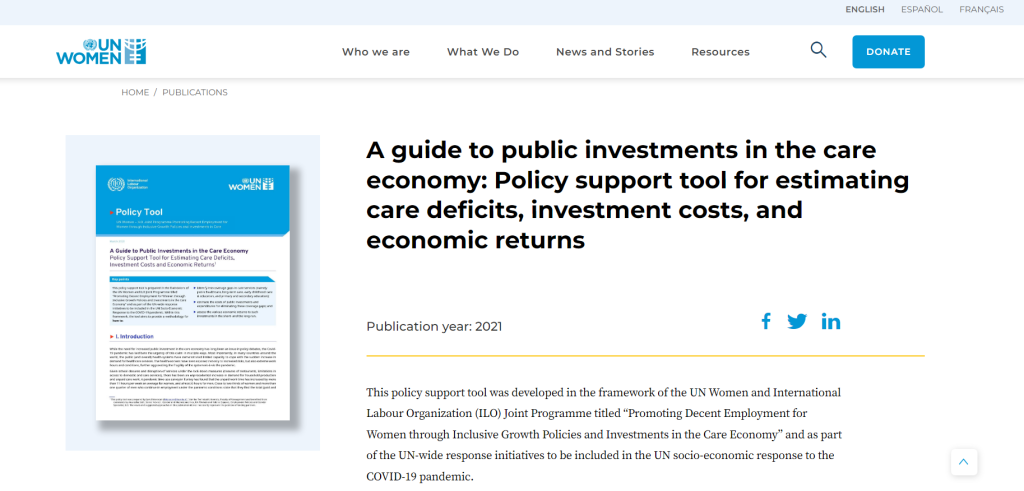
This policy support tool was developed in the framework of the UN Women and International Labour Organization (ILO) Joint Programme titled “Promoting Decent Employment for Women through Inclusive Growth Policies and Investments in the Care Economy” and as part of…
In recent years, there have been ongoing efforts to understand the concept of quality in early childhood settings, and to better design policy and program initiatives that enhance quality. A growing body of evidence suggests that “process quality, that is…
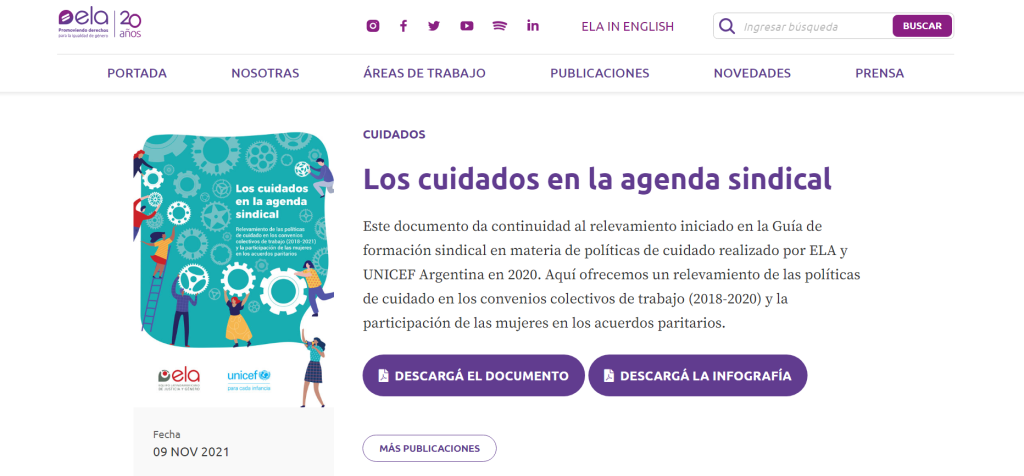
This document continues the survey initiated in the Trade Union Training Guide on care policies conducted by ELA and UNICEF Argentina in 2020. Here, we provide an overview of care policies in collective bargaining agreements (2018-2020) and the participation of…
The pandemic has made access to early learning and child care a universal issue that is resonating across sectors, regions, and income brackets. School and child care centre closures have been difficult for parents. Some have had to leave their…
This document has been conceived to serve as a guiding framework for those involved in the development of comprehensive national care systems. It addresses key questions about why to invest in care, its importance and benefits for the advancement of…