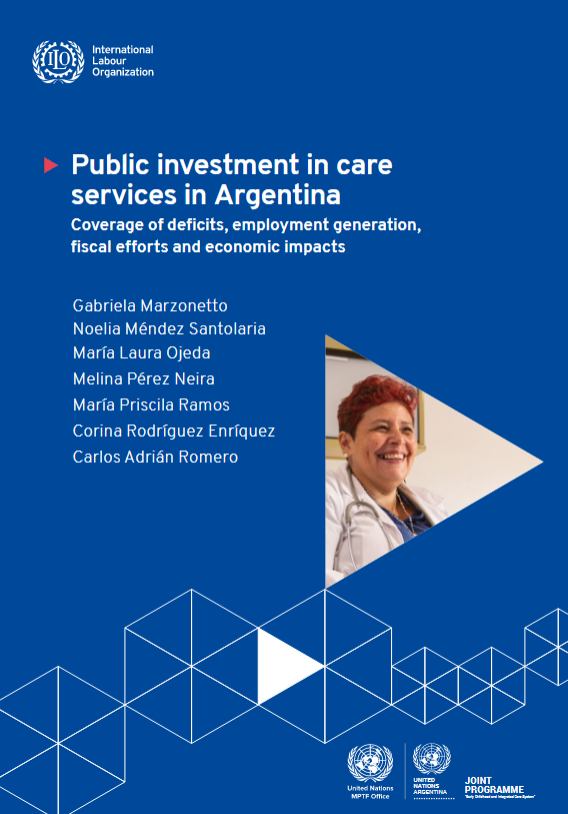
Public investment in care services in Argentina. Coverage deficits, employment generation, fiscal efforts and economy impacts
- Type
- Reports
- Country
- Argentina
- Types of care work
- Paid care work Unpaid care work
- Actors
- International organizations
- Regions
- Latin America and the Caribbean
- Policies and actions
- Budgeting and financing Policy and legal frameworks Research and diagnostics Wages and working conditions
- Conceptual framework
- Care economy
In Argentina, especially since the coronavirus (COVID-19) pandemic, it has become increasingly evident that there are gender-related, as well as economic, inequalities in the social organization of care (OSC), which it is important to highlight and to change.
In this context, using methodology developed by ILO-UN Women (2021), this study shares the results of efforts to estimate the deficits in meeting the demand for care in Argentina (coverage and quality, including staff working conditions) for each of the subsectors (education, health and long-term care), as well as the investments required to address those deficits, and the economic and employment implications that may arise from expanding and strengthening care policies in a comprehensive manner in the future by the year 2030.
The generation of jobs, in particular paid employment for women, in the care sector, but also in other related sectors such as the construction of the necessary elements of the care infrastructure, will have a significant impact on the economy, but also and more importantly, would address the inequalities in these sectors of activity which are essential for life and would strengthen rights in general.

Author
Gabriela Marzonetto
Author
Noelia Méndez Santolaria
Author
María Laura Ojeda
Author
Melina Pérez Neira
Author
María Priscila Ramos
Author
Corina Rodríguez Enríquez
Author
Carlos Adrián Romero
Editor
Sol Gorlero
Editor
Mariana Sebastiani
Editor
Pablo Sorondo
Continue reading
Related resources