- Type
- Articles
- Care and populations
- Urban populations
- Actors
- Communities
- Policies and actions
- Urban planning
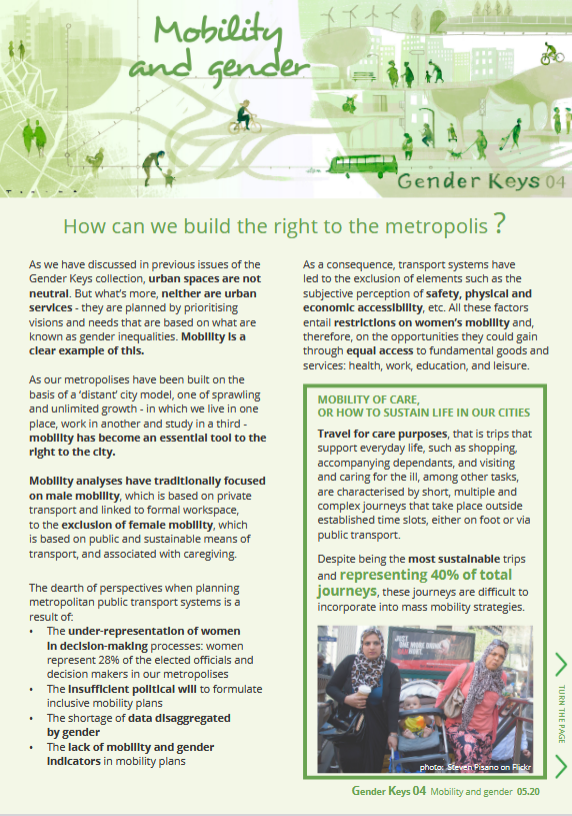
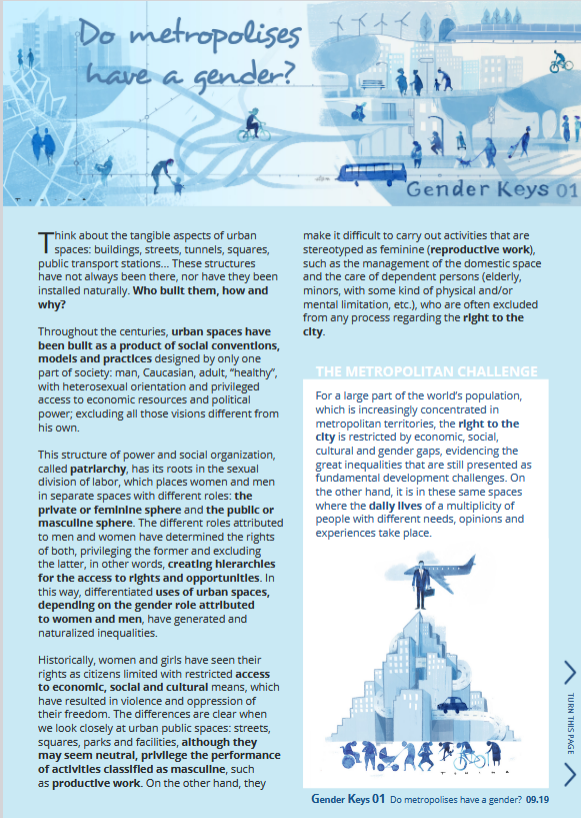
Think about the tangible aspects of urban spaces: buildings, streets, tunnels, squares, public transport stations… These structures have not always been there, nor have they been
installed naturally. Who built them, how and why? Throughout the centuries, urban spaces have been built as a product of social conventions, models and practices designed by only one part of society: man, Caucasian, adult, “healthy”, with heterosexual orientation and privileged access to economic resources and political power; excluding all those visions different from his own.

Continue reading
Related resources