March 8, 2026: Care as a structural condition for equality
Every March 8, we reaffirm that gender equality is built by transforming the foundations that organize our societies. Among these, caregiving occupies a central place.
Every March 8, we reaffirm that gender equality is built by transforming the structures that organize our societies. Among them, care is central. One of the most persistent drivers of inequality is the social organization of care. Across all countries, women continue to assume a disproportionate share of unpaid and underpaid care work, shaping their economic autonomy, limiting their political participation, and influencing their labor trajectories.
To speak about equality is to speak about care. Care sustains community life, supports the functioning of economies, and underpins collective well-being. Yet it continues to fall primarily on households and, within them, on women. As long as care is not recognized, reduced, redistributed, rewarded, and represented through comprehensive public policies, substantive equality will continue to face structural barriers.
From the Global Alliance for Care, we promote a profound transformation of the social organization of care. Reducing gender inequality requires transforming the conditions that produce and reproduce injustice. Globally, women spend three times more time than men on unpaid care work, restricting their access to income, opportunities, and rights.
This transformation requires a human rights–based approach that recognizes both those who provide care and those who require care and support. Guaranteeing the rights of all care workers—including migrant workers—and strengthening their organizations is essential to advancing more just and sustainable care systems. It also requires an intersectional perspective that addresses diverse needs and inequalities shaped by age, territory, occupation, disability, nationality, ethnic belonging, race, sexual orientation, gender identity, and socioeconomic conditions.
Transforming care means advancing toward more equal, democratic, and sustainable societies, where care is a shared responsibility and a guaranteed right. In the context of 8M, the Global Alliance for Care shares concrete experiences across regions and contexts that demonstrate that transformation is possible. There have been important advances in the constitutional recognition of care, reforms to parental leave, expanded public service provision, and the development of comprehensive care systems.
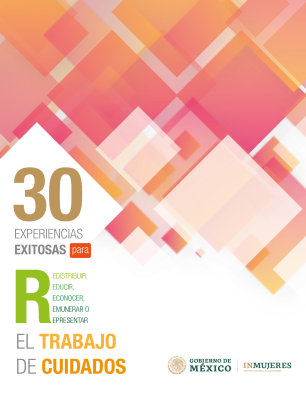
Today we share 30 experiences drawn from the publication 30 Successful Experiences to Redistribute, Reduce, Recognize, Reward, or Represent Care Work, which demonstrate that progress on the Care Agenda is achievable. These experiences offer opportunities for exchange, enabling us to learn from the paths taken and the challenges faced in positioning the care agenda at different levels—national and local, public and private.
They include initiatives such as the constitutional and legal recognition of unpaid domestic work in Ecuador; the inclusion of the care economy in national accounts in Colombia; Argentina’s Comprehensive Program for the Recognition of Service Periods for Care Work; Uruguay’s National Integrated Care System; Bogotá’s District Care System; Chile Cuida; parental leave reforms in Finland; public long-term care insurance in South Korea; and local and community-based experiences across Europe and Latin America that expand rights, services, and co-responsibility.
This year’s 8M also takes place at a key moment for the global equality agenda. The opening of the 70th session of the Commission on the Status of Women (CSW70), to be held from March 9 to 19, 2026, at United Nations Headquarters in New York, marks a new cycle of global commitments and deliberations on women’s rights.
In this context, we reaffirm that care cannot remain at the margins. Placing care at the center of public decision-making is not a sectoral issue; it is a structural condition for advancing more just, sustainable, and equal societies. The solutions exist. Only through strong, universal, and well-financed care systems will we advance gender justice.
We share the 30 experiences individually below:
- Constitutional and legal recognition of unpaid work in the home, Ecuador
- Inclusion of the care economy in the national accounts system, Colombia
- Comprehensive Program for the Recognition of Periods of Service in Care Work, Argentina
- Recognition of work in the home in the 2009 Constitution of Bolivia
- Constitutionalization of the right to care, Mexico City, Mexico
- Constitutional and legal recognition of domestic work in Brazil
- Constitutionalization process of the right to care in Mexico
- Private Initiative: Extension of paternity leave in Curaçao
- Business Sector: Extension of paternity leave in Mexico
- Business Sector: Gender-neutral extended parental leave, Mexico
- Postnatal parental leave in Chile
- Reform process of the parental leave policy in Finland
- A Father from the Start (Padre desde el principio), Cuba
- Caring in Equality Nationwide Campaign. Necessity, Right, Work
- The promotion of co-responsibility in care work, La Villita, Mexico
- #I’llTakeCareOfIt – The Helpers Campaign, Spotlight Initiative, Argentina
- Building Equality Seal, Directorate of Labor Equality, Buenos Aires, Argentina
- Piña Palmera, Oaxaca, Mexico
- The Eighth Day (Le huitième jour), Belgium
- Home-Start Worldwide, United Kingdom
- Child Development Centers, Argentina
- R.O.S.A. (Caregiving Employment and Services Network), Italy
- National Subsystem of Support and Care: Chile Cares (Chile Cuida)
- Public long-term care insurance, South Korea
- One’s Home – Active Home (Casa Propia – Casa Activa) program, Argentina
- Xantar na Casa program, Galicia, Spain
- Urban planning from a gender and care perspective: Nagareyama, Japan
- Santa Clara de Málaga Residence, Los Milagros Andalusian Cooperative Society, Spain
- National Integrated Care System (SNIC), Uruguay
- District Care System, Bogotá, Colombia