With your permission we measure how the site is used and show content from other services: Google Maps, YouTube, Spotify. Accept or reject all of it, or choose in your preferences. You can change this at any time from Privacy preferences at the foot of every page. Privacy policy
The multiple crises of recent years have shown that the current development model is unsustainable and fails to address the structural gaps that affect the vast majority of the population of Latin America and the Caribbean.Against this backdrop, a comprehensive…
It is tailored to actors who are just getting started in this field or hoping to learn more about the multiple, intersecting aspects of paid and unpaid care work.This toolkit builds on the original "Toolkit on recognizing, reducing and redistributing…
Globally, unpaid care work is a key determinant of whether women enter and remain in the labour market, and of the type and quality of their employment. Care work is usually categorized into direct care (personally caring for an adult…
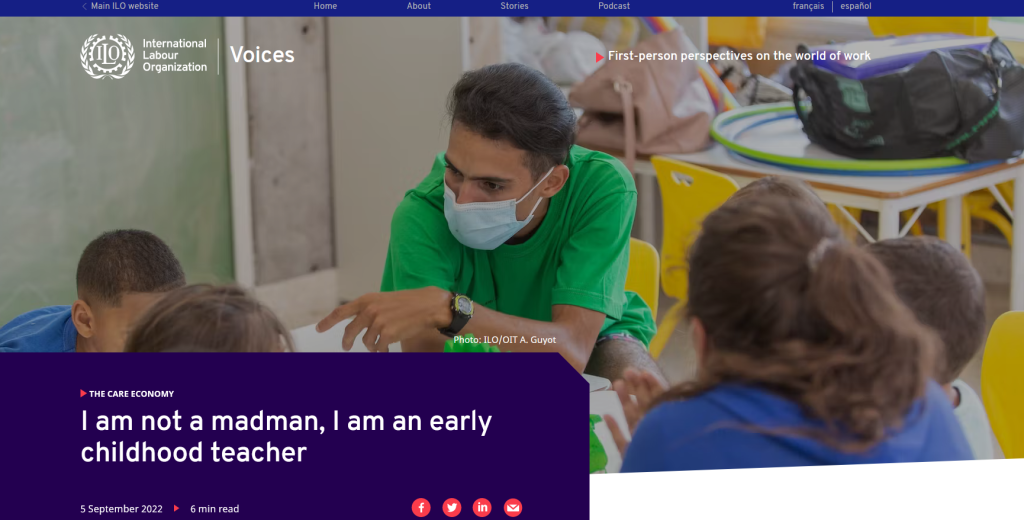
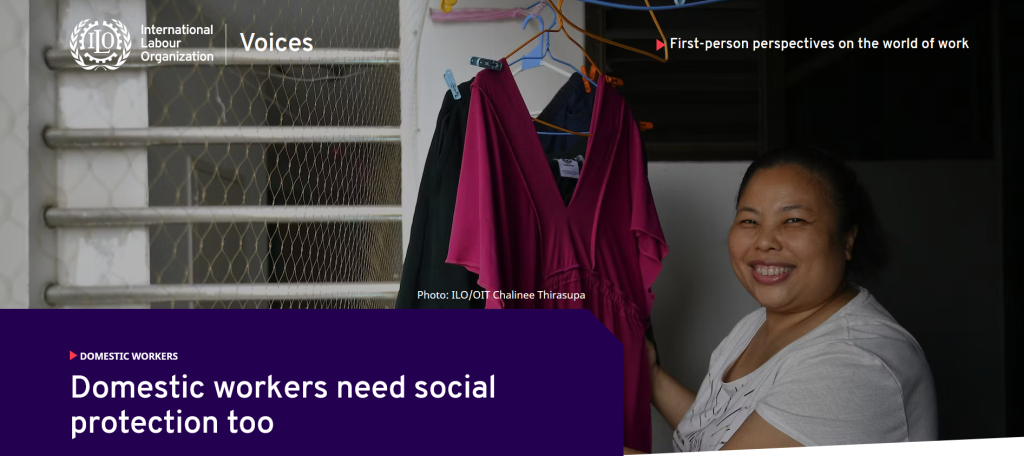
My name is Champa. I grew up in a village in Myanmar. When I was five years old my father died. I am the youngest of nine children, and as a daughter, I was the one who had to help…
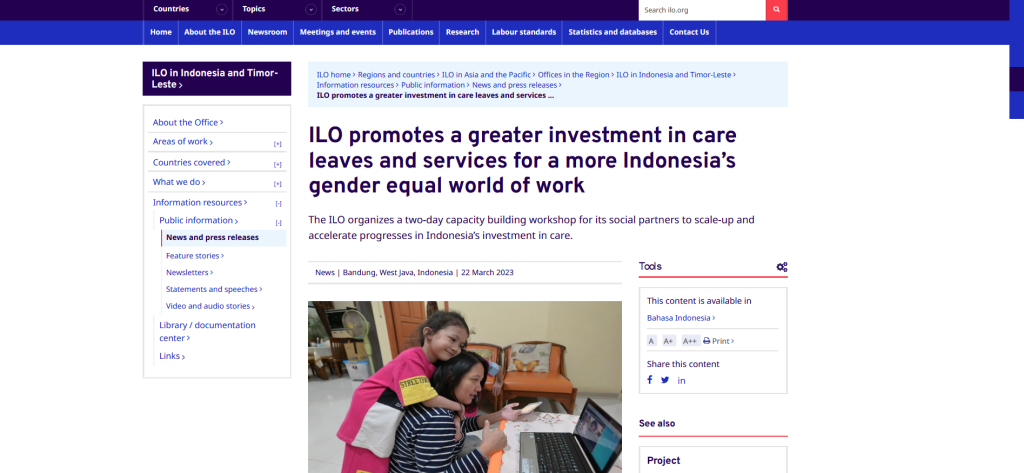
Following to a tripartite social dialogue on care economy held in early March, the ILO conducted a two-day capacity building workshop in Bandung, West Java, from 16-17 March. The workshop was targeted to representatives of relevant ministries, employers’ and workers’…
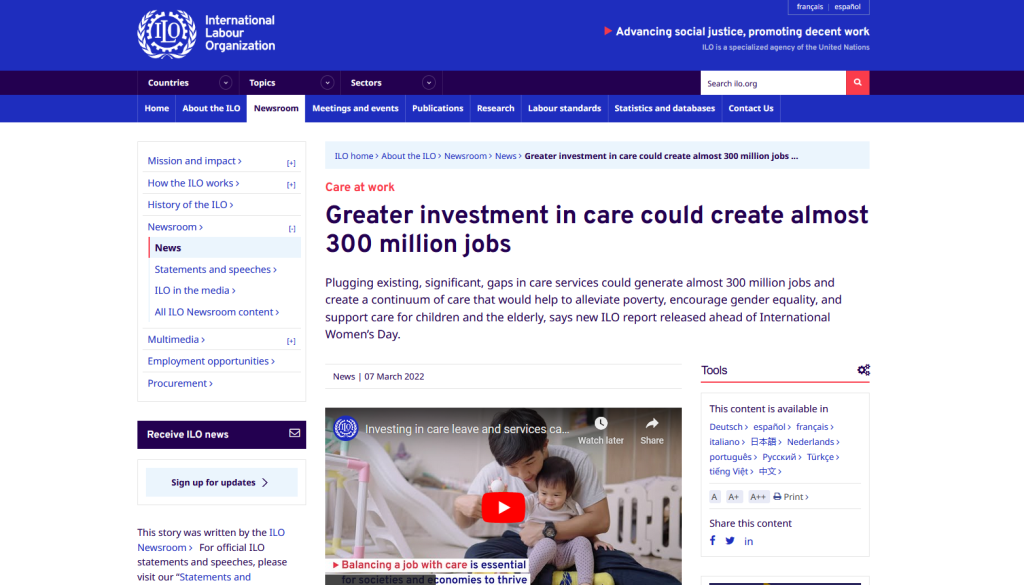
Plugging existing, significant, gaps in care services could generate almost 300 million jobs and create a continuum of care that would help to alleviate poverty, encourage gender equality, and support care for children and the elderly, says new ILO report…
With the acceleration of population ageing, the achieving of healthy ageing is becoming a global imperative and social protection policies and social security systems have an important role to play in this endeavour. Through a life-cycle approach, social protection systems…
1. In accordance with article 19 of the ILO Constitution, at its 334th Session in October–November 2018, the Governing Body decided that the General Survey to be prepared by theCommittee of Experts on the Application of Conventions and Recommendations (CEACR)…
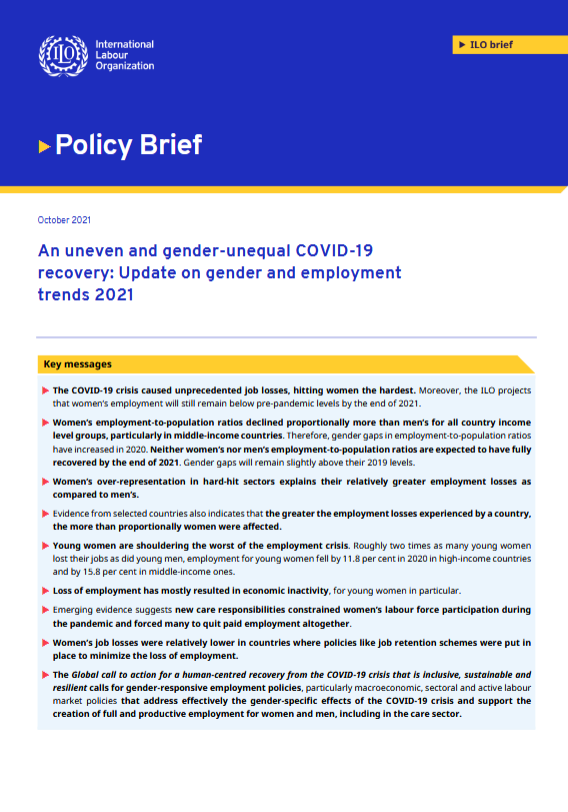
Key Messages - The COVID-19 crisis caused unprecedented job losses, hitting women the hardest. Moreover, the ILO projects that women’s employment will still remain below pre-pandemic levels by the end of 2021.- Women’s employment-to-population ratios declined proportionally more than men’s…
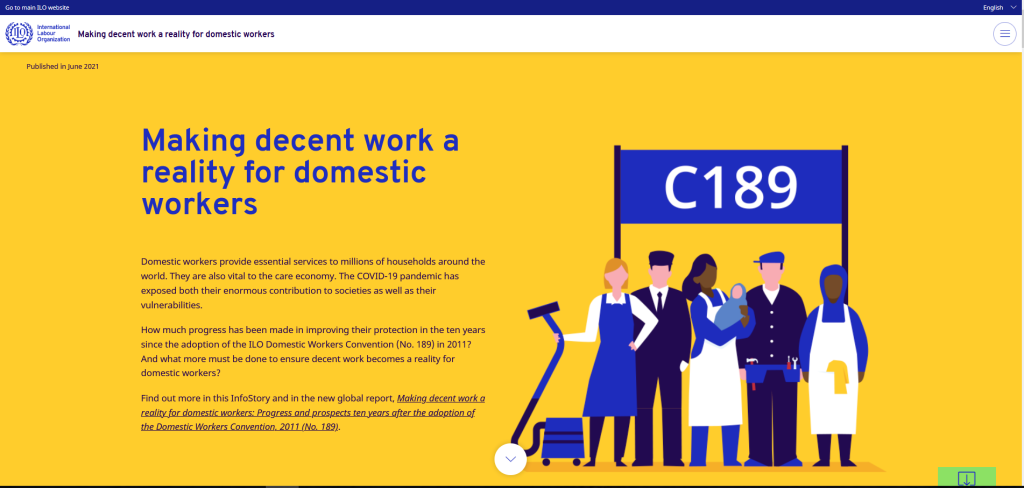
Domestic workers provide essential services to millions of households around the world. They are also vital to the care economy. The COVID-19 pandemic has exposed both their enormous contribution to societies as well as their vulnerabilities.How much progress has been…
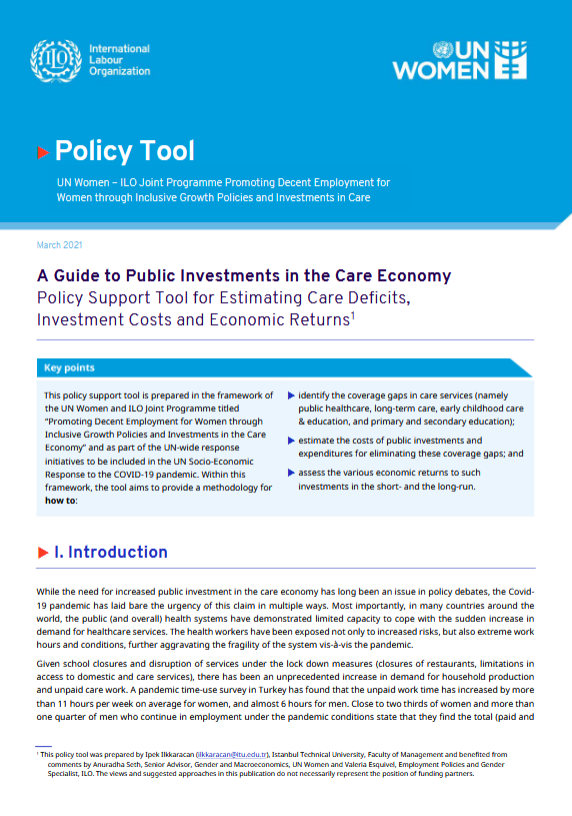
Key points: - UN Women – ILO Policy Tool 1 A Guide to Public Investments in the Care Economy.- Policy Tool March 2021 A Guide to Public Investments in the Care Economy.- Policy Support Tool for Estimating Care Deficits, Investment…
The following study presents the causes, behaviors, and consequences of workplace discrimination based on pregnancy in Mexico, offering an overview of the situation in the country and a summary of official information.
The publication of this report, in the midst of a devastating global health pandemic, could not have come at a more critical time for domestic workers. This crisis has highlighted the vital role that they play in supporting the care…
As with many areas of our societies and economies, COVID-19 exposed andexacerbated existing vulnerabilities in nursing homes. Long plagued withcombined crises including under-funding and staffing shortages, nursing homesbecame the epicentre of the global pandemic. As of mid-October, estimatesfrom 21 countries…
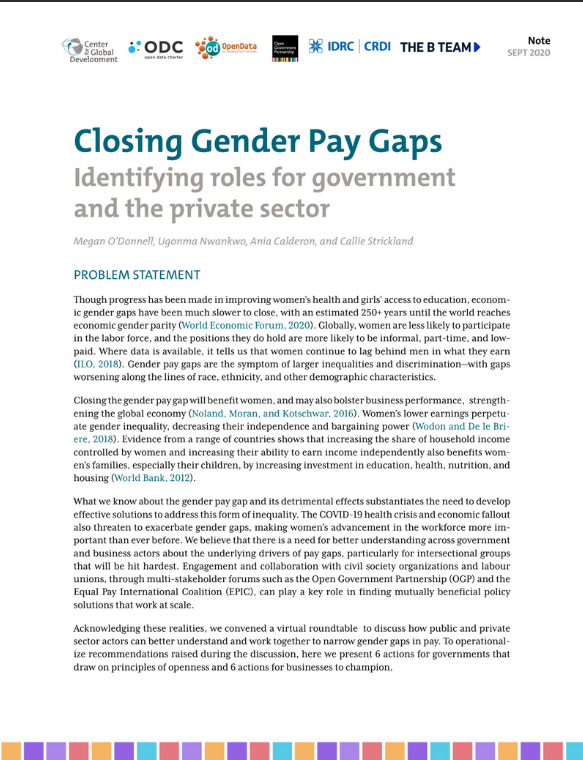
We convened a virtual roundtable to discuss how public and private sector actors can better understand and work together to narrow gender gaps in pay. To operationalize recommendations raised during the discussion, here we present 6 actions for governments that…
This publication is an update of the report Office Hours: Shared Responsibility for Work-Life Balance, originally published in 2016. This report focuses on the importance of reconciling and balancing workers’ professional and family responsibilities in benefit to their human rights…
Care work and care jobs for the future of decent work is an important contribution to the ILO’s Women at Work Centenary Initiative and to the process that the ILO is un-dertaking to guide its work for social justice as…
The objective of Office Hours is to present an overview of the situation in Mexico regarding the balance and co-responsibility between work and personal and family life. To this end, the research, systematization and analysis of the regulatory framework and…
This report systematizes practices and experiences promoted by 28 companies in Argentina to facilitate the reconciliation of work and family life for their employees. It explores the main obstacles identified by their representatives and offers recommendations for introducing care practices…