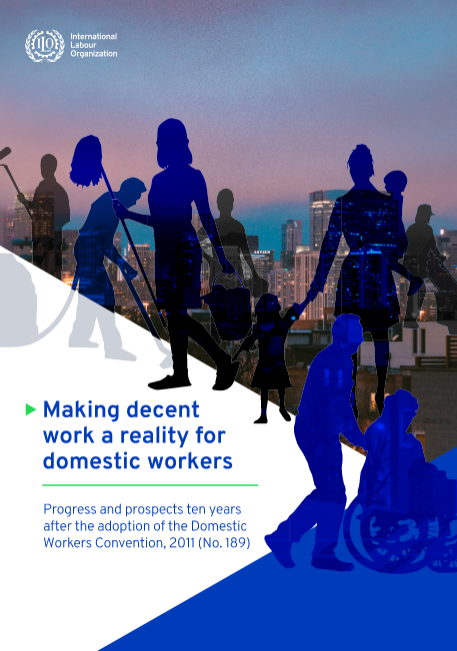
Making decent work a reality for domestic workers: Progress and prospects ten years after the adoption of the Domestic Workers Convention, 2011 (No. 189)
- Type
- Reports
- Types of care work
- Domestic work Paid care work Unpaid care work
- Actors
- International organizations
- Regions
- Central and South Asia East and Southeast Asia Europe Latin America and the Caribbean North America Sub-Saharan Africa
- Policies and actions
- Budgeting and financing Monitoring and evaluation Policy and legal frameworks Research and diagnostics Social security and protection Wages and working conditions
- Conceptual framework
- Global care chains International and regional regulations The 5Rs of care
The publication of this report, in the midst of a devastating global health pandemic, could not have come at a more critical time for domestic workers. This crisis has highlighted the vital role that they play in supporting the care needs of households. It has also exposed the precarious position the majority have found themselves in – many being obliged to go to work despite the health risks, others losing their jobs, with no access to income-support measures, putting them and their families at risk of falling into poverty or deeper poverty.
Meanwhile, the households in which they work have struggled with additional care responsibilities, as parents juggle with teleworking and ensuring that their children are educated while at home. Never before has the interdependence of domestic workers and the households they care for been so clear. Neither has the vulnerability of the millions of domestic workers earning a living behind the closed doors of private households been so visible. This report is also timely since it marks the tenth anniversary of the adoption of the Domestic Workers’ Convention, 2011 (No. 189), and its accompanying Recommendation (No. 201), dedicated to the sector in its entirety. Ten years ago, the adoption of these standards was celebrated worldwide by domestic workers’ organizations.

Continue reading
Related resources