Global Digital Community
18 resources

Reports
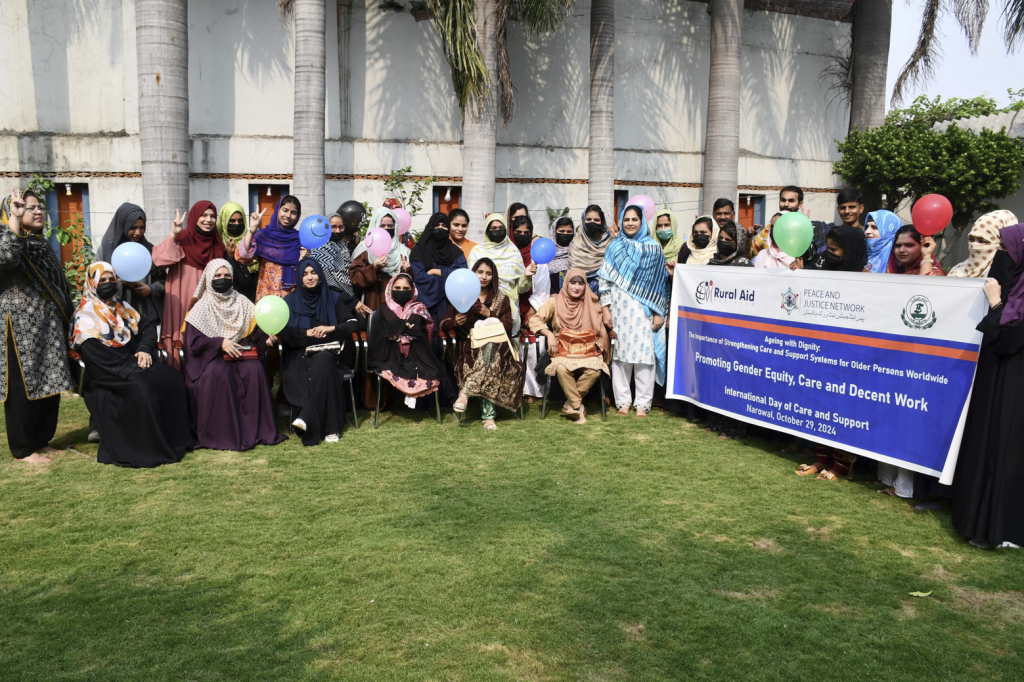
El 29 de octubre, Rural Aid Pakistán organizó los actos comunitarios «Promoción de la igualdad de género, los cuidados y el trabajo decente» en los distritos de Narowal y Sanghar, Pakistán, con la colaboración de la Red por la Paz…
Reports
This report contributes to understanding how care policies are being implemented in the different regions of the Global South - Sub-Saharan Africa; Asia and the Pacific; Latin America and the Caribbean, as well as identifying elements that have the potential…
Videos
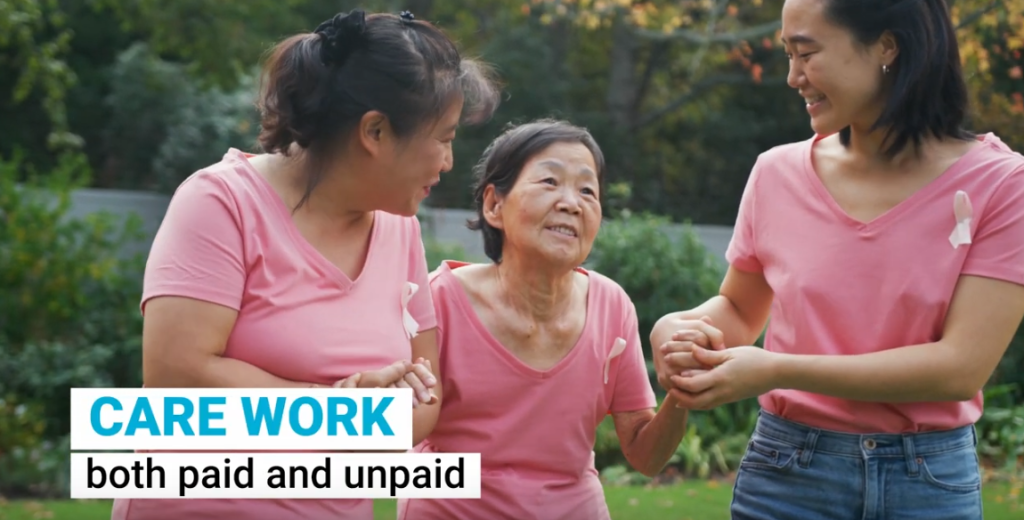
The virtual commemoration of the International Day of Care and Support will serve as the second Global Care Alliance initiative in the Asia-Pacific region. The objective is to raise awareness of the importance of care and support, and its key…
Reports
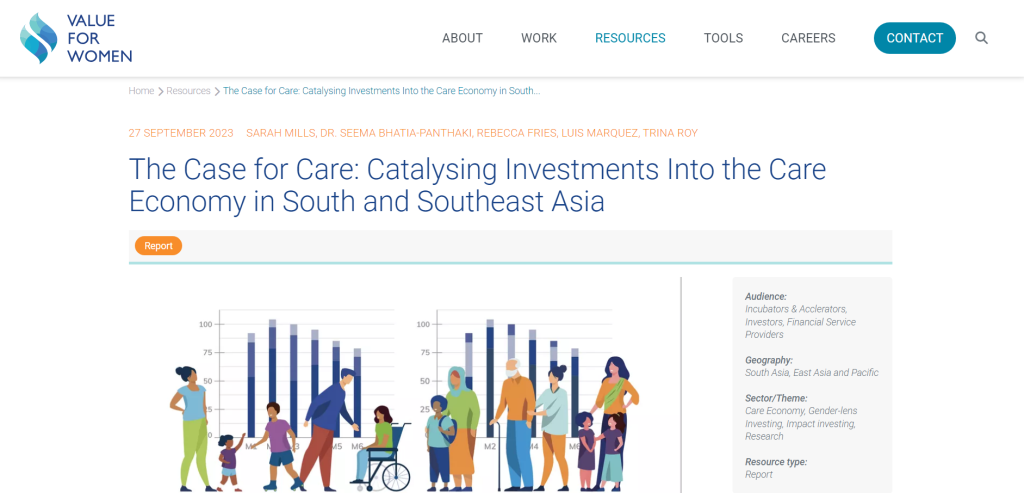
Across Asia and the Pacific, women perform more than four times the unpaid care work done by men, and this difference accelerated during the Covid-19 pandemic. Meanwhile, the market size and investment potential of the care sector is growing.This paper…
Web portals
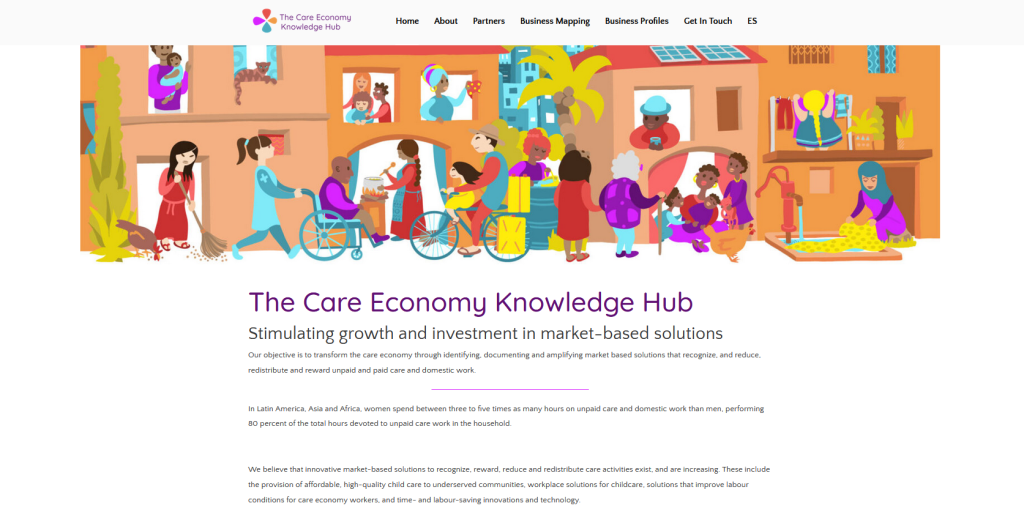
Stimulating growth and investment in market-based solutions. Our objective is to transform the care economy through identifying, documenting and amplifying market based solutions that recognize, and reduce, redistribute and reward unpaid and paid care and domestic work.In Latin America, Asia…
Videos
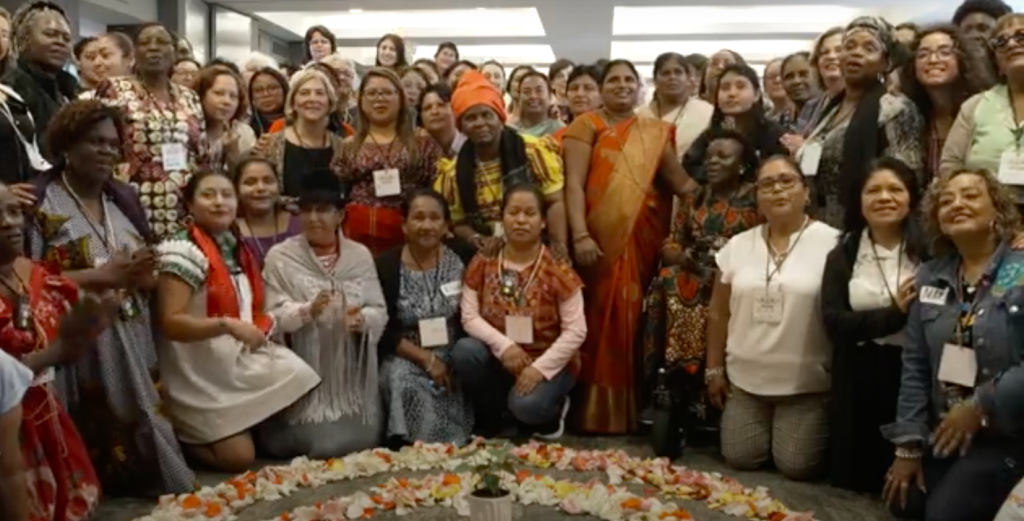
On June 28-30, the “Global Grassroots Women Community Caregivers’ Summit” brought together more than 70 caregivers and domestic workers from 24 countries. The Summit was convened by the Global Alliance for Care, the Huairou Commission (HC), the National Institute of…
Reports
To leave no one behind and to reach those furthest behind first are the essential ambitions of the 2030 Agenda for Sustainable Development. Within that mandate, Sustainable Development Goal 5 (achieving gender equality and the empowerment of all women and…
Reports
This case study on Uzbekistan enhances ESCAP technical and advisory assistance to its member States, in particular aligning with the region’s efforts to bring care to the centre of public policy. The study aims to draw great attention and resources…
Reports
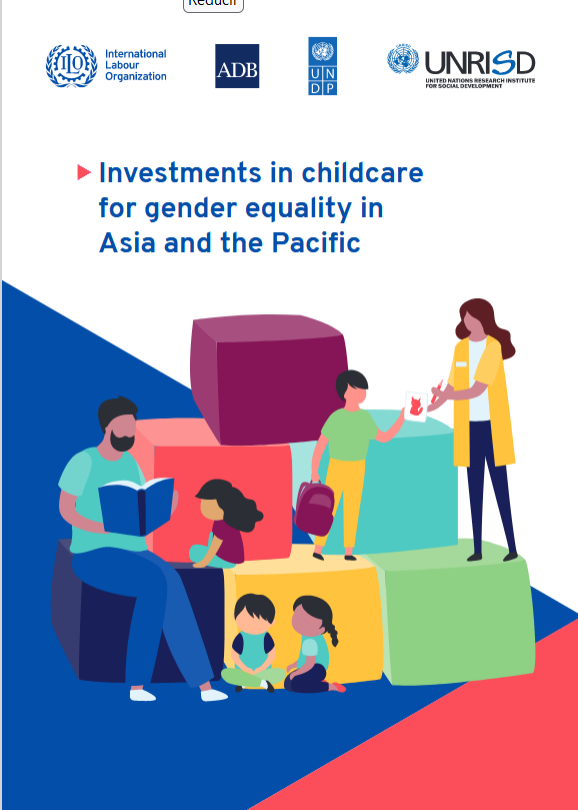
This is a study on the public provision of childcare across 48 economies in Asia and the Pacific through the lens of accessibility, affordability, quality, and decent work for childcare workers. Based on its findings the study offers recommendations for…
Reports
This policy brief examines the low rate of female labour force participation in Asia and the Pacific and its correlation with persistent inequalities in the distribution of care responsibilities between men and women as well as the society and the…
Reports
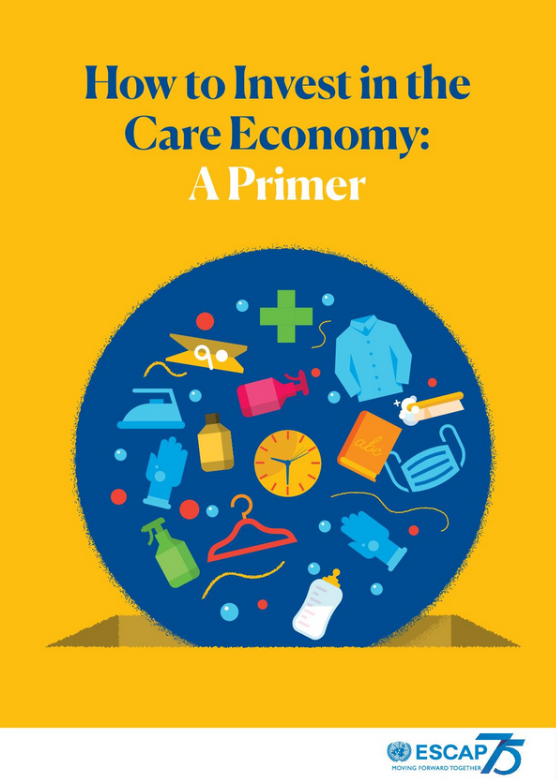
This primer is designed to support policymakers and government officials in their efforts to achieve Sustainable Development Goal 5 on gender equality and empowerment of women in their countries. It lays out the basic concepts relating to what is called…
Reports
This report describes the state of the unpaid care economy in ASEAN countries. By examining the socioeconomic, political, legislative and institutional conditions in each country of ASEAN, this report highlights examples of promising policy measures undertaken either prior to the…
Reports
The publication of this report, in the midst of a devastating global health pandemic, could not have come at a more critical time for domestic workers. This crisis has highlighted the vital role that they play in supporting the care…
Reports
Women in Asia and the Pacific work the longest hours in the world. On average, women in the region worked 7.7 hours daily, of which only 3.3 hours are paid, and the rest are dedicated to unpaid care work. If…
Reports
This report contributes to understanding how care policies are being implementedin the Global South – in Sub-Saharan Africa, Asia and the Pacific, and Latin Americaand the Caribbean –, as well as the elements that have the potential to make themtransformative.…
Reports
The authors take a close look at unpaid work using data from China’s first large-scale time use survey (TUS) conducted in 2008. They document the gender patterns of time allocation over three activities: paid work, unpaid work and non-work activity…