With your permission we measure how the site is used and show content from other services: Google Maps, YouTube, Spotify. Accept or reject all of it, or choose in your preferences. You can change this at any time from Privacy preferences at the foot of every page. Privacy policy
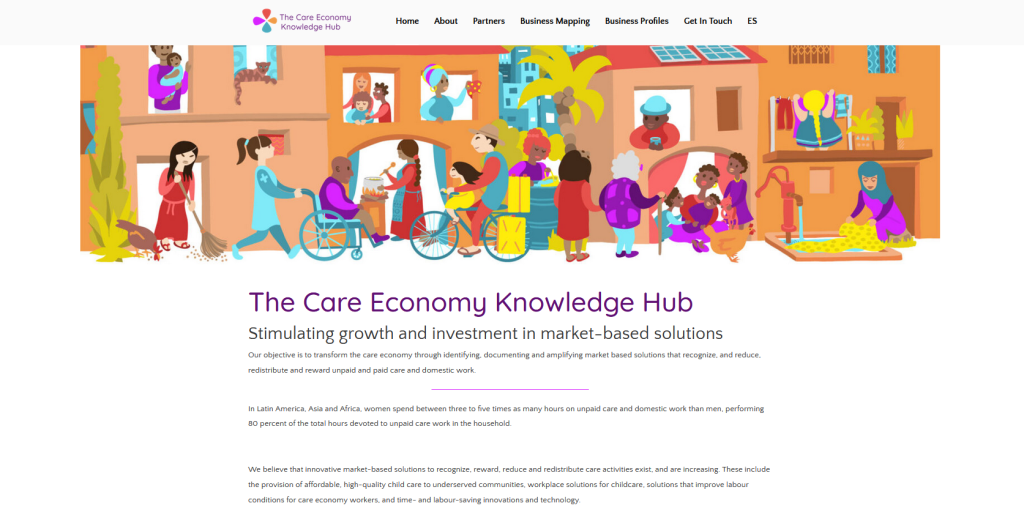
Stimulating growth and investment in market-based solutions. Our objective is to transform the care economy through identifying, documenting and amplifying market based solutions that recognize, and reduce, redistribute and reward unpaid and paid care and domestic work.In Latin America, Asia…
The pandemic exacerbated a reality that was already there, and consequently exposed what could no longer remain hidden. This is the key insight that unites the four think pieces in this mini-series which come from different geographical locations in Ibero-America…
WISE-R consists of six modules and training guides that aims at promoting workplace productivity through the improvement of working conditions.WISE-R Module 5 on Family-friendly measures will help you:1. To understand family responsibilities and their link with your business and productivity;2.…
Healthy pregnancies and healthy newborn children, combined with a measure of economic security, are an aspiration for all working mothers. Maternity protection at work supports this aspiration. Its goals are twofold: 1) to ensure that a woman’s economic activities do…
En los próximos años, es probable que aumente la necesidad de trabajo asistencial debido a las transformaciones demográficas, socioeconómicas y medioambientales. En todo el mundo, los cuidadores no remunerados, especialmente las mujeres, cubren la gran mayoría de las necesidades de…
The different forms of work identified within the framework include employment, own-use production work (activities people do to produce goods and provide services for their own use) as well as other unpaid activities such as volunteer work and unpaid trainee…
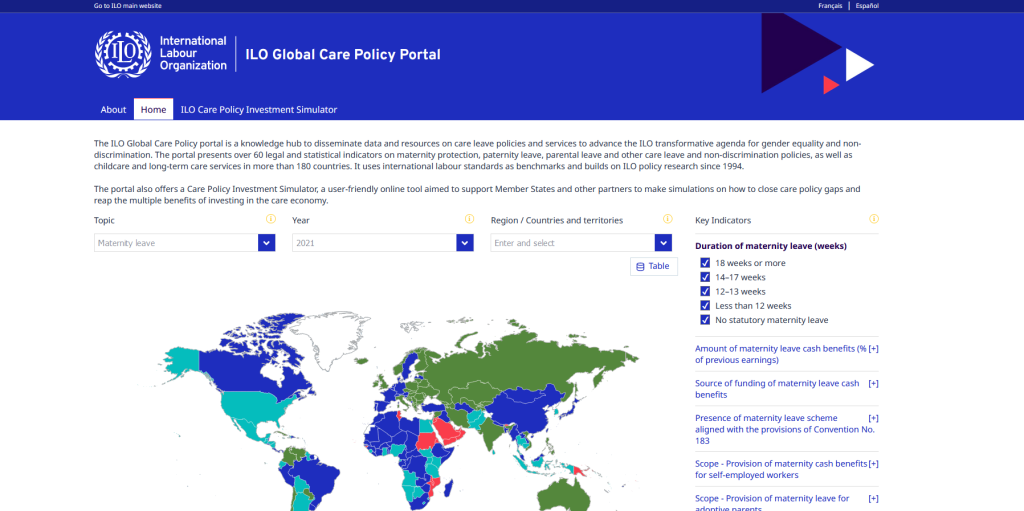
The ILO Care Policy Investment Simulator calculates the investment requirements in 4 care policy areas and the related employment and gender equality benefits for 82 countries. To use the Simulator, please log in. If you are a new user, please…
The ILO Global Care Policy portal is a knowledge hub to disseminate data and resources on care leave policies and services to advance the ILO transformative agenda for gender equality and non-discrimination. The portal presents over 60 legal and statistical…
EPIC is the Equal Pay International Coalition. Led by the ILO, UN Women, and the OECD. The Coalition’s goal is to achieve equal pay for women and men everywhere. By bringing together a diverse set of actors with different areas…
In Argentina, especially since the coronavirus (COVID-19) pandemic, it has become increasingly evident that there are gender-related, as well as economic, inequalities in the social organization of care (OSC), which it is important to highlight and to change.In this context,…
- UN Women - ILO Policy Tool 1 How to Assess Fiscal Stimulus Packages from a Gender Equality Perspective - Policy Tool March 2021 How to Assess Fiscal Stimulus Packages from a Gender Equality Perspective.- The policy support tool aims…
In collaboration with the Seoul Metropolitan Government Human Resources Development Centre (SHRDC), which is the home of the Metropolis International Training Institute, UCLG, as well as UCLG-ASPAC we have developed an online training programme focused on the theme "Caring Cities".…
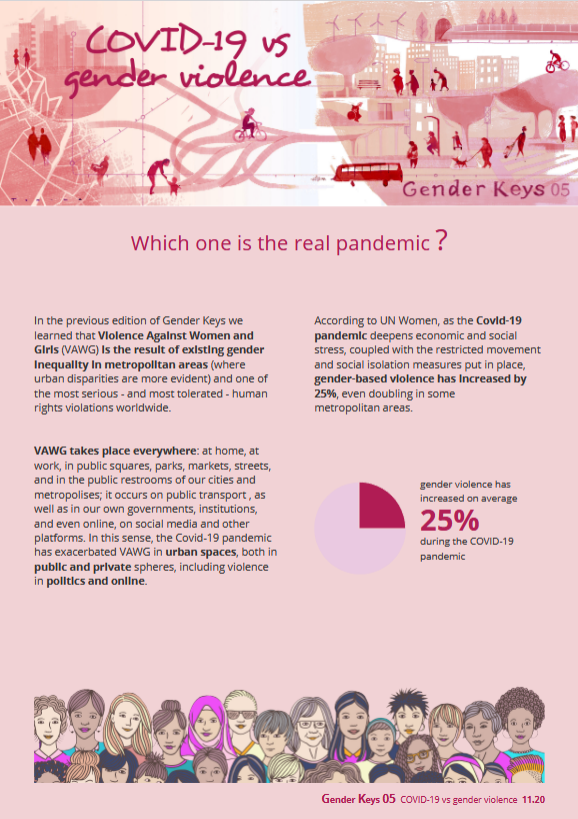
In the previous edition of Gender Keys we learned that Violence Against Women and Girls (VAWG) is the result of existing gender inequality in metropolitan areas (where urban disparities are more evident) and one of the most serious - and…
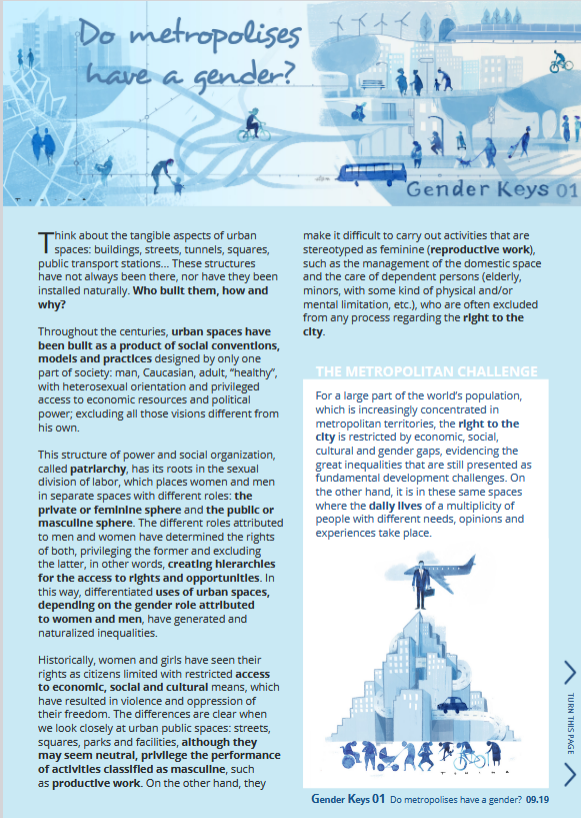
Think about the tangible aspects of urban spaces: buildings, streets, tunnels, squares, public transport stations... These structures have not always been there, nor have they beeninstalled naturally. Who built them, how and why? Throughout the centuries, urban spaces have been…
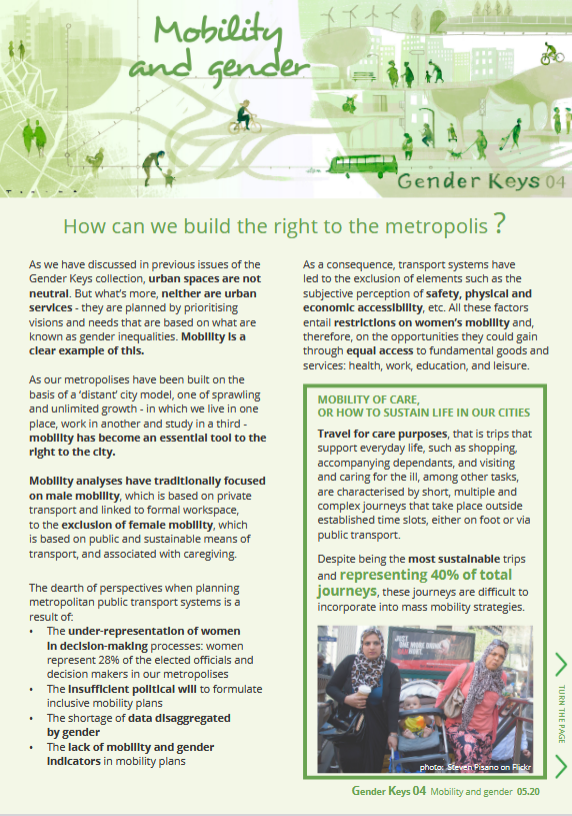
As we have discussed in previous issues of the Gender Keys collection, urban spaces are not neutral. But what’s more, neither are urban services - they are planned by prioritising visions and needs that are based on what are known…
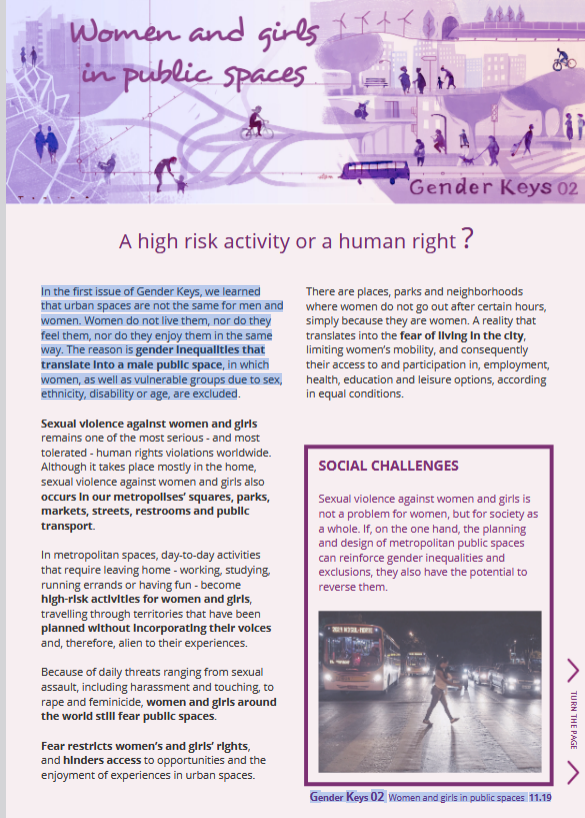
In the first issue of Gender Keys, we learned that urban spaces are not the same for men and women. Women do not live them, nor do they feel them, nor do they enjoy them in the same way. The…
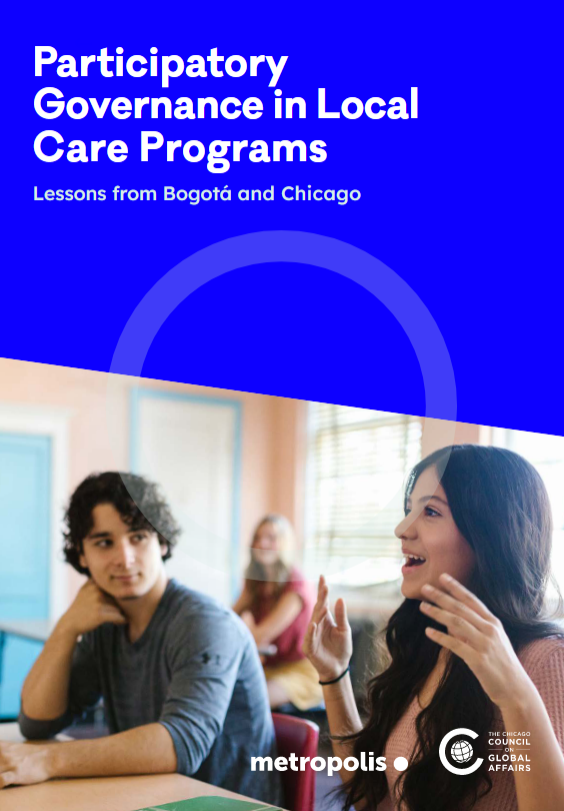
Among the many urban crises precipitated by COVID-19, the pandemic was foremost a crisis of care. Urban dwellers faced lockdowns, isolation, illness, changes in employment and schooling, and a significant increase in demand for care and unpaid care work among…