With your permission we measure how the site is used and show content from other services: Google Maps, YouTube, Spotify. Accept or reject all of it, or choose in your preferences. You can change this at any time from Privacy preferences at the foot of every page. Privacy policy
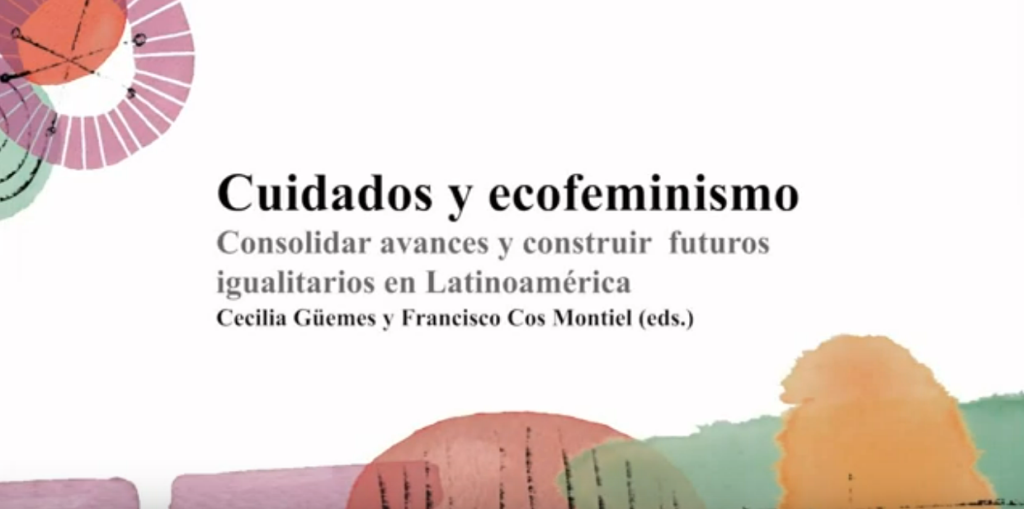
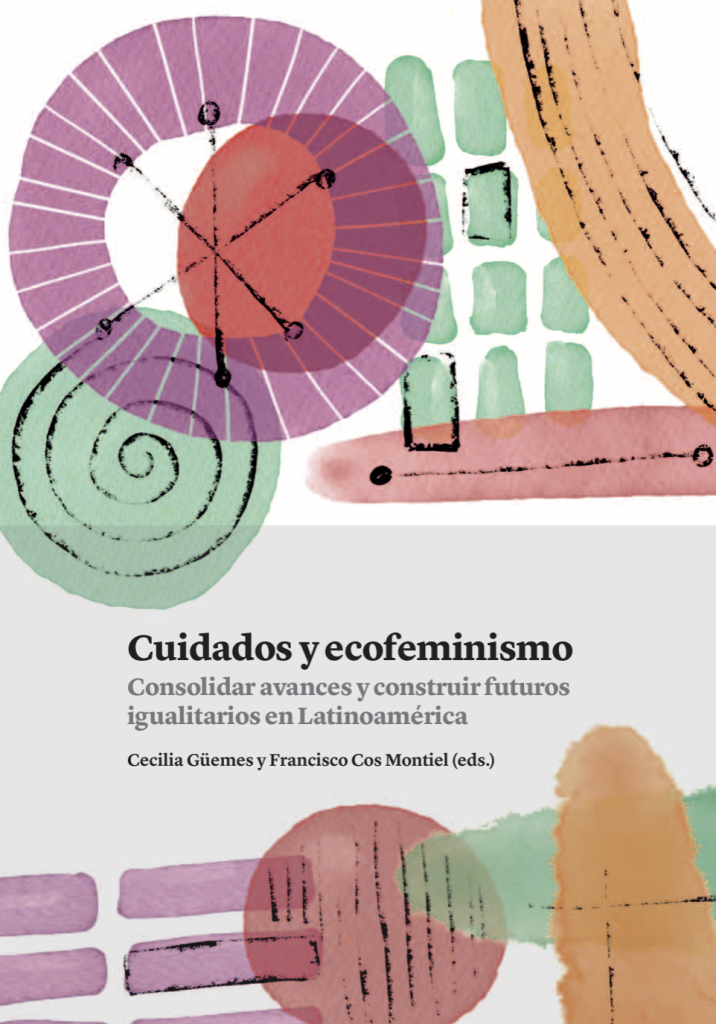
In 2021 the Carolina Foundation and UNRISD launched a polyphonic project focused on reflecting, in a situated and critical way, on some of the most pressing challenges of Latin American in relation to gender justice. After the Covid-19 pandemic, several…
As a follow up to the G20 meeting held under the Presidency of Indonesia in 2022 on care economy, the ILO supported the initiative of the Indonesian government led by the Ministry of Women Empowerment and Child Protection to develop…
Women shoulder a disproportionate share of unpaid work around the world, and gender imbalances in the distribution of care work constitute a root cause of women’s economic and social disempowerment. To further discuss about the implications and consequences of policy…
The ILO, with the support of the Bill & Melinda Gates Foundation, has developed the Care Policy Investment Simulator, the largest online care policy modelling tool that once launched will be available for the general public. Containing data from more…
In 2021, the Carolina Foundation and UNRISD launched a project of multiple voices focused on reflecting in a situated and critical way on some of the most pressing challenges in the Latin American region in relation to gender justice. After…
ILO hopes these new tools will encourage the investment needed to support the two billion people still without adequate maternity and paternity support, parental leave and childcare services.
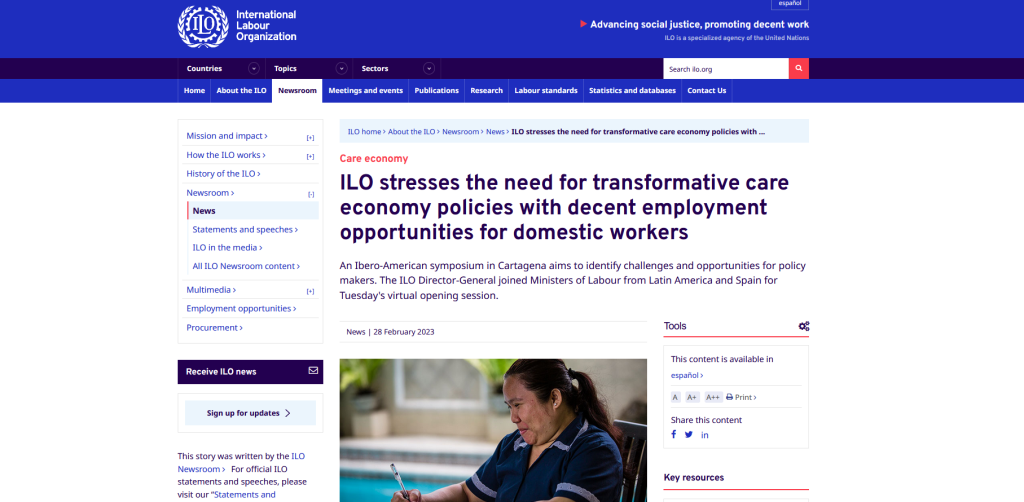
An Ibero-American symposium in Cartagena aims to identify challenges and opportunities for policy makers. The ILO Director-General joined Ministers of Labour from Latin America and Spain for Tuesday's virtual opening session.
The talkshow discusses about the care economy and a great involvement of women in the care economy. It is growing as the demand for childcare and care for the elderly is increasing in all regions. It will thus create a…
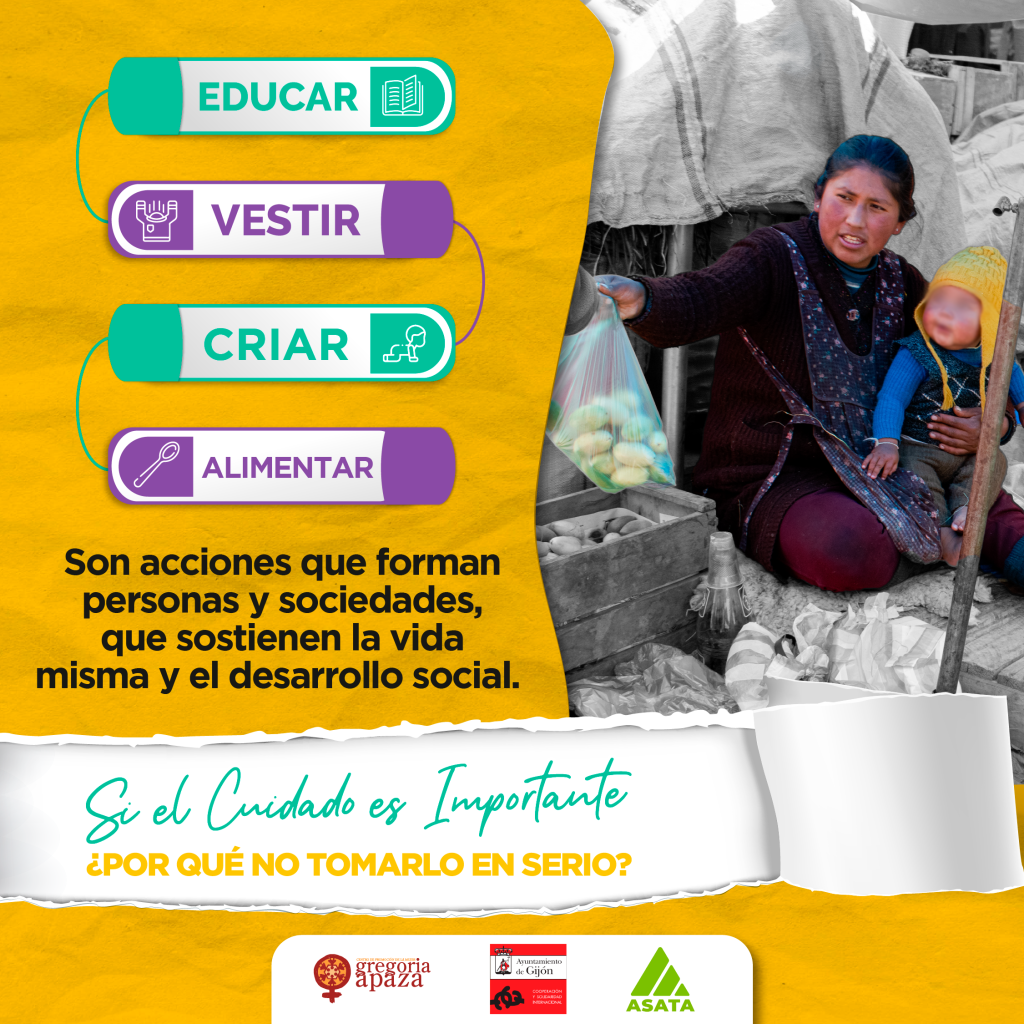
The care economy refers to the care of children, the elderly, and dependent persons, but also to domestic work and all activities necessary for the functioning of households. These activities can be classified as paid and unpaid care work, which…
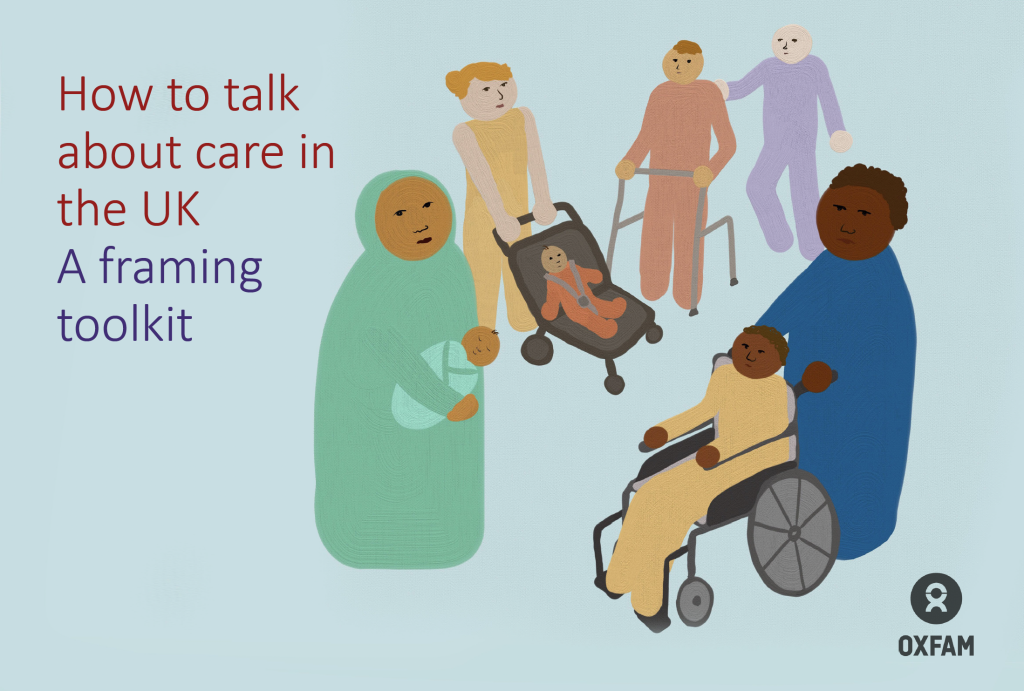
In this toolkit you will find some helpful recommendations and tools that can be used flexibly by anyone who wants to talk more effectively about the value of all care, paid and unpaid, to the UK general public.
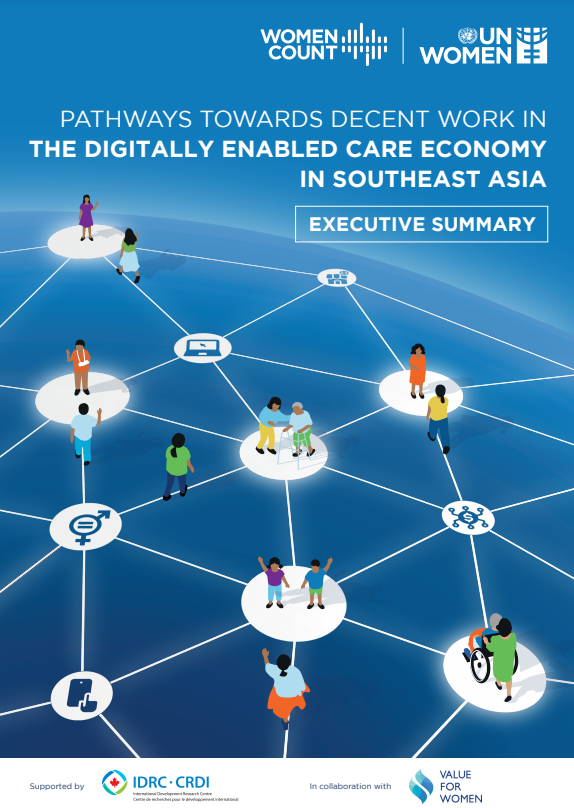
This publication examines emerging goodpractices of market-based models in the digitallyenabled care economy in Southeast Asia andidentifies pathways towards decent work for thepredominantly female workforce.The care economy entails the production andconsumption of goods and services necessary forthe physical, social, mental…
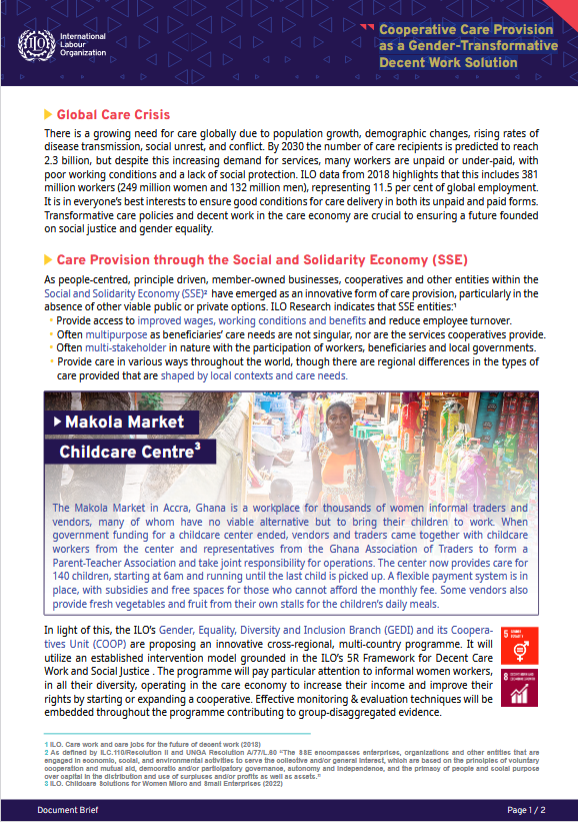
There is a growing need for care globally due to population growth, demographic changes, rising rates of disease transmission, social unrest, and conflict. By 2030 the number of care recipients is predicted to reach 2.3 billion, but despite this increasing…
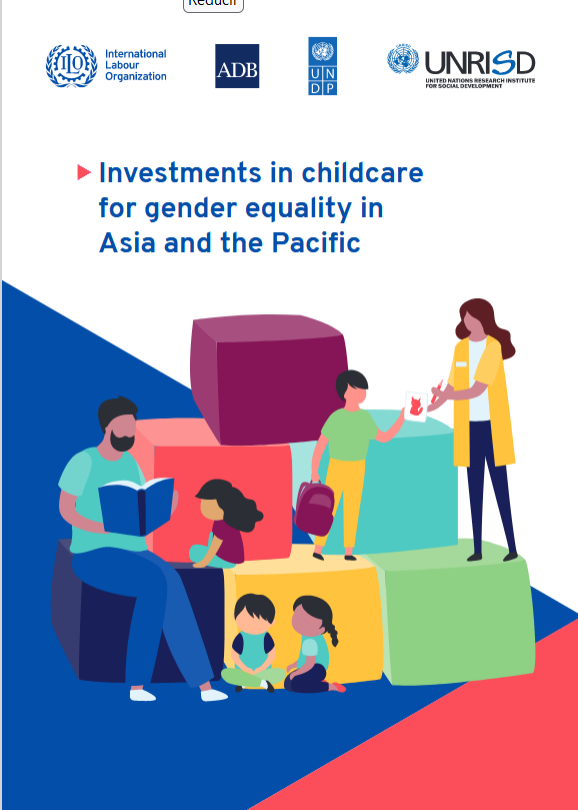
This is a study on the public provision of childcare across 48 economies in Asia and the Pacific through the lens of accessibility, affordability, quality, and decent work for childcare workers. Based on its findings the study offers recommendations for…
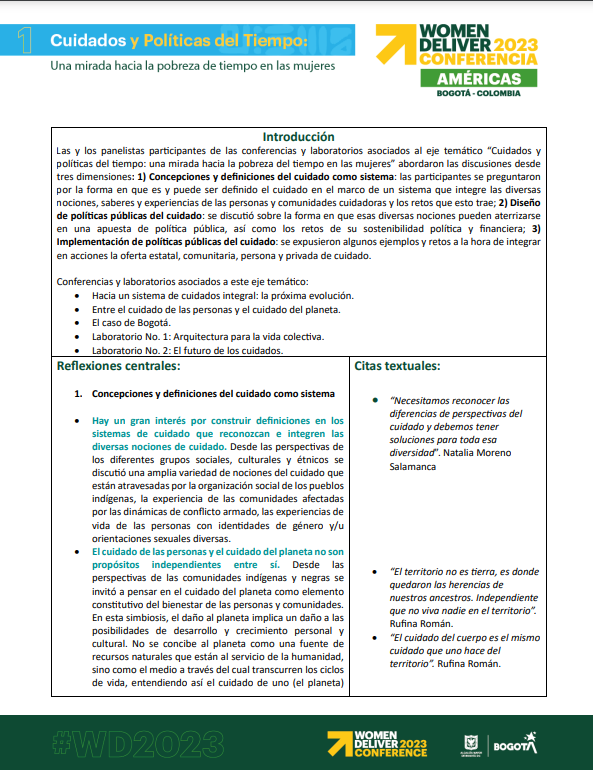
The panelists participating in the conferences and laboratories associated with the thematic axis "Care and time policies: a look at women's time poverty" approached the discussions from three dimensions: 1) Conceptions and definitions of care as a system: the participants…
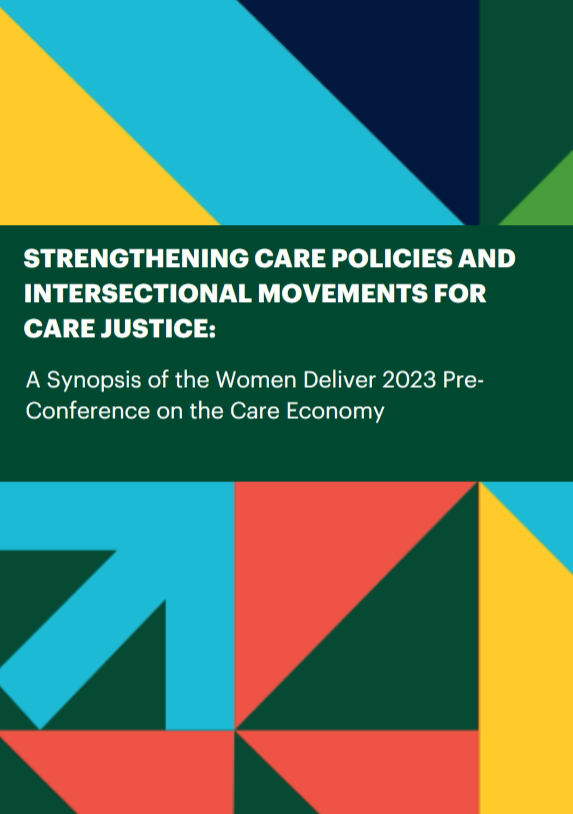
This document makes it possible to situate domestic and care work as a systemic dimension that enables social reproduction and has become a buffer in crisis scenarios. With this analysis we propose to discuss from the structure to the co-responsibility…
In recent years, ongoing conflicts and crises coupled with demographic changes have spurred the urgent need for policy action and financing to support a resilient and gender-transformative care economy. With rising childcare, eldercare, and/or disability care needs, the demand for…
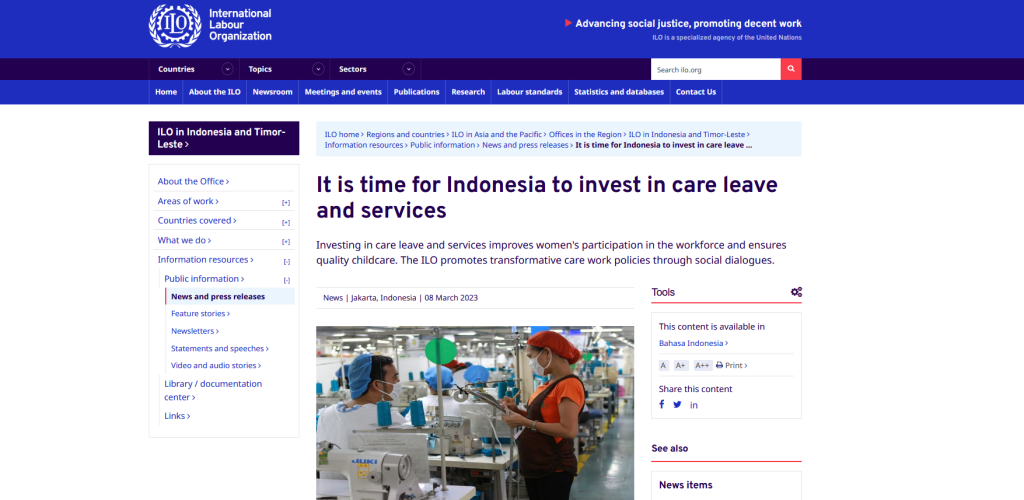
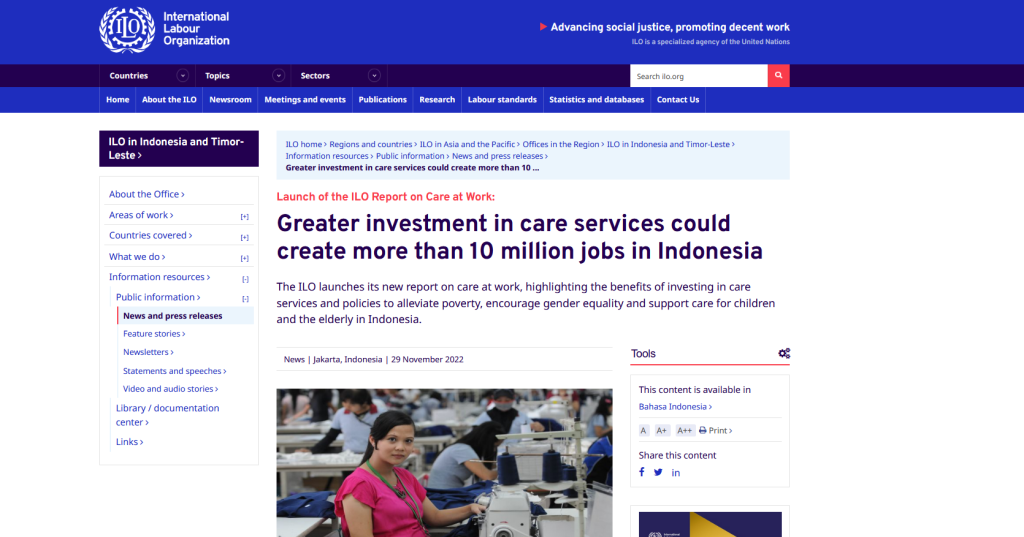
The ILO launches its new report on care at work, highlighting the benefits of investing in care services and policies to alleviate poverty, encourage gender equality and support care for children and the elderly in Indonesia.