With your permission we measure how the site is used and show content from other services: Google Maps, YouTube, Spotify. Accept or reject all of it, or choose in your preferences. You can change this at any time from Privacy preferences at the foot of every page. Privacy policy
This document introduces the theoretical arguments thathave led to recognizing care as a human right and thesocial and political mobilization underpinning its imple-mentation. The Starting Point summarizes the main ele-ments that have contributed to problematizing the sexualdivision of labor and…
This case study on Uzbekistan enhances ESCAP technical and advisory assistance to its member States, in particular aligning with the region’s efforts to bring care to the centre of public policy. The study aims to draw great attention and resources…
The commitments made over the last 45 years have led to the development of a robust Regional Gender Agenda in which women’s rights and gender equality are recognized as central and cross-cutting elements of all State action geared toward strengthening…
An inclusive, participatory and egalitarian society will only be achieved if the policies to promote it synergistically andcreatively relate the transformative realities and potentialities of ICTs and technological change with other resources essential to achieving social, climate and gender justice.…
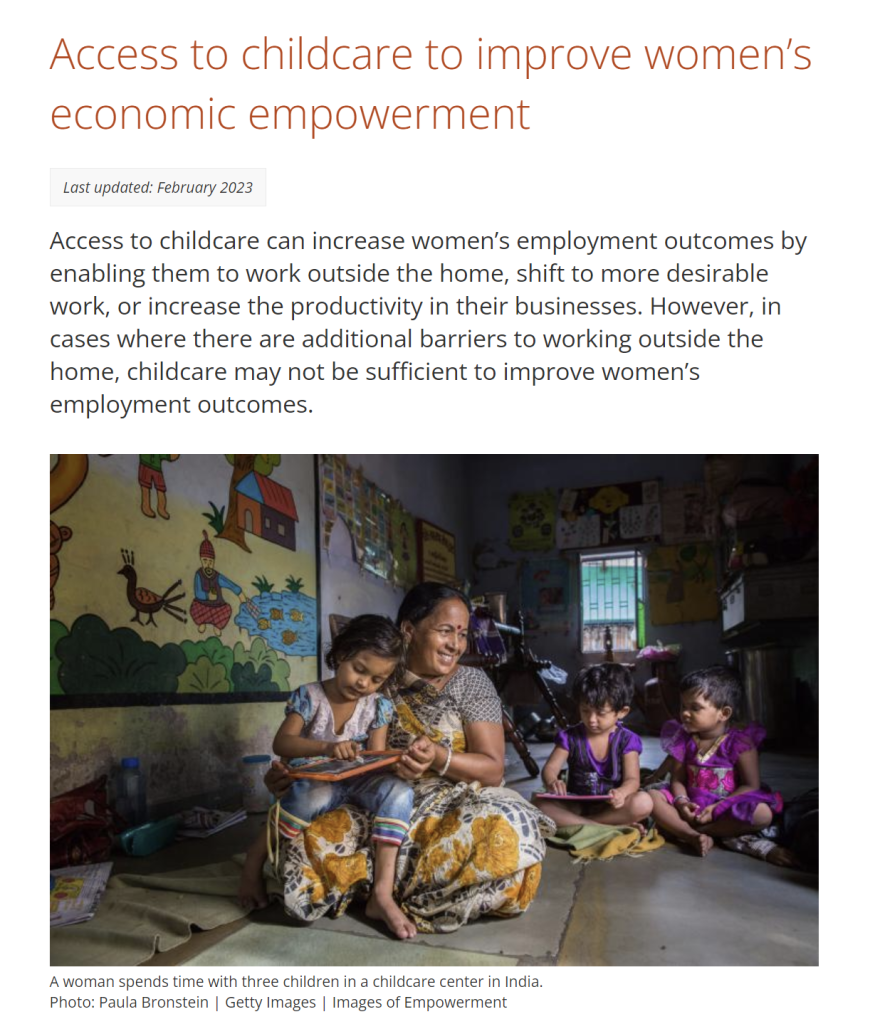
Access to childcare can increase women’s employment outcomes by enabling them to work outside the home, shift to more desirable work, or increase the productivity in their businesses. However, in cases where there are additional barriers to working outside the…
The commitments made over the last 45 years have led to the development of a robust Regional Gender Agenda in which women’s rights and gender equality are recognized as central and cross-cutting elements of all State action geared toward strengthening…
In recent years, ongoing conflicts and crises coupled with demographic changes have spurred the urgent need for policy action and financing to support a resilient and gender-transformative care economy. With rising childcare, eldercare, and/or disability care needs, the demand for…
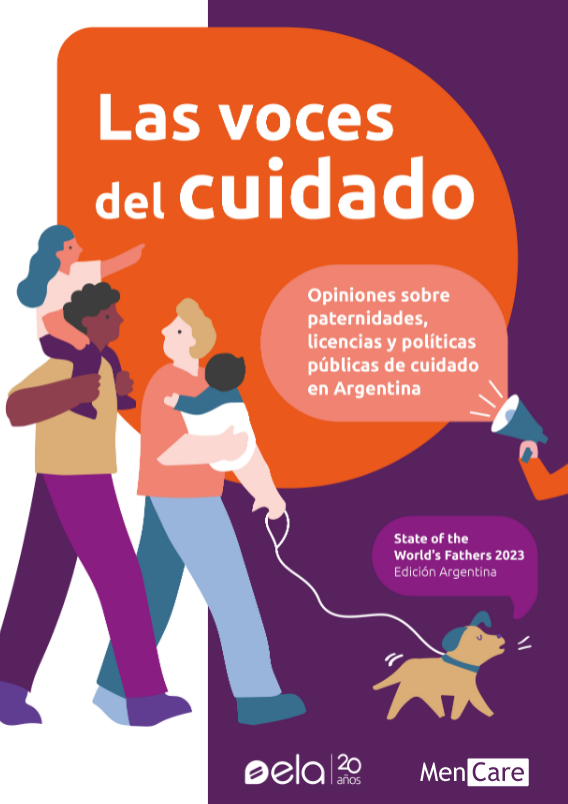
This research presents local data from the State of the World's Fathers 2023, an exploratory study on representations, social demands and experiences of fatherhood and caregiving worldwide, based on an online survey implemented in 17 countries.
This document provides a research and systematization of various experiences in childcare centers for children aged 45 days to 5 years in companies, consortiums of companies, chambers of interest, and other private sector organizations, both nationally and regionally. It presents…
In the context of the reviews and evaluations of the implementation of the Madrid implementation of the Madrid International Plan of Action on Ageing in Latin American and In the context of the reviews and evaluations of the implementation of…
This is a study on the public provision of childcare across 48 economies in Asia and the Pacific through the lens of accessibility, affordability, quality, and decent work for childcare workers. Based on its findings the study offers recommendations for…
In this document, we present 9 reasons why the creation of a comprehensive care system is essential for the development of Argentina. Care consists of a set of routine activities that provide physical, psychological, and emotional well-being to individuals and…
This report offers a qualitative analysis of the reform introduced by the Buenos Aires city government in its leave scheme (public employment) in 2018, based on the experiences of government workers.
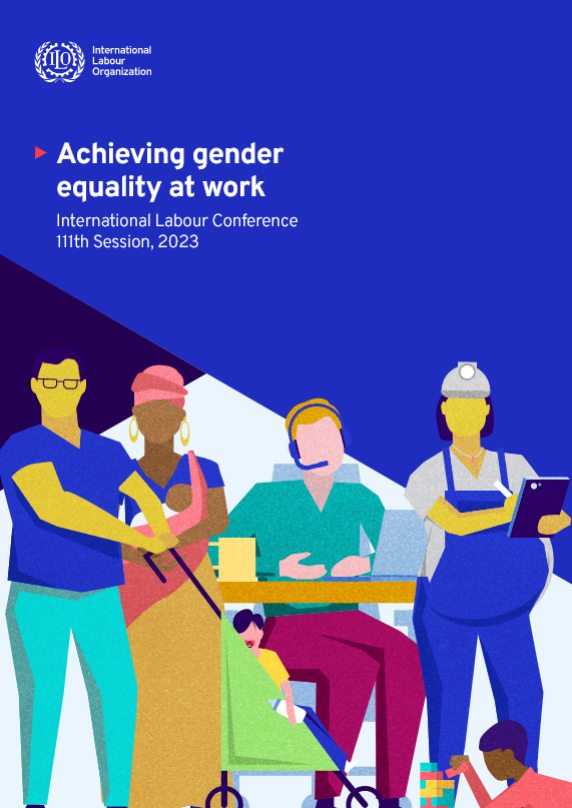
Halfway through the 2030 Agenda for Sustainable Development, the world is failing to achieve gender equality, making it an increasingly distant goal. The latest available data show that, despite the strong rhetoric, none of the United Nations’ Sustainable Development Goal…
This Technical Note provides guidance on how to use the online ILO Care Policy Investment Simulator by explaining the underlying methodology, calculations and results. The Simulator helps build tailor-made care policy investment packages to fill national gaps on care leave…
The care economy refers to the care of children, the elderly, and dependent persons, but also to domestic work and all activities necessary for the functioning of households. These activities can be classified as paid and unpaid care work, which…
Every quality management and regulation system for the care of dependent persons defines criteria relating to the professional training of caregivers: content of training curricula, minimum qualification levels for access to certain occupations, duration of programs and hours of practice,…
Halfway through the 2030 Agenda for Sustainable Development, the world is failing to achieve gender equality, making it an increasingly distant goal. The latest available data show that, despite the strong rhetoric, none of the United Nations’ Sustainable Development Goal…
General Survey on the Discrimination (Employment and Occupation) Convention, 1958 (No. 111), the Workers with Family Responsibilities Convention, 1981 (No. 156), the Maternity Protection Convention, 2000 (No. 183), the Discrimination (Employment and Occupation) Recommendation, 1958 (No. 111), the Workers with…
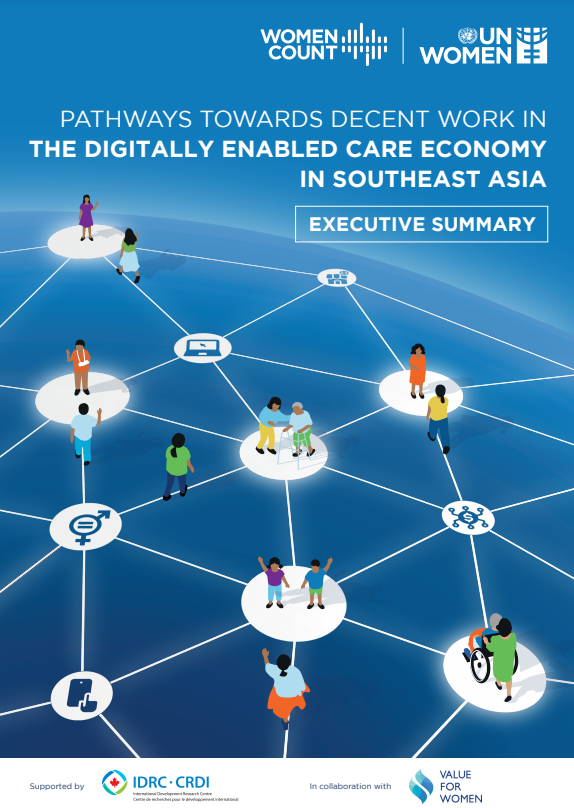
This publication examines emerging goodpractices of market-based models in the digitallyenabled care economy in Southeast Asia andidentifies pathways towards decent work for thepredominantly female workforce.The care economy entails the production andconsumption of goods and services necessary forthe physical, social, mental…