Mental Health and Self-Care Among Young People: From the “Wellness” Industry to a Shared Path Forward
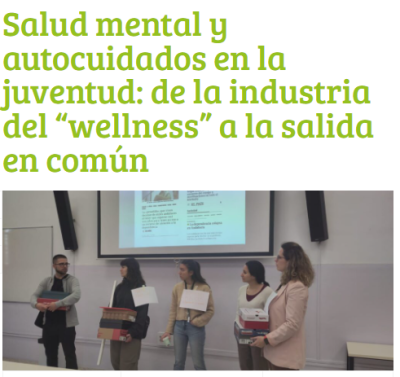
Youth mental health has become a critical issue of our time. Probably never before has there been so much discussion about this issue, which has become a recurring topic of public debate, revealing the shortcomings and limitations of the current system in providing solutions. The search for shared answers is precisely what motivated the conference on self-care and mental health aimed at the university population, organized as part of the “Aliadas por la Cuidadanía” project in Granada and Seville, which provides the context for this article. It is by no means the objective to provide an exhaustive summary of the conclusions from these conferences, but it is essential to mention and acknowledge the contributions of the participants as a collective effort that informs the ideas and reflections shared in this text.
The World Health Organization (WHO) currently defines mental health as “a state of mental well-being that enables people to cope with life’s stresses, develop their full potential, learn and work effectively, and contribute to the betterment of their community.” This definition offers a multidimensional view of mental health, going beyond the absence of psychological or psychiatric problems and including both individual characteristics and the social context or ways of life. In this sense, it represents a step forward from pathologizing approaches that only consider mental health problems when they result in what is officially classified as illnesses and following a medical diagnosis. However, this definition also includes elements that warrant further examination: What if what prevents us from taking care of our mental health is precisely “learning and working effectively”? Can young people today keep up with the pace, demands, and conditions of academia and the labor market without compromising their mental health? What if what seriously disrupts mental health is trying to fit into expectations and standards of living that are increasingly harmful to our personal and collective well-being? What do we mean by contributing to the betterment of our community?