Care and Sumak Kawsay
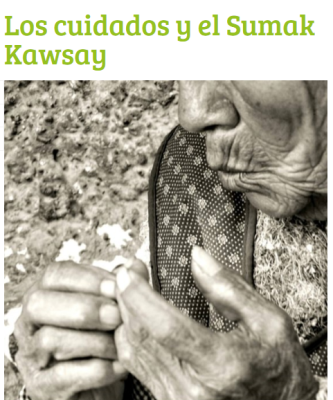
Sumak Kawsay and Suma Qamaña, known as “Good Living,” stem from the Kichwa and Aymara worldviews and propose a different way of thinking about well-being. They are not limited to policies or economic models, but rather express ways of life based on the care of life, reciprocity, and interdependence among people, territories, and nature.
These ideas engage in dialogue with other worldviews of Abya Yala, such as the Lékel Kuxlejal of the Tseltal and Tsotsil peoples in Chiapas, the Comunalidad of the Zapotec and Mixe peoples of Oaxaca, Tojolabal thought, the Küme Mongen of the Mapuche people, and the Ñande Reko of the Guaraní peoples. Although they emerge from distinct historical, territorial, and cultural contexts and do not constitute a single or homogeneous model, they share a relational ethic that places community life, care for the territory, and reciprocity at the center. The dialogue between these worldviews does not imply uniformity, but rather the recognition of a common horizon that challenges extractivist development and proposes plural, just, and sustainable ways of inhabiting the world—approaches that are particularly relevant in the face of the ecological crisis and contemporary inequalities.