With your permission we measure how the site is used and show content from other services: Google Maps, YouTube, Spotify. Accept or reject all of it, or choose in your preferences. You can change this at any time from Privacy preferences at the foot of every page. Privacy policy
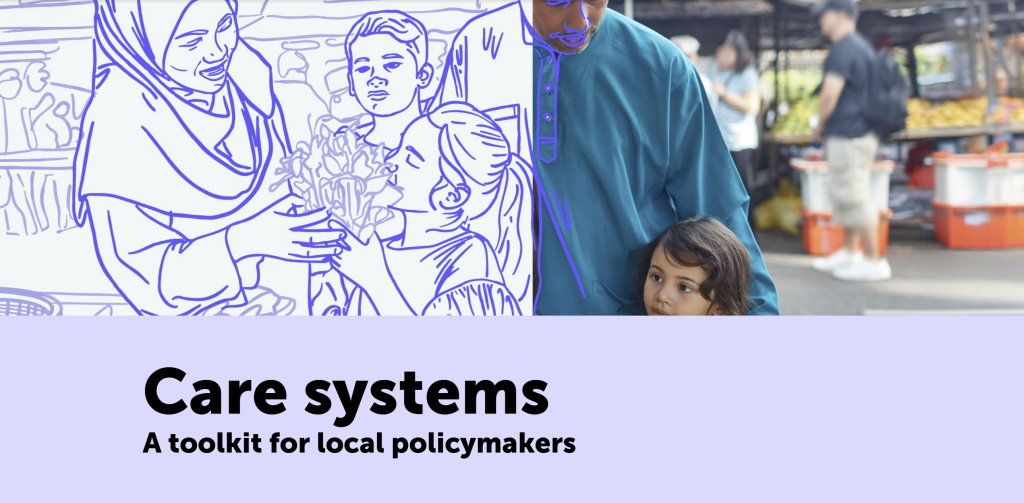
We all need care and support throughout our lives. Cities play a key role in fostering services and programs that ensure all peoples’ care needs are met. Effective care policies take a transformative, integrated, gender-sensitive and systemic approach, accounting for…
In collaboration with the Seoul Metropolitan Government Human Resources Development Centre (SHRDC), which is the home of the Metropolis International Training Institute, UCLG, as well as UCLG-ASPAC we have developed an online training programme focused on the theme "Caring Cities".…
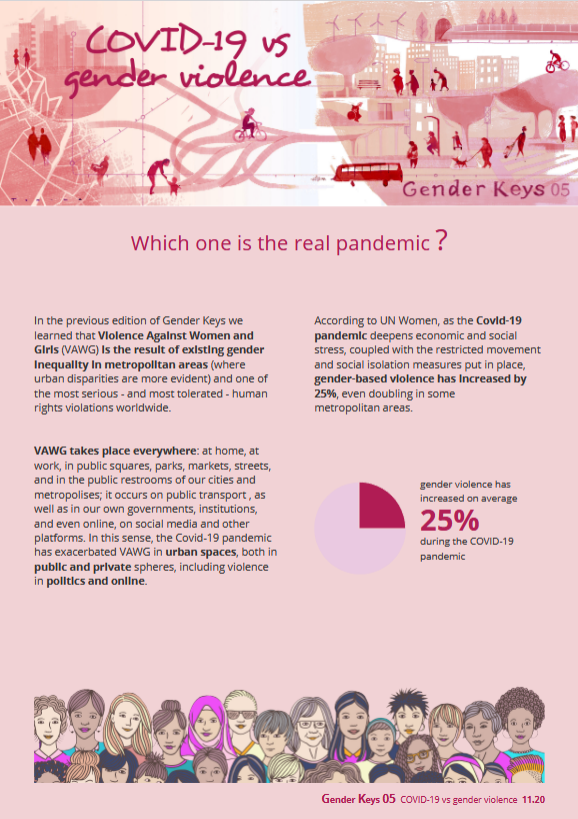
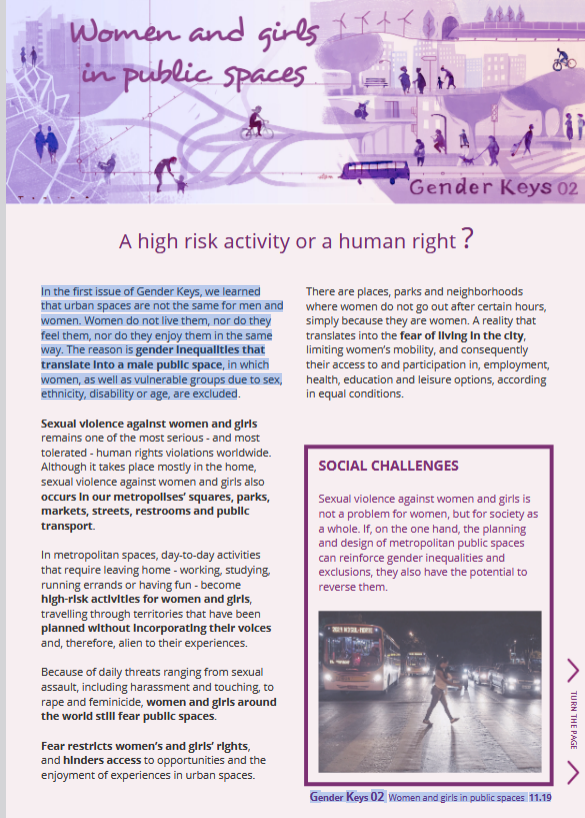
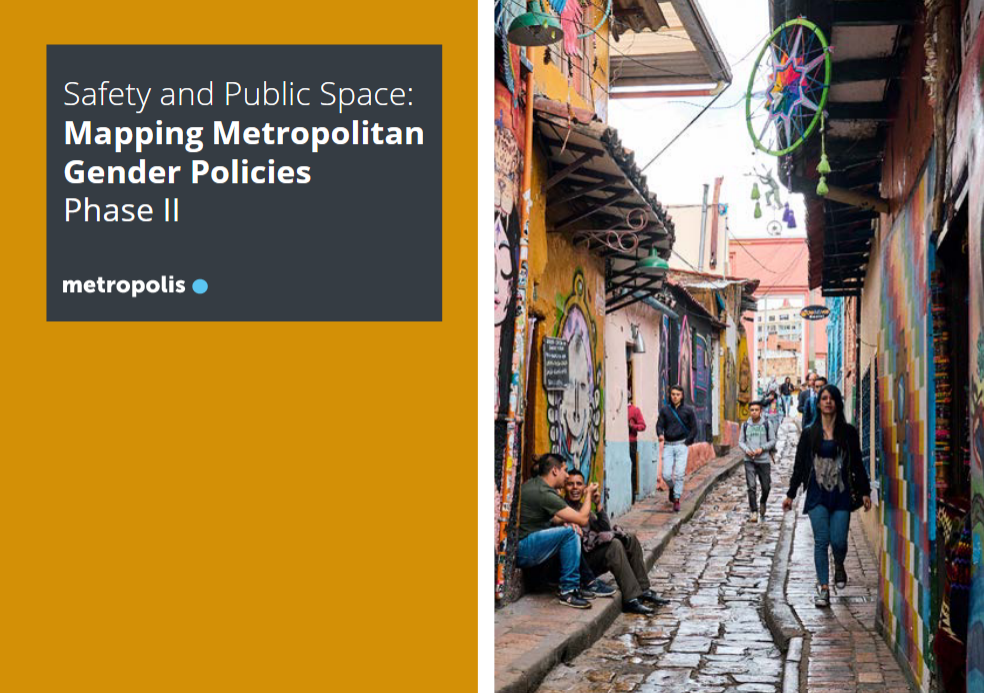
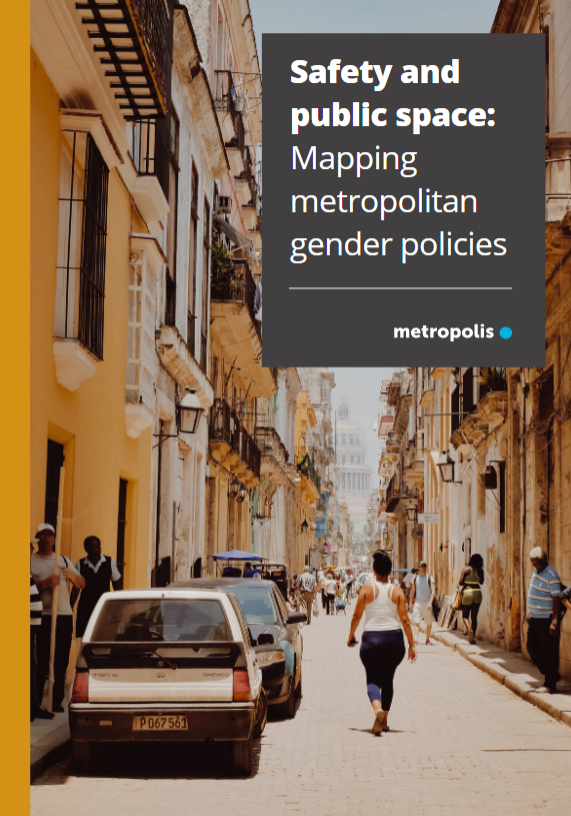
In the previous edition of Gender Keys we learned that Violence Against Women and Girls (VAWG) is the result of existing gender inequality in metropolitan areas (where urban disparities are more evident) and one of the most serious - and…
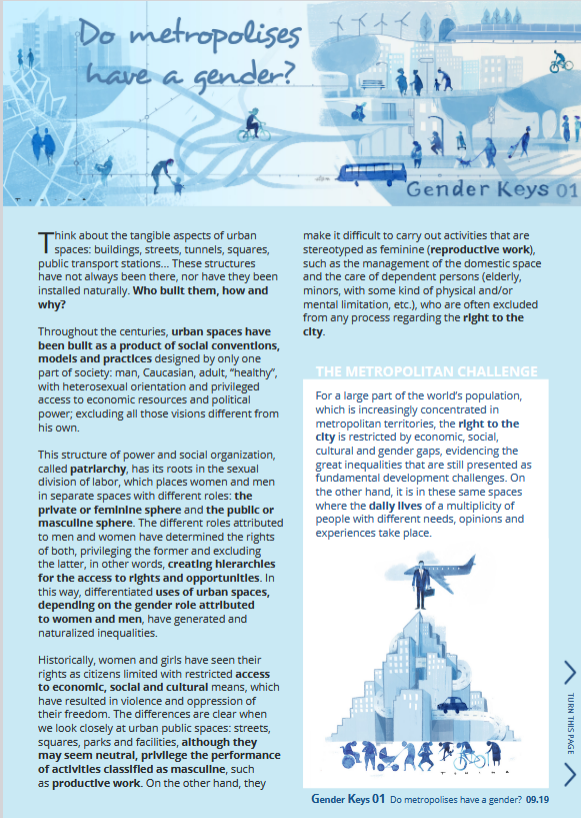
Think about the tangible aspects of urban spaces: buildings, streets, tunnels, squares, public transport stations... These structures have not always been there, nor have they beeninstalled naturally. Who built them, how and why? Throughout the centuries, urban spaces have been…
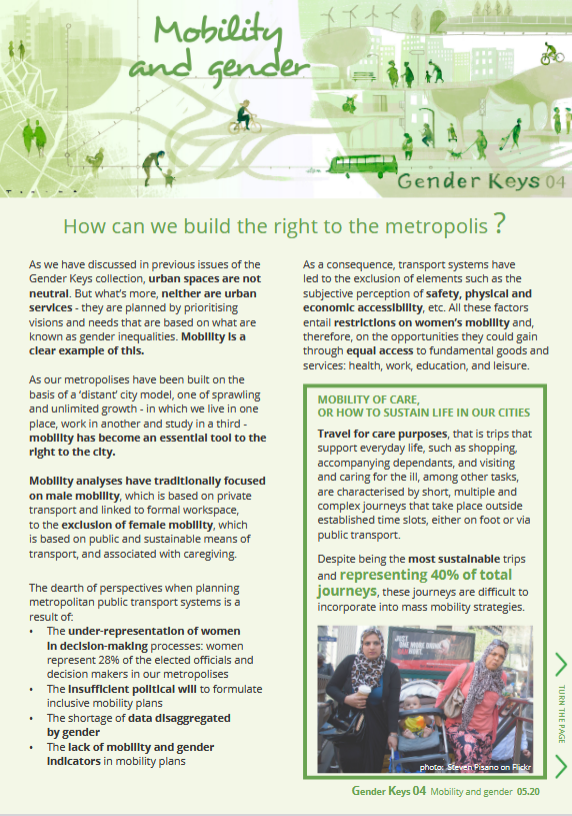
As we have discussed in previous issues of the Gender Keys collection, urban spaces are not neutral. But what’s more, neither are urban services - they are planned by prioritising visions and needs that are based on what are known…
In the first issue of Gender Keys, we learned that urban spaces are not the same for men and women. Women do not live them, nor do they feel them, nor do they enjoy them in the same way. The…
Among the many urban crises precipitated by COVID-19, the pandemic was foremost a crisis of care. Urban dwellers faced lockdowns, isolation, illness, changes in employment and schooling, and a significant increase in demand for care and unpaid care work among…
Violence against women and girls is a human rights violation. Its immediate and long-term impact has multiple physical, sexual and psychological consequences that affect women’s general well-being and their full participation in society, as well as their families, their community…
As metropolitan spaces face increasing challenges from sea level rise and growing health inequity to environmental contamination and food insecurity, greening is seen as a remedy and a path to achieving UN Sustainable Development Goals (SDG11 in particular), while bringing…
Fundamental to urban dwellers’ daily, mobility is one of the most emblematic, high-profile and sensitive examples of how metropolitan governance applies to the life of many individuals. Transport and its management have a profound impact on people’s access to the…
One of the main challenges faced by large cities and metropolitan areas is the contradiction between the key role they play in the world economy and global society, and the unequal distribution of the benefits brought by this role within…
Around the world, troubling levels of violence against women result in a restricted or complete lack of rights and opportunities for women and girls. For a majority of the world’s population, who is increasingly concen- trated in large cities, this…
Cities stand at the intersection of the major challenges of the 21st century. Globalization, climate change, mass migration, and rapid urbanization have converged to pose disproportionate pressures on urban centers. Over 55% of the world’s population now lives in cities,…